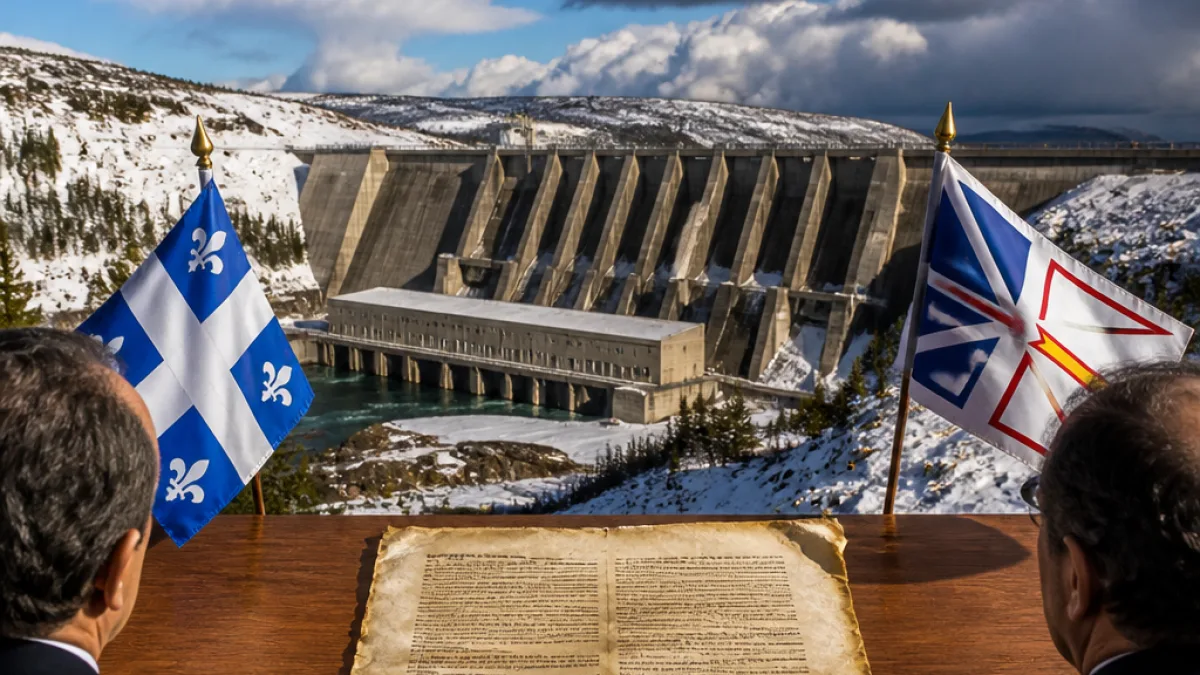
Quebec and Newfoundland and Labrador have moved noticeably closer to a new agreement to replace the long‑standing and disputed 1969 Churchill Falls contract, sources with knowledge of the matter told CBC News, with both governments aiming for a formal announcement early next week.
Progress reported, but not finalized
People familiar with the negotiations, who were not authorised to speak publicly, said only "two or three issues" remain outstanding but are nearing resolution. Montreal’s La Presse reported that a deal had been reached; however, officials in Newfoundland and Labrador cautioned that no final agreement has yet been signed.
"We can confirm that in recent days we have made significant progress in our negotiations with both Quebec and the Government of Canada as it relates to replacing the 2024 MOU with a new deal for Churchill Falls and Gull Island," said Ashley Politi, a spokesperson for Newfoundland and Labrador Premier Tony Wakeham.
"As of right now, no final deal has been signed."
A spokesperson for Quebec Premier Christine Fréchette declined to confirm the reports, saying in French she could "neither confirm nor deny this information at the moment." The two premiers met recently in Prince Edward Island to discuss a framework for the sale and development of Churchill Falls power and the potential development of the long‑discussed Gull Island project on the Churchill River.
What the 2024 MOU means
In December 2024, the government of Newfoundland and Labrador under then‑premier Andrew Furey signed a Memorandum of Understanding (MOU) with Quebec to begin the process of ending and replacing the original 1969 Churchill Falls contract. That 1969 agreement has been a source of political controversy for decades because of its long‑term pricing and market arrangements.
Sources indicate the current negotiations are intended to convert the MOU into a binding agreement that would govern the sale and development of hydroelectric power from Churchill Falls and the proposed Gull Island development.
Key sticking points and next steps
- Only a small number of issues — reported as two or three — remain outstanding, according to sources.
- Officials are said to be aiming for a public announcement within days if those issues are resolved.
- Both provincial governments have signalled progress, but have not confirmed a signed final deal.
The involvement of the federal government was also referenced by Newfoundland and Labrador officials as part of the recent talks. The federal role may relate to regulatory, interprovincial electricity trade or financing matters, but officials have not detailed the precise federal contributions.
| Timeline | Event |
|---|---|
| 1969 | Original Churchill Falls contract signed |
| Dec. 2024 | MOU signed between Newfoundland and Labrador and Quebec to replace the 1969 contract |
| Aug. 2026 | Sources say final deal is close; officials indicate few issues remain |
Regional stakes and political context
The outcome of the talks carries significant economic and political weight for both provinces. Churchill Falls is a major hydroelectric facility on the Churchill River, and the proposed Gull Island project has long been on provincial development agendas. Any new agreement would reshape decades of power‑sale arrangements and could influence electricity markets, revenues and regional relations.
For Newfoundland and Labrador, securing better terms than those in the 1969 contract has been a political priority for successive governments. For Quebec, the negotiations intersect with its own hydroelectric planning and interprovincial energy trade strategy.
What to watch for next
Observers will look to formal statements from both premiers and any federal announcement. Key indicators that a final agreement is complete would include signed documentation, coordinated press releases and details on how the new deal addresses pricing, revenue sharing and development timelines for Gull Island.
Until then, both sides appear to be in a cautious phase of public communications: acknowledging progress while stopping short of declaring a concluded bargain.
As negotiations enter what sources describe as their final stretch, residents and stakeholders in both provinces are likely to scrutinize the terms carefully for impacts on utility rates, provincial revenues and long‑term energy planning.