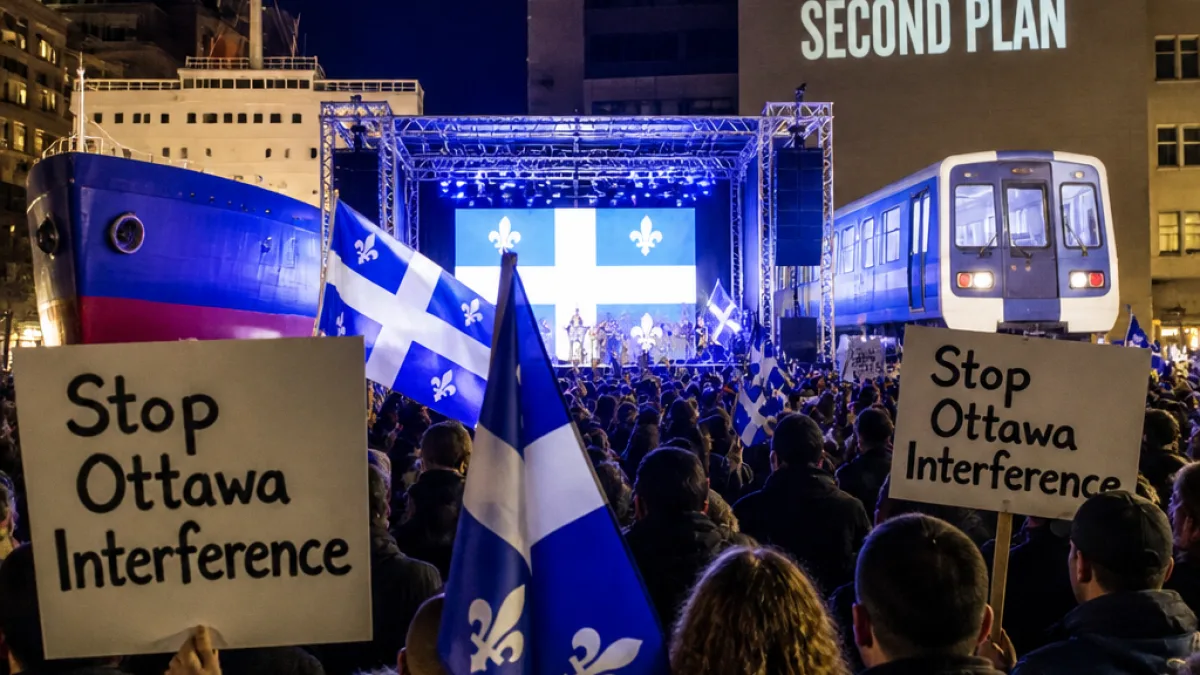
MONTREAL — Parti Québécois leader Paul St‑Pierre Plamondon has raised serious concerns that the federal government may be exerting unusual influence over Quebec’s provincial election, saying there is a “possibility that we are facing the greatest federal interference in our affairs and our election since 1995.”
Allegations tied to federal announcements
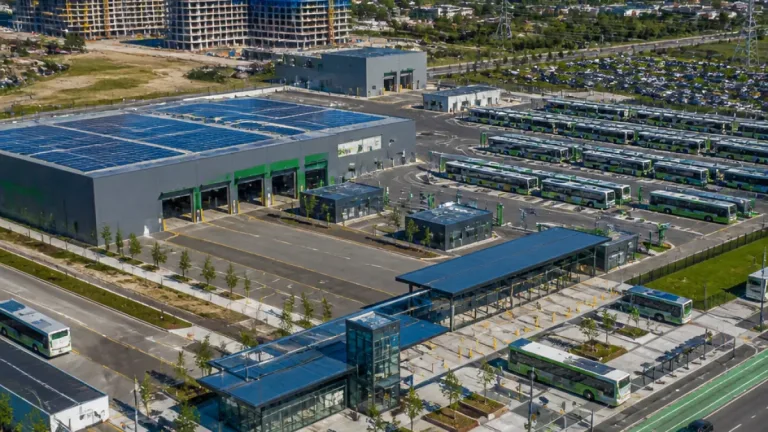
Speaking on the campaign trail as Quebecers head toward the Oct. 5 vote, St‑Pierre Plamondon pointed to a sequence of federal announcements in recent months and argued they were unusually timed and potentially designed to affect the provincial outcome. He singled out three high‑profile developments: a multibillion‑dollar investment in the Davie shipyard, a large manufacturing contract for train cars in La Pocatière, and a recent agreement involving Churchill Falls.
“There is a possibility that we are facing the greatest federal interference in our affairs and our election since 1995.”
The PQ leader suggested that the federal government’s increased public spending and high‑visibility deals — revealed while the provincial campaign was underway — raise questions about Ottawa’s motives. He argued the pattern contrasts with the eight years he said the Coalition Avenir Québec government was in power, when he claims federal authorities were less responsive to requests from Quebec.
Specific initiatives cited
Among the measures St‑Pierre Plamondon referenced were an $11‑billion commitment to expand the Davie shipyard, and a $4.7‑billion investment tied to building train cars at a facility in La Pocatière. He also mentioned a recent arrangement between Newfoundland and Quebec regarding the Churchill Falls hydroelectric project. He framed these announcements as more numerous and more prominent than the federal government’s typical activity prior to the campaign.
| Federal announcement | Amount |
|---|---|
| Davie shipyard investment | $11 billion |
| Train cars project in La Pocatière | $4.7 billion |
| Agreement on Churchill Falls | Not specified |
Implications and political context
St‑Pierre Plamondon framed his concerns in the language of democratic fairness, suggesting Ottawa’s recent activity could influence voter perceptions and the provincial political landscape. He also accused the federal Liberal party of not wanting a sovereigntist movement to regain traction in Quebec — an assertion that escalates tensions between the PQ and the national government.
His remarks come as the PQ seeks to capitalise on voter unease with the incumbent Coalition Avenir Québec. The PQ leader contrasted what he described as a marked increase in federal responsiveness during the campaign with years when, he said, Quebec’s requests were quietly declined.
Reactions and unanswered questions
No federal spokesperson quoted directly in the remarks cited by St‑Pierre Plamondon has been presented in his comments; the PQ leader interpreted the timing and scale of recent federal investments as evidence of Ottawa’s interest in the election result. There has been no public acknowledgement from the federal government that the announcements were intended to influence provincial politics.
Observers will watch whether federal ministers or officials provide further explanation of the timing and decision‑making behind the investments and agreements named by the PQ leader. The claims also set up political sparring in the closing weeks of the campaign, as rival parties may press for clarifications or rebuttals.
What voters should know
For Quebecers seeking context on the allegation, key points to consider include:
- The PQ leader linked several large federal announcements to his concerns about interference.
- Specific figures cited publicly by the PQ include an $11‑billion Davie shipyard commitment and a $4.7‑billion train‑cars investment in La Pocatière.
- There has been no public admission from the federal government that the announcements were timed to affect provincial election outcomes.
As the campaign proceeds, voters and media will likely press both the federal and provincial actors for more detailed accounts of how these funding decisions were made and whether normal protocols around impartiality during election periods were observed.
The allegation adds another layer to an already fraught election environment in Quebec, where provincial identity, federal relations and public investments are recurring themes.
Geneviève Tremblay, WE NEWS.