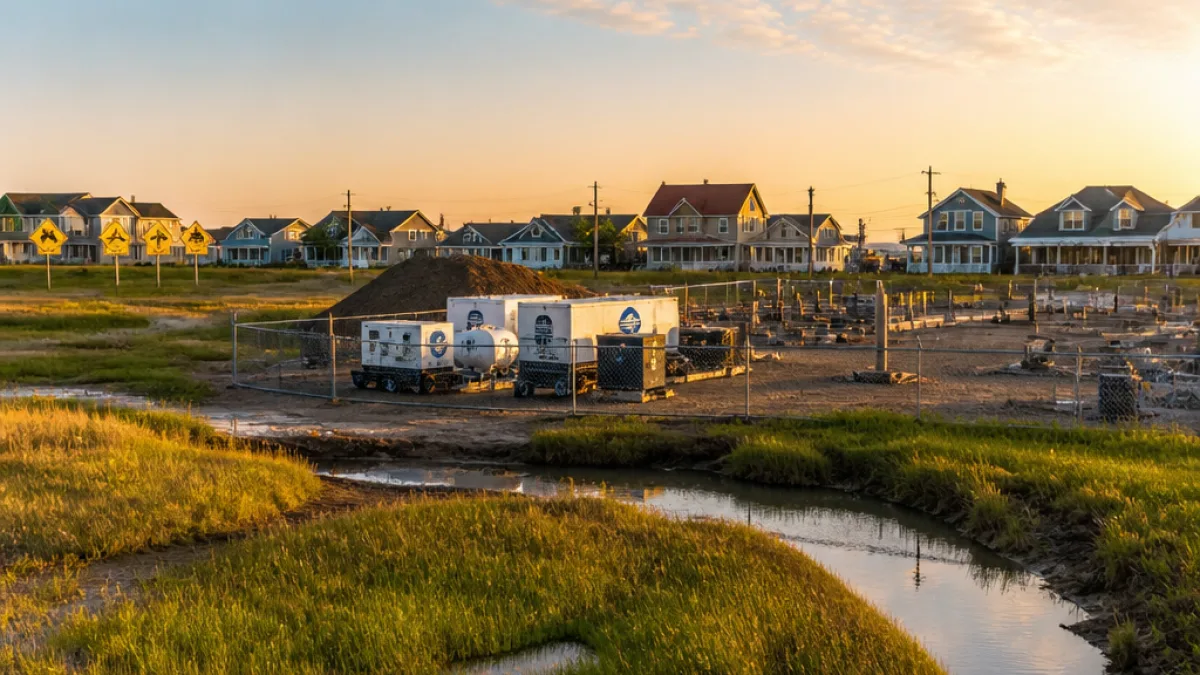
The New Brunswick Energy and Utilities Board has approved construction of a new gas- and diesel-fired generating plant in Centre Village, a hamlet in the municipality of Tantramar on the Isthmus of Chignecto, provoking immediate resistance from local residents and Indigenous communities concerned about environmental risks and the province’s direction on energy policy.
Where the plant will sit
The proposed facility is part of the provincial project known as Renewables Integration and Grid Security (RIGS) and will be developed, built, owned and operated by ProEnergy, a U.S. company headquartered in Sedalia, Missouri. NB Power, the provincial Crown corporation responsible for electricity planning and generation, says RIGS is intended “to meet New Brunswick’s growing electricity needs while keeping power reliable, affordable, and environmentally responsible.”
“to meet New Brunswick’s growing electricity needs while keeping power reliable, affordable, and environmentally responsible.”
Centre Village sits on the narrow Isthmus of Chignecto, the land bridge linking Nova Scotia to the rest of Canada. The area includes extensive salt marshes—the largest in the country—and wetlands that local residents and environmental advocates describe as ecologically sensitive and prone to flooding.
Local and Indigenous opposition
Opposition to the plant emerged almost immediately. Residents in the area say placing a fossil-fuelled generating station on the isthmus risks further harm to a landscape already vulnerable to rising seas and storm surge. They argue the project appears to contradict broader environmental protection goals for the region.
Indigenous groups have also raised concerns. The North Shore Mi’kmaq Tribal Council and Elsipogtog, one of the largest Mi’kmaq communities in the area, have made their objections known. The source material indicates clear unease from Mi’kmaq authorities, though specific legal or consultation processes underway were not detailed in the available information.
Questions about climate, location and process
Critics point to several interlocking issues: the climate vulnerability of the isthmus, the ecological value of the salt marshes, and the decision to contract a foreign private company to build and operate a vital piece of provincial energy infrastructure. Those concerns feed a wider debate in New Brunswick about energy independence, environmental stewardship and democratic oversight of public assets.
Centre Village and the surrounding coastal areas have previously been at the centre of political discussions about protecting the isthmus from sea-level rise and coastal erosion. The isthmus is described in the reporting as politically contentious, with New Brunswick and Nova Scotia engaged with the federal government over the cost of protection measures. Locating a fuel-burning plant in such a place has been criticised as short-sighted by residents who worry it may exacerbate the very risks that require protection.
Who the main actors are
| Actor | Role | Position (reported) |
|---|---|---|
| NB Power | Provincial Crown utility | Proponent of RIGS; describes goal as reliable, affordable, environmentally responsible |
| ProEnergy | U.S. developer/operator | To develop, build, own and operate the plant |
| Local residents | Community stakeholders | Opposed; cite ecological sensitivity and flood risk |
| North Shore Mi’kmaq Tribal Council & Elsipogtog | Indigenous stakeholders | Opposed; raised concerns |
Broader implications for New Brunswick energy policy
Observers say the decision highlights perceived tensions in provincial policy: the reliance on fossil-fuelled backup generation even as governments and utilities talk about integrating renewables and improving grid security; the outsourcing of infrastructure to an international private operator; and what some see as limited public debate about long-term strategy.
Supporters of the RIGS approach argue that additional dispatchable generating capacity can help stabilise the grid and support integration of intermittent renewable sources. Opponents contend that placing new gas- and diesel-fired capacity in an environmentally fragile area and outsourcing control to a private foreign company raises unacceptable environmental and governance costs.
Next steps and public interest
The Energy and Utilities Board’s approval marks a formal regulatory milestone, but the reporting does not detail timelines for construction, further permitting, or any outstanding consultation steps. Residents, Indigenous leaders and environmental groups may pursue additional avenues to challenge or influence the project as it moves forward.
For communities on the Isthmus of Chignecto, the decision will be watched closely: it touches on the preservation of sensitive coastal ecosystems, the province’s approach to climate-related risks, and how New Brunswick balances local voices with provincial infrastructure needs.
- Location: Centre Village, Tantramar (Isthmus of Chignecto)
- Developer/operator: ProEnergy (U.S.-based)
- Project: Renewables Integration and Grid Security (RIGS) — gas- and diesel-fired generating plant
Provincial officials and NB Power may be contacted for further comment as the project proceeds; Indigenous communities and local residents have already signalled ongoing concern about the plant’s environmental and social impacts.