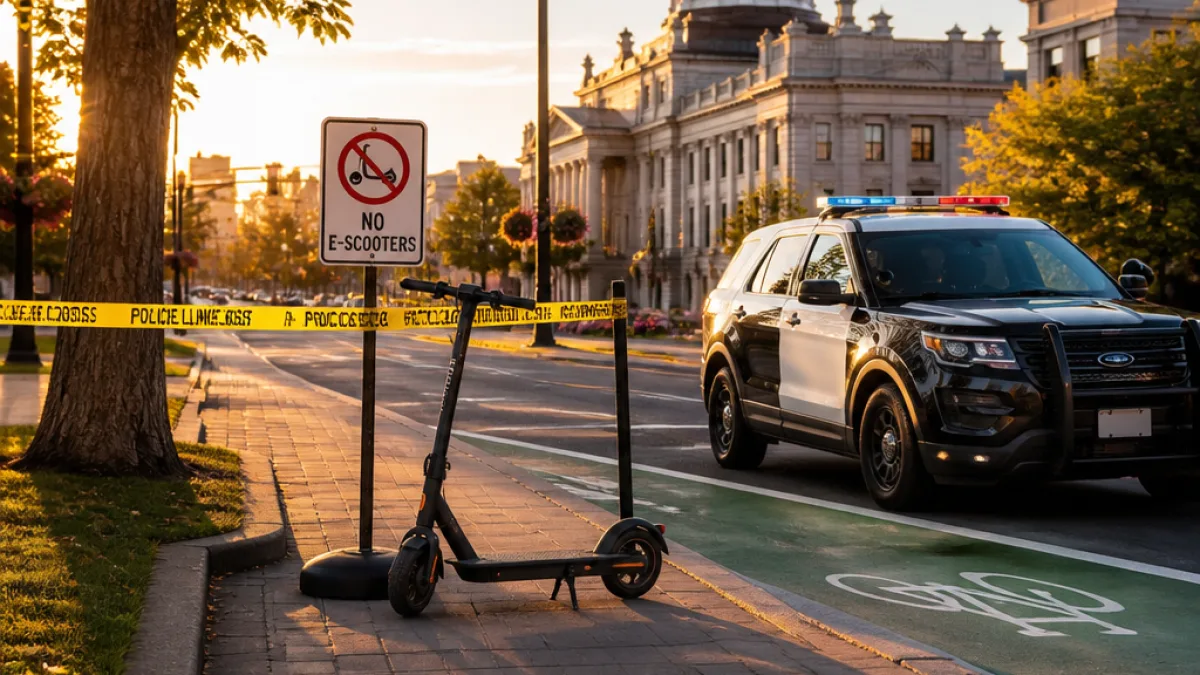
The City of Kingston is reminding residents and visitors that electric scooters remain illegal on municipal roads, sidewalks, trails and other public property after council opted not to join Ontario’s provincial e-scooter pilot program.
Policy stance and enforcement
In a news release this week, city officials and Kingston Police reiterated that the municipality has not opted into the province’s nearly decade-long pilot that permits two‑wheel electric scooters capable of travelling up to 24 km/h on flat ground where a local government has approved them. Kingston’s current approach means such devices are not permitted in public spaces and can be seized by police.
“The City of Kingston and its police force are reminding residents that it has not opted into Ontario's e-scooter pilot project,”
The advisory warns people found riding e-scooters illegally face charges, fines and seizure of the device. The city also noted a recent enforcement incident in which someone was stopped riding an electric scooter at 77 km/h — a speed well beyond the pilot’s equipment limit and one that could classify such a vehicle as a motor vehicle under provincial rules, with all the attendant licensing, registration and equipment requirements.
What Kingston is reviewing
Municipal staff are conducting a review of so‑called micromobility rules to bring recommendations to council. Micromobility covers a range of low‑speed personal transport modes, including e-scooters, bicycles, skateboards and rollerblades. The review follows broader provincial policy that allows individual municipalities to decide whether to participate in the pilot.
- Current legal status in Kingston: e-scooters and several other electric devices are prohibited on public property.
- Devices over the pilot speed or weight thresholds could be treated as motor vehicles.
- Staff will present proposed bylaw changes to council after the review is complete.
Kingston’s downtown, waterfront and recreational trail network are busy corridors shared by pedestrians, cyclists, residents and students from nearby post-secondary institutions. That mixed use is a central concern for city staff and police as they weigh safety, accessibility and enforcement implications of any future rule changes.
What is allowed — and what is not
The city’s release clarified several categories of devices currently disallowed in public spaces. To help readers understand the distinction, the following table summarises the municipal position as outlined by staff:
| Device type | Kingston status |
|---|---|
| Standard e-scooters (pilot-compliant) | Not permitted on public roads, sidewalks or trails |
| E-cargo bikes over 55 kg | Not permitted |
| Electric skateboards and hoverboards | Not permitted |
| Low-speed electric vehicles resembling small cars | Not permitted |
Municipal officials say the intent of the review is to balance safety for pedestrians and vulnerable road users with evolving transportation choices, including for short urban trips. In other Ontario municipalities that have opted into the pilot, regulators have grappled with helmet and age requirements, parking and clutter from shared-scooter fleets, and collision reporting.
For Kingston residents, the immediate consequence is straightforward: until council changes the rules, e-scooters remain illegal. Police enforcement can include fines and seizure, and riders on high-powered devices could be subject to vehicle‑related regulations if their scooters exceed provincial speed or weight thresholds.
The city has asked residents to stay informed through official communications and to await the staff report to council, which will outline options and recommended bylaw changes. For now, Kingston’s streets, sidewalks and trails remain off-limits to e-scooters and several other types of electric micromobility devices.