Yoruba traditions on display at Riverbank Discovery Centre
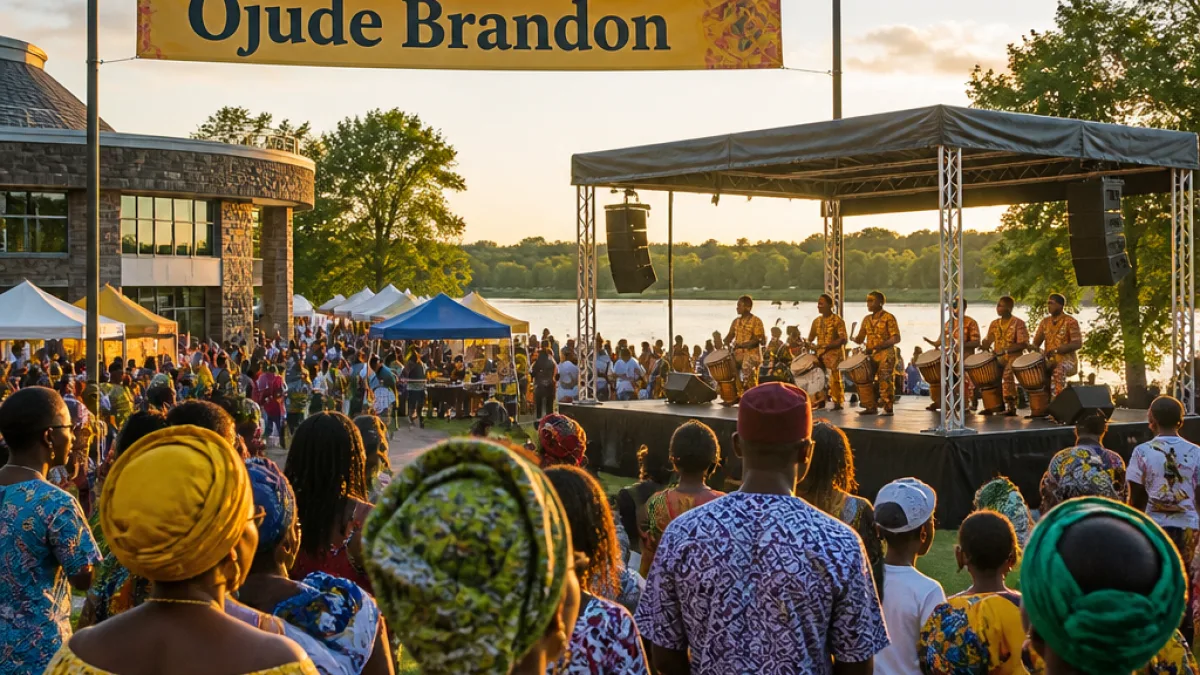
Hundreds of people gathered at the Riverbank Discovery Centre on Aug. 8 as members of the Yoruba Heritage Association of Brandon staged the city’s first "Ojude Brandon" festival, presenting music, dance, food and traditional attire drawn from a centuries‑old celebration in south‑western Nigeria.
The event was organised as a local replication of Ojude Oba, a traditional festival of the Yoruba people, whose homeland is centred in south‑western Nigeria and extends into parts of Benin and Togo. The association said the day was intended both to preserve Yoruba cultural practices and to introduce younger generations in Brandon — and the wider community — to those traditions.
Attendance exceeded expectations
Organisers said they had planned for roughly 200 people but saw the crowd grow to about 300, a turnout they described as beyond expectations. Traditional drumming and dancers entertained guests while tables featured cultural displays and food.
- What: Ojude Brandon — inaugural festival celebrating Yoruba history and culture
- Where: Riverbank Discovery Centre, Brandon
- Attendance: Organisers planned for 200; reported about 300
- Outcome: Association intends to hold the festival annually
Organisers emphasise preservation and community
Moses Gbenga Owolewa, president of the Yoruba Heritage Association of Brandon, said the local festival reflects the broad geographic reach of the Yoruba people and provides an opportunity to pass traditions on to the next generation. The association plans to make Ojude Brandon a recurring event.
“The Yoruba community represented at the celebration reflects the broad geographical reach of Yoruba people,” he said. “We actually planned for about 200 people, but we are about 300. That’s really beyond the expectation.”
While the mood at the Riverbank was celebratory, organisers also spoke candidly about the practical challenges of staging the event. Owolewa said financing was a key obstacle: initial hopes for external sponsorship did not materialise, so members of the association raised funds within the community to cover costs.
Local significance and future plans
The festival’s successful turnout has local significance beyond the day itself. Brandon is home to a growing and diverse immigrant population, and community events such as Ojude Brandon create visible opportunities for cross‑cultural exchange. For attendees of Yoruba descent, the festival offered a connection to heritage through clothing, music and ritual practice. For others, it provided a chance to learn about the history and contemporary life of a large West African ethnic group.
| Planned | Reported |
|---|---|
| 200 people | ~300 people |
Organisers said they want to build on the first year’s momentum. Making Ojude Brandon an annual fixture, they said, will require continued community support and stronger partnerships with local organisations and potential sponsors. The association’s experience this year — relying on internal fundraising when outside sponsorship fell through — highlights the financial vulnerability of grassroots cultural programming.
Community advocates and cultural organisers say that when such events receive stable backing, the benefits extend beyond celebration: they can boost cultural tourism, strengthen ties among newcomers and long‑time residents, and provide educational opportunities for local schools and institutions.
For now, the Yoruba Heritage Association of Brandon has marked the beginning of a new tradition in the city. Organisers described the inaugural day as a successful first step and expressed hope that future Ojude Brandon festivals will grow in scale and resources while maintaining the cultural continuity that motivated the event.