Union mandate comes as branches report heavy summer use
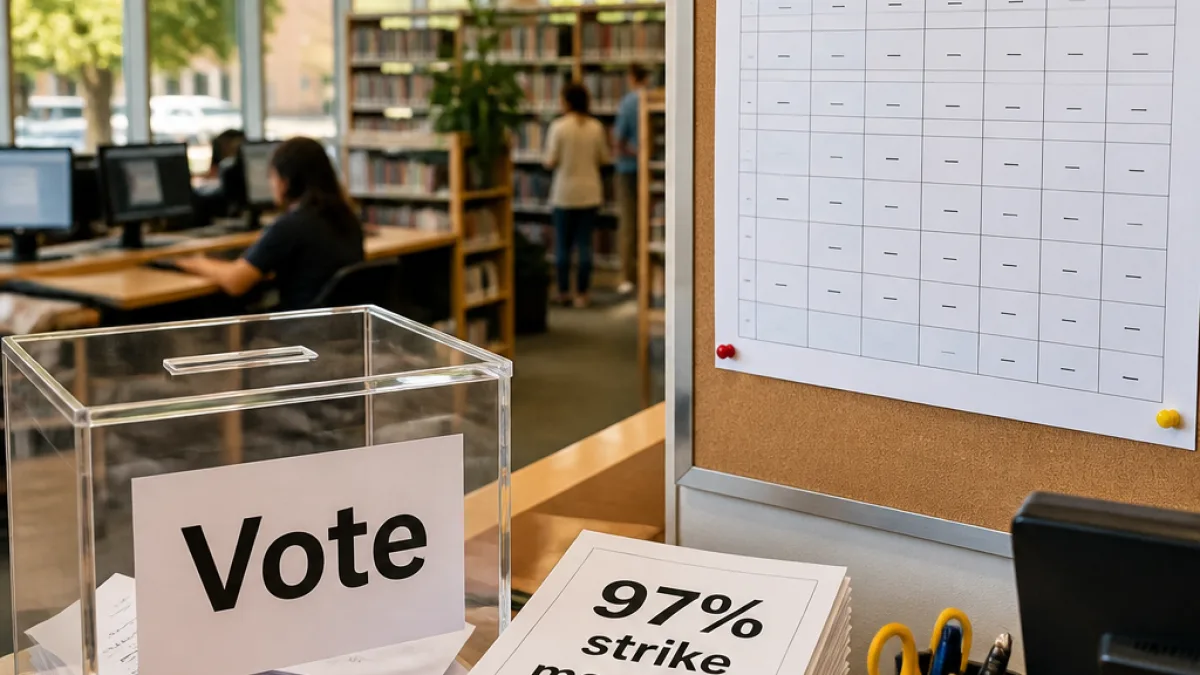
Nearly all Brampton Library employees who voted have backed a strike mandate in a labour dispute that centres on wages, scheduling and understaffing. The Canadian Union of Public Employees (CUPE) Local 1776 announced on June 26 that 97 per cent of voting members authorised the action as bargaining continues after the collective agreement lapsed earlier this year.
CUPE Local 1776 represents about 180 full- and part-time employees across Brampton’s nine library branches. While a strike mandate gives the union the legal authority to call a walkout, both library management and the union say they hope to resolve outstanding issues at the negotiating table rather than on a picket line.
Branches remain open as talks and conciliation continue
Brampton Library chief executive Todd Kyle told The Pointer that all nine branches are open and operating normal hours. He noted that this summer has been one of the system’s busiest, with heavy attendance at the library’s summer reading club.
“The library did comparatively well in the last budget process in terms of compared to other municipally funded services,”
Kyle said the system is concentrating on improving services for the public while bargaining and conciliation proceed. The library’s comments indicate management is preparing to maintain service levels even as workers pursue stronger bargaining positions.
Union cites inflation, population growth and staff shortages
The union says the strike mandate reflects years of frustration over pay that has not kept pace with inflation and with Brampton’s rapid population growth. CUPE representatives also point to staffing levels that leave branches short when employees are sick or otherwise absent — forcing remaining workers to absorb extra shifts or leading to cancelled programs such as makerspace sessions.
- Primary union concerns: wages lagging behind inflation and population-driven service demand.
- Operational problems cited: scheduling, staff shortages, cancelled programming.
- Scope: about 180 employees across nine branches; the collective agreement expired earlier this year.
Municipal funding growth modest despite rising costs
Library operations are funded through property taxes. City budget figures presented for recent years show incremental increases in operating funding for Brampton Library:
| Year | Library operating funding |
|---|---|
| 2024 | $21.4 million |
| 2025 | $22.2 million |
| 2026 | $22.6 million (1.4% increase) |
Those figures show gains in budgeted support, but union officials argue the modest increases have not matched inflationary pressures or the demands of a growing city. Kyle countered that the library fared better than many other municipally funded services during the most recent budget process.
What’s next for bargaining and the community
Both sides report that conciliation efforts are underway and that bargaining remains active. For now, Brampton residents can continue to access services at local branches and participate in library programming.
Still, if the union were to convert its strike mandate into a work stoppage, the impacts could be felt across the city — from closures or reduced hours at branches to cancelled events and services that support children, newcomers and seniors. With summer programming in high demand, the timing of any labour disruption would have immediate consequences for families and community groups that rely on library resources.
As talks proceed, Brampton councillors and municipal staff will be watching both for potential service interruptions and for any budget or staffing decisions that may be necessary to resolve the dispute. The coming weeks will determine whether negotiations deliver a deal that addresses wage concerns and staffing shortfalls, or whether the union moves from a mandate to a strike.