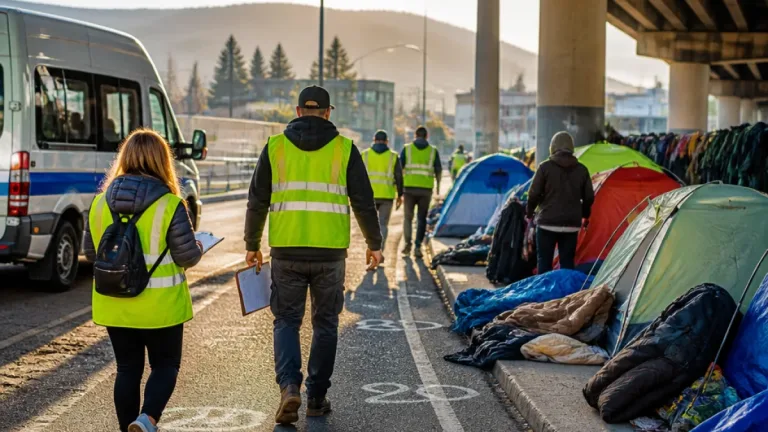
Abbotsford’s latest point-in-time count found a notable decline in the number of people experiencing homelessness, the first drop in the local population since 2011 and a development city officials say stems from co‑ordinated efforts with provincial and community partners.
Numbers and where people were found
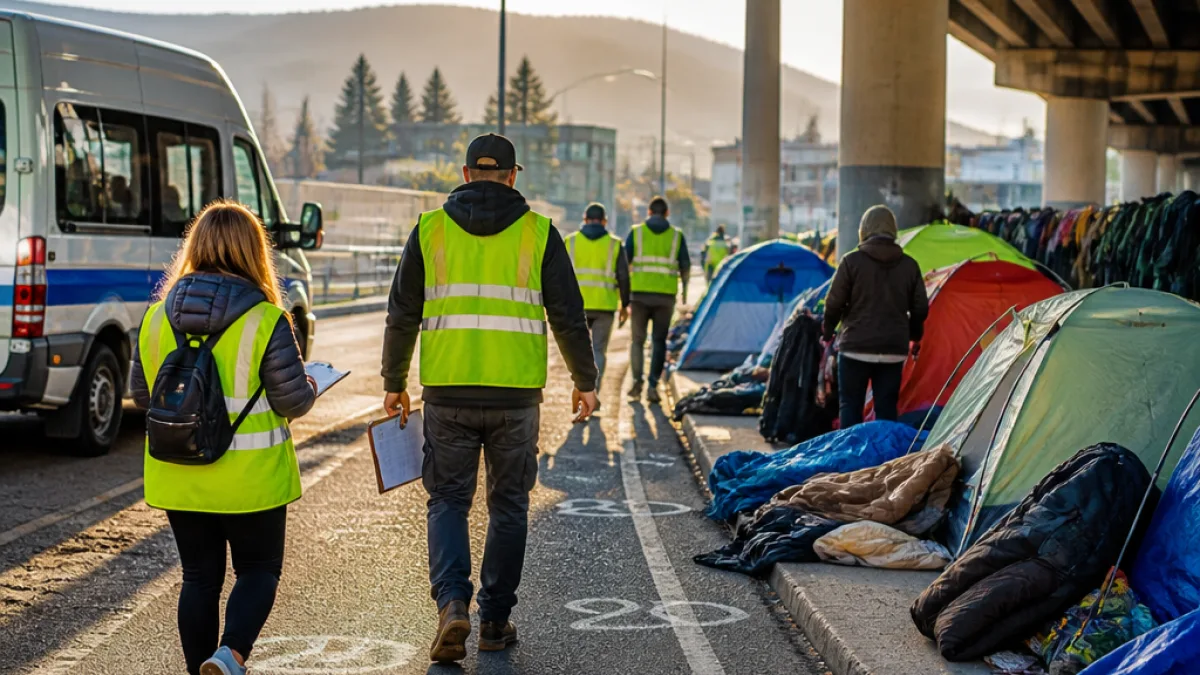
The count, conducted Oct. 7 by the Mennonite Central Committee on behalf of the City of Abbotsford, recorded 521 people experiencing homelessness — a reduction of 133 individuals, or 20.7 per cent, compared with the 2025 count. City staff and the non-profit group said the 2026 result reflects the combined effects of encampment closures, rehousing efforts and supports provided by BC Housing and local service agencies.
- Total counted: 521
- Change from 2025: down 133 people (20.7%)
- Date of count: Oct. 7, 2026
The count also included a breakdown of where people were staying at the time of the survey:
| Location type | Number of people |
|---|---|
| Unsheltered | 248 |
| Emergency shelters | 223 |
| No fixed address at hospital | 28 |
| Transitional housing | 22 |
What changed: encampments and rehousing
The city attributed the reduced count in part to recent closures of encampments at Cole Road, McCallum Road, Peardonville Road and Whatcom Road. According to municipal statements, many people who had been living at those sites were transitioned into other housing options with assistance from BC Housing, the provincial government and local organizations.
“We are grateful for the province’s continued investment through BC Housing, and for the strong collaboration among our government partners and local service providers. These organizations and their frontline staff do tremendous work every day helping people access housing and the support they need.”
Mayor Ross Siemens made the remark in the city’s release, while also stressing that the lower number does not signal an end to the challenge. He said the municipal homelessness action plan will be reviewed and updated to continue developing strategies to reduce homelessness in Abbotsford and across B.C.
Local context and next steps
For residents, a smaller homeless count may reflect concrete changes on local streets where encampments have been cleared and supports expanded. At the same time, the data show a substantial number of people remain unsheltered — nearly half of the count — indicating persistent gaps in long‑term housing and supports.
Point‑in‑time counts provide a snapshot rather than a complete measure of housing need. They are influenced by timing, methodology and who is available to be counted on a particular day. The Mennonite Central Committee carried out the count in Abbotsford; municipalities and service agencies typically use these results to guide local planning, funding requests and program decisions.
City staff have said the homelessness action plan update will build on partnerships with BC Housing and community agencies to expand housing placements, supports for people exiting encampments and wraparound services. Abbotsford’s statement did not include a timeline for the plan revision or disclose the specific number of people moved from encampments into housing, only that many were transitioned into other forms of housing with partner support.
As municipal leaders follow up on the count, residents and service providers will be watching for detailed targets, budgets and timelines that translate the decline in this year’s count into sustained reductions and permanent housing outcomes.
This deeper look at the numbers and the policy response will be central to Abbotsford’s work in the months ahead as the city seeks to balance growth, community safety and supports for people experiencing homelessness.