
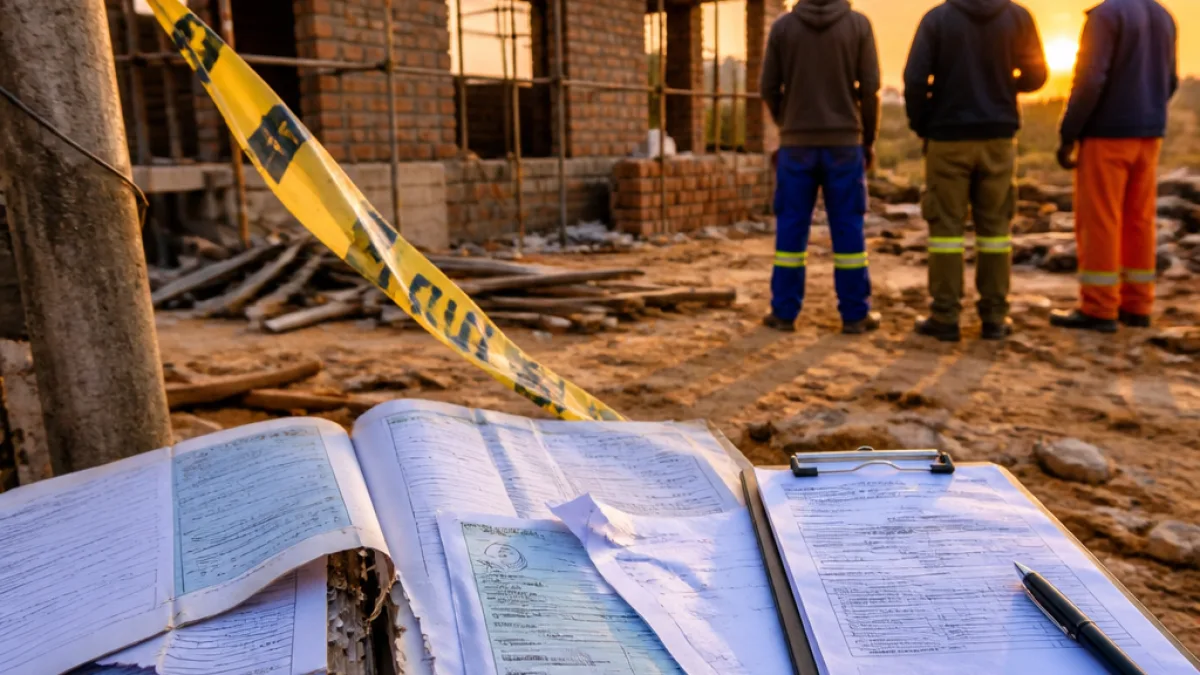
A Gauteng school building project in Soshanguve is at the centre of fresh criminal allegations after a contractor lodged an affidavit with the South African Police Service (SAPS) claiming R16.9 million was paid for work that never took place. The complaint relates to the R116 million Semphato Secondary School project and names provincial officials, consultants and contractors, according to the affidavit.
Whistle‑blower flags discrepancies to the department
Nhlanhla Mkhize, owner of Mkhize Gcwabe Properties (MGP), says he warned the provincial education department more than a year ago after being brought into the project in January 2024 to assist the original contractor, Yaweh 1 Construction and Projects, shortly before that contractor was terminated. Mkhize says his concerns were not properly investigated despite officials promising to involve the department’s risk management unit.
In his affidavit — lodged with SAPS in connection with the Semphato project — Mkhize alleges four separate instances of theft totalling R16.9m. The claims include alleged forgery, corruption, theft by false pretence and conspiracy to commit crimes, and centre on payment certificates that reportedly authorised payments for work that was not on site.
“The claimed progress figure was vastly different from our own audit at feasibility stage,”
The company’s internal assessment of the project’s physical progress and expenditure conflicted sharply with figures presented at a technical meeting when MGP resumed work on 17 January 2024. The department reportedly presented the project as 55% complete with expenditure of R48.4m, while MGP’s assessment placed progress at 23.48% and expenditure at R31.4m — a gap Mkhize says amounts to R16.9m.
Alleged payments for non‑existent work
Mkhize’s affidavit lists categories where he says the department paid for works that could not be found on site. Among these is more than R6.1m allegedly paid for paving, roads and parking, yet when MGP arrived in 2024 there was no paving work visible. The affidavit also cites payments claimed for preliminaries, roof sheeting and trusses, and masonry.
He says 71% of the budget for paving, roads and parking was reportedly paid between September 2021 and the end of 2022, despite there being no paving bricks on site when his company took over.
| Alleged category | Detail / amount noted in affidavit |
|---|---|
| Overall alleged irregular payments | R16.9m (total across four alleged instances) |
| Paving, roads and parking | More than R6.1m allegedly paid; 71% of budget paid Sept 2021–end 2022, but no paving on site in 2024 |
| Other categories named | Preliminaries; roof sheeting and trusses; masonry (amounts not specified in affidavit extract) |
What Mkhize says happened on site
According to the affidavit, the discrepancy between claimed progress and MGP’s audit became clearer as the new team examined payment certificates and the physical state of the project. Mkhize questions how work could have been measured and approved for quality when, in his words, there was no evidence of the work having been done.
He alleges that payment certificates were used to facilitate payments for stages of work that did not exist — a claim that, if substantiated, would point to serious procurement and project‑management failures and possible criminality.
Officials and the risk unit
Mkhize told officials of his concerns more than a year ago and says departmental staff promised to involve the risk management unit. He alleges no meaningful investigation followed that promise. The affidavit remains the basis for a SAPS complaint, but there has been no public update in the material provided about subsequent departmental action or the progress of any police probe.
The matter raises questions about how payments on large school building projects are authorised and audited, and whether existing oversight mechanisms detected or prevented the alleged irregularities.
- Who is involved: Mkhize Gcwabe Properties, Yaweh 1 Construction and Projects, Gauteng education department officials and consultants.
- Where: Semphato Secondary School, Soshanguve, Gauteng.
- Allegations: Forgery, corruption, theft by false pretence, conspiracy to commit crimes; R16.9m in disputed payments.
At the time of reporting, there was no additional detail in the affidavit provided about the identity of all departmental officials or consultants implicated, nor public confirmation from the Gauteng education department about steps taken since the complaint was lodged.
The allegations are significant for parents and learners at Semphato Secondary, where construction delays and disputed payments could affect the school’s readiness to provide adequate facilities. They also feed into wider concerns about transparency and accountability in the administration of school infrastructure funds across the province.
I requested comment from the Gauteng education department and from parties named in the affidavit; those responses will be reported when received. For now, the complaint lodged with SAPS remains the formal route by which the whistle‑blower has sought to have the matter investigated.
What residents can do: Parents and community stakeholders should ask the school governing body and the district office for copies of project completion reports and payment certificates. Any community member who suspects misuse of school funds can make representations to the provincial education department, the office of the Auditor‑General, or report matters to SAPS.
This story will be updated as the department, SAPS or other oversight bodies respond to the allegations.













