
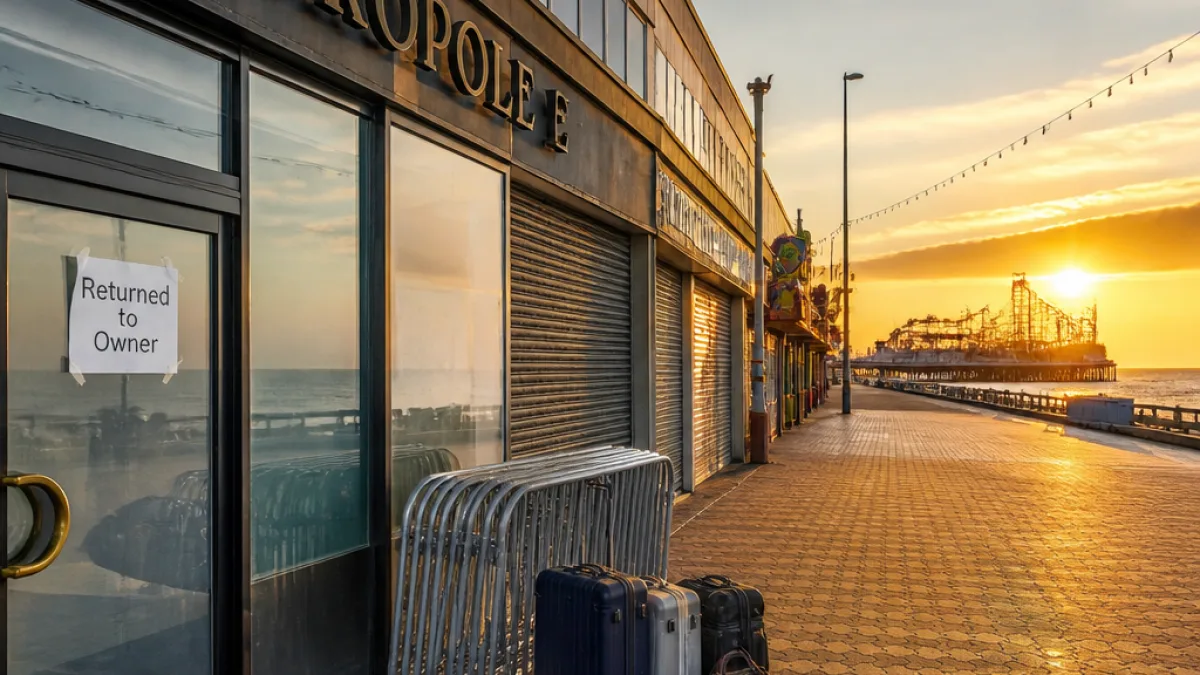
The UK Home Office has announced that three hotels previously used to accommodate asylum seekers have been handed back to their owners, the department said. The Metropole Hotel on Blackpool Promenade, the Britannia Ashley Hotel in Hale, Altrincham, and the Chimney House in Sandbach, Cheshire, were all returned as the government moves to replace hotel placements with other accommodation options.
Government says move will save public money
Border Security and Asylum Minister Anna Turley framed the closures as part of a cost-saving drive and a wider commitment to cease using hotels for asylum accommodation by 2029. The government has signalled it intends to repurpose former military sites as alternative centres to house people seeking asylum.
"For too long, communities have watched hotels at the centres of their towns and cities become symbols of a broken asylum system," Anna Turley said.
The closures were disclosed alongside a pattern of earlier handbacks. Eleven asylum hotels were closed in April and a further 20 in June, according to reporting. At the peak of the scheme in 2023, some 400 hotels were in use for asylum accommodation.
Local reactions and political context
Local MPs who had campaigned against the use of certain hotels welcomed the returns. Chris Webb, Labour MP for Blackpool South, had campaigned to stop asylum placements at the Metropole on safety and community-service grounds, saying residents had sought the hotel’s closure. He said the hotel had been taken for use under a previous government and that earlier promises about temporary stays had been broken.
"Residents told me they wanted this to close. We were promised back in 2021 this would only be for three months, that promise was broken," Chris Webb said.
The Britannia Group, which operates hotels including several in Blackpool and Hale, said it was "reviewing its options" regarding the future use of the Blackpool and Hale properties.
How many hotels and what next?
The government’s action forms part of a stepwise reduction in hotel use for asylum accommodation. The announced closures follow earlier rounds in April and June. Officials say moving asylum seekers into alternative accommodation will both reduce costs and restore town-centre hotels to the hospitality market.
- Properties returned: Metropole Hotel (Blackpool Promenade), Britannia Ashley Hotel (Hale, Altrincham), Chimney House (Sandbach, Cheshire).
- Policy aim: end the use of hotels as asylum accommodation by 2029.
- Alternatives signalled: former military sites and other designated centres.
| Hotel | Location | Current status |
|---|---|---|
| Metropole Hotel | Blackpool Promenade | Handed back to owner |
| Britannia Ashley Hotel | Hale, Altrincham | Handed back to owner |
| Chimney House | Sandbach, Cheshire | Handed back to owner |
Home Office figures cited in reporting show a substantial reduction from the scheme’s 2023 peak. The government maintains the shift will relieve pressures on local services where hotels had been used and will direct spending saved towards other asylum-system reforms.
What advocates and critics say
Campaigners who opposed hotel use argue that town-centre properties were ill-suited to long-term residence by asylum seekers, who often include vulnerable families. MPs such as Chris Webb said closures addressed safety concerns and the strain on local services. Ministers argue the change will be more cost-effective and orderly as alternative accommodation is brought online.
The Britannia Group’s statement that it is "reviewing its options" suggests owners are weighing reopening, repurposing or selling assets as they are returned. Local economies that depended on hotel trading may welcome a return to normal hospitality operations, but the transition raises questions about the availability and suitability of alternative accommodation for people seeking asylum while their claims are processed.
As the UK government progresses towards its stated 2029 deadline, further closures are likely. Observers will watch for details on planned alternative sites, timelines for transfers, and how the government will meet the needs of asylum seekers during the transition.
(Reporting based on BBC coverage.)










