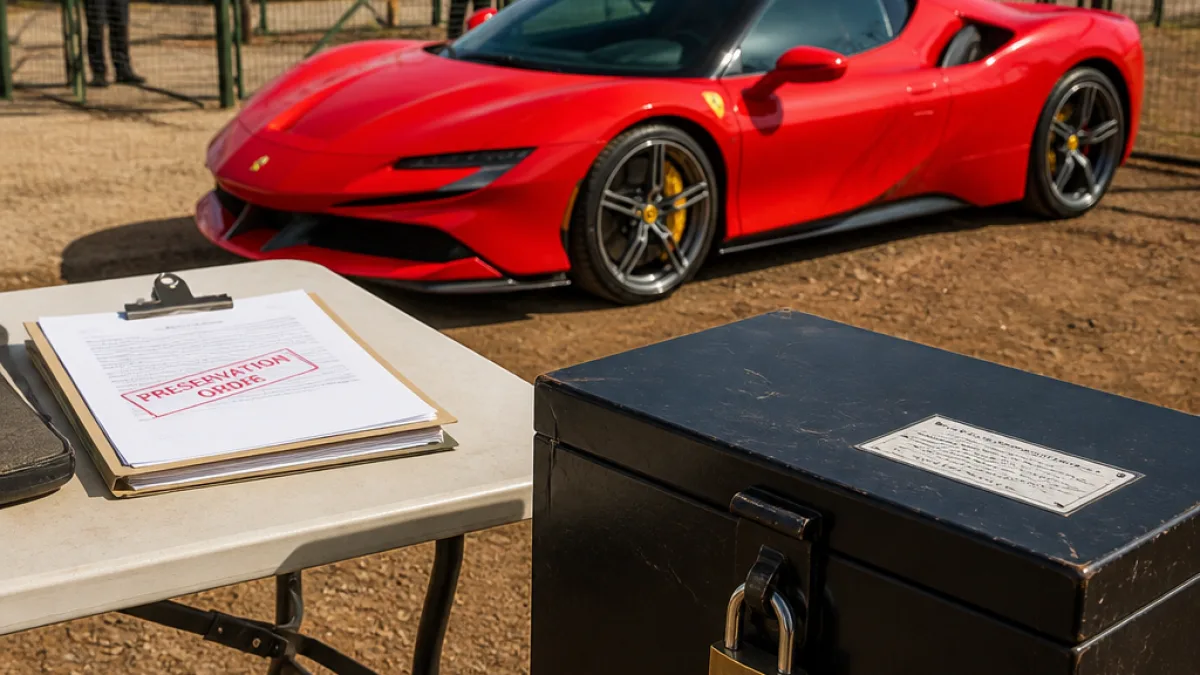
The Special Tribunal has authorised the sale of a Ferrari SF90 Stradale connected to the ongoing investigation into alleged procurement irregularities at Tembisa Hospital, the court confirmed this week.
What the tribunal decided
Judge Bernard Makgabo Ngoepe, president of the Special Tribunal, dismissed applications by Hangwani Morgan Maumela, the MHR Maumela Family Trust and associates who sought to block the curator’s request to sell the vehicle. The application to sell was brought by curator Jacobus Gideon Louw van Wyk, acting under preservation orders issued while the main case is finalised.
The curator told the tribunal the Ferrari was incurring ongoing costs — for storage, insurance and maintenance — and that converting the asset to cash would better preserve its value and provide liquidity to manage other assets under curatorship.
"The sale was necessary to protect the value of the estate while the main case remains unresolved," the curator said in his application, according to court records.
Ownership dispute and alleged stratagem
Opponents to the sale argued the MHR Maumela Family Trust owned the Ferrari and that the vehicle would appreciate rather than depreciate. The tribunal examined evidence about the car’s title and ownership after the curator reported conflicting information. At one stage, the curator was told the vehicle belonged to Drive Time Auto CC, but Drive Time later confirmed it had no ownership rights.
Judge Ngoepe found that the trust had the vehicle registered in its name shortly before the application and that this registration ran counter to an earlier preservation order that prohibited any transfer of the Ferrari to another entity. The judge described the late registration as a manoeuvre aimed at frustrating the curator’s efforts to preserve and, if necessary, sell the asset.
Valuation and sale terms
The tribunal noted two independent valuations placing the car’s market value at about R10.2 million and R10.165 million. In a separate decision the Special Tribunal authorised that the vehicle be sold for not less than R9.5 million, with proceeds to be deposited into an interest-bearing account and used to maintain assets under curatorship while investigations continue.
| Item | Figure / detail |
|---|---|
| Valuations | R10.2 million and R10.165 million |
| Minimum sale price authorised | R9.5 million |
| Linked investigation | Alleged looting and procurement irregularities at Tembisa Hospital |
- Proceeds of the sale will be preserved in an interest-bearing account.
- The Special Investigating Unit (SIU) has welcomed the ruling, saying it helps protect asset value during investigations.
- The sale decision follows evidence of attempts to transfer or register the vehicle in ways inconsistent with preservation orders.
Wider probe and local impact
The Ferrari forms part of a cluster of luxury assets subject to preservation while the SIU and the Special Tribunal progress the larger inquiry into alleged wrongdoing involving Tembisa Hospital procurement. The SIU has framed the matter as part of investigations into the looting of state funds linked to the hospital; previous reporting places the wider probe in the context of allegations involving as much as R2 billion in irregular expenditure.
SIU acting head Leonard Lekgetho welcomed the tribunal’s decision, saying it showed the importance of practical steps to protect assets that are the subject of preservation orders. Lekgetho said the approach would avoid unnecessary ongoing costs and ensure assets linked to alleged corruption are managed for the benefit of the state and citizens.
For Tembisa residents, the outcome demonstrates that state processes can act to secure assets while investigations unfold — but it also keeps the spotlight on governance at a major regional hospital whose services affect thousands of patients. The sale will convert a high-value asset into guarded liquidity, but it does not determine the outcome of the underlying allegations against those named in the SIU inquiry.
The Special Tribunal’s order instructs that proceeds must remain preserved and be used strictly in accordance with the tribunal’s directions until the main application and any related litigation are concluded.
The matter remains before the tribunal and further court processes may follow as parties consider the judgment and next steps.