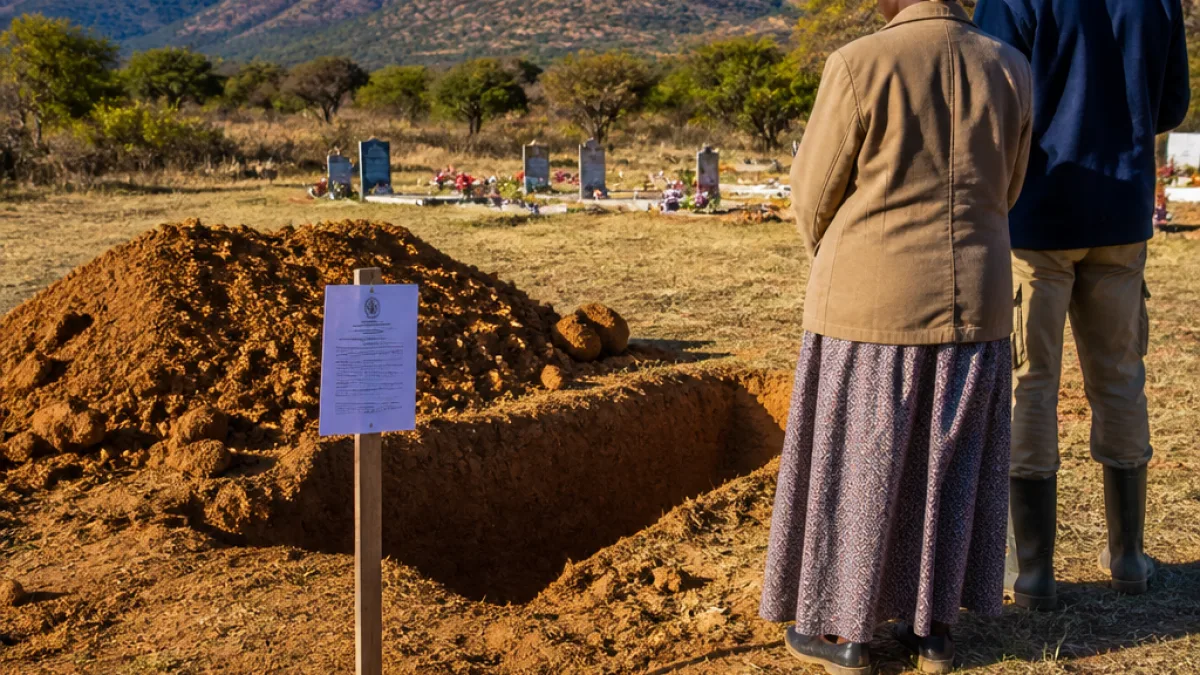
Pieter Meijer has spent nearly a decade attempting to have his father’s remains returned after his sister allegedly arranged an exhumation, according to reporting by News24 and Rapport. The family dispute has left relatives without closure and raised questions about the legal processes that govern exhumations in South Africa.
What the reporting says
News24’s account, using material supplied to Rapport, describes how Meijer and his wife Lorika have pursued the return of the remains for about ten years. The story does not set out the precise legal steps taken in the matter nor the current status of any police or court interventions, but it makes clear that the family conflict centres on an allegation that a sibling authorised or carried out an exhumation without the consent of other next of kin.
Family burial disputes are painful and protracted, and where allegations of an unlawful exhumation arise they often involve multiple agencies, including the South African Police Service, municipal cemeteries offices, and sometimes the courts. The News24/Rapport report focused on the human consequences for the Meijer family rather than listing court filings or criminal charges.
Legal and administrative context
Exhumations in South Africa are regulated by provincial and municipal by-laws and usually require formal permission from relevant authorities. Where relatives disagree, the matter can become a legal dispute that delays any decision about reburial or the return of remains. Where an exhumation is carried out without the required permissions, authorities may open an inquiry or a case at a police station, investigate whether by-laws were breached, and consider whether prosecution is appropriate. The News24/Rapport story does not state whether such a case was opened in this instance.
For many families, the immediate consequences are practical and emotional: inability to perform final rites, disruption of customary mourning practices, and the stress of lengthy legal processes. Meijer’s pursuit over a decade, as reported, illustrates how these cases can linger and affect several generations.
Practical steps for families facing similar disputes
- Contact the local municipal cemeteries office to establish whether any permissions were granted for exhumation.
- Consult with the South African Police Service if you believe an exhumation was unlawful; request information about any case opened.
- Seek legal advice early to clarify next-of-kin rights and remedies, including applications to the magistrate’s court if necessary.
- Where custom and customary law are relevant, speak to community or traditional leaders who may help mediate family disputes.
These are general steps family members can consider; they are not a substitute for professional legal counsel. The News24/Rapport coverage of the Meijer family highlights the complexity of such disputes but does not provide details of any legal filings or exact remedies pursued by Pieter.
Human impact in Limpopo communities
In Limpopo and other provinces, extended family structures and customary funeral practices mean that disagreements about burial arrangements have deep cultural resonance. Where a grave is disturbed, the sense of loss can be amplified by the perception that customary rites have been interrupted. Community leaders frequently play a role in mediating such disputes; however, when relations break down or unlawful action is alleged, recourse to the legal system often becomes necessary.
The News24/Rapport account gives a human face to a broader administrative and legal problem: when families cannot agree and formal permissions are unclear or absent, the consequences ripple outward, affecting mourning processes, property of the grave site and inter-family relationships.
Timeline (as reported)
| Event | Detail |
|---|---|
| Duration of dispute | Approximately ten years — ongoing attempt to secure return of remains |
| Principal parties | Pieter Meijer and his wife Lorika; the deceased's sister is reported to have ordered or carried out the exhumation (as per News24/Rapport) |
The News24 article supplies the primary reporting on the Meijer family’s case. It does not, in its public excerpts, list formal charges, court dates or the exact municipal offices involved.
Families in similar situations should document communications with municipal and police officials and seek legal advice to clarify rights and next steps. Where possible, community mediation may help avoid protracted legal battles. The case reported by News24 and Rapport is a reminder of how disputes over burial can persist for years and the emotional toll they take on relatives.
— Mpho Netshimbupfe, Limpopo correspondent