
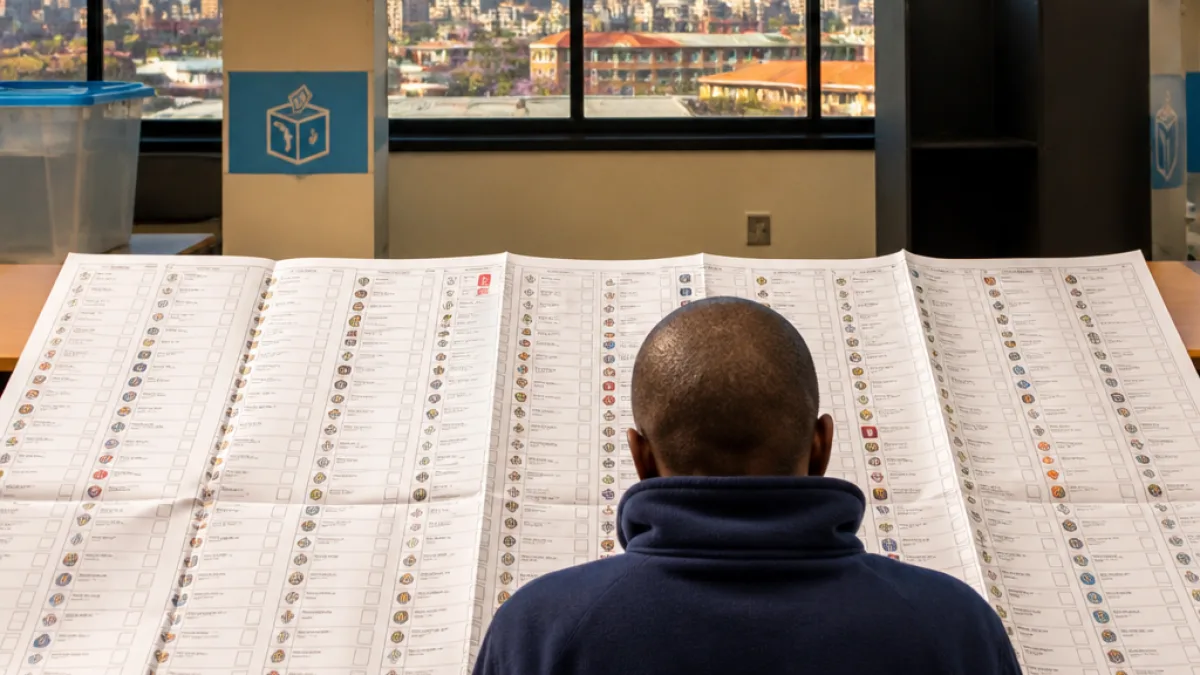
Gauteng voters face packed ballots as local politics fragments
Voters across Gauteng will see unusually long ballot papers in November after the Electoral Commission of South Africa (IEC) certified party candidate lists showing a total of 241 parties standing in the province’s three metropolitan municipalities.
Johannesburg will have the largest field with 82 parties, followed by Tshwane with 81 and Ekurhuleni with 78. The IEC’s lists also reveal very large candidate pools: just over 9,000 candidate-list entries in Johannesburg, 7,171 in Ekurhuleni and 6,774 in Tshwane. These numbers may include repeat entries where names appear in multiple positions on lists.
The breadth of participation reflects how unsettled metro politics in the province have become since the African National Congress lost outright control of Johannesburg, Tshwane and Ekurhuleni in 2016. Since then each council has been governed through coalitions, negotiated arrangements and periodic leadership changes.
- 241 — total parties certified across the three metros
- 82 — parties in Johannesburg
- 81 — parties in Tshwane
- 78 — parties in Ekurhuleni
The mayoral race in Johannesburg is already attracting national attention. Several well-known figures have been nominated by their parties to lead city lists:
- DA: Helen Zille, nominated as the party’s candidate for mayor;
- ActionSA: Herman Mashaba, seeking a return to the mayoral office he held from 2016 to 2019;
- EFF: Dr Tlaleng Mofokeng, a medical doctor and former UN special rapporteur;
- MK Party: Bongani Baloyi, former Midvaal mayor;
- Patriotic Alliance: Kenny Kunene;
- IFP: Mlungisi Mabaso.
The ANC had not finalised mayoral candidates for the three metros at the time the IEC certified the lists, the paperwork shows.
Local outfits increase ballot complexity
Beyond the major national parties, the certified lists show a swelling number of smaller, locally focused groups that are standing on issues tied to service delivery, rates, and community representation. Examples on the Johannesburg list include parties such as People of Joburg, Vuka SA, ImStaying, Change Party, Combat and the Shosholoza Progressive Party. Tshwane’s entries include Batho Pele Community Service Delivery Tshwane, the Progressive Tshwane Alliance, the Republican Conference of Tshwane and the Region 7 New Generation Party. In Ekurhuleni, lists feature community and ratepayer formations such as the Palmridge Community Forum, Merafong Civic Association and the Independent Ratepayers Association of SA.
For voters, the proliferation of parties means ballot papers may be lengthy and navigating candidate lists could be more demanding — particularly where many small formations stand on local wards and proportional representation lists. Electoral administrators and civil society have previously urged voters to check the final ballot layout and to study party manifestos and candidate lists before polling day to avoid confusion.
What this means for coalition dynamics
The crowded field increases the likelihood that no single party will secure an outright majority in any of the three metros, continuing the post-2016 pattern of coalition governments. That fragmentation gives smaller parties and independent groupings outsized influence during coalition negotiations and in determining mayoral coalitions.
Analysts note that such fragmentation can produce both instability and opportunities for local accountability: frequent coalition realignments have led to leadership changes and service delivery disruptions in the past, but they have also forced parties to negotiate policies and power-sharing arrangements at council level.
| Metro | Parties certified | Candidate-list entries |
|---|---|---|
| Johannesburg | 82 | 9,000+ |
| Tshwane | 81 | 6,774 |
| Ekurhuleni | 78 | 7,171 |
Political party strategists and civic groups will now shift focus to voter education and coalition planning. For ordinary residents, the immediate practical steps are straightforward: check the IEC website for official party and candidate lists, confirm voting station details on your green ID reference, and familiarise yourself with who is standing in your ward and on the party lists that will affect proportional representation.
The growing number of parties contesting these metros underscores how competitive and unpredictable Gauteng local politics are likely to be as voters head to the polls in November.












