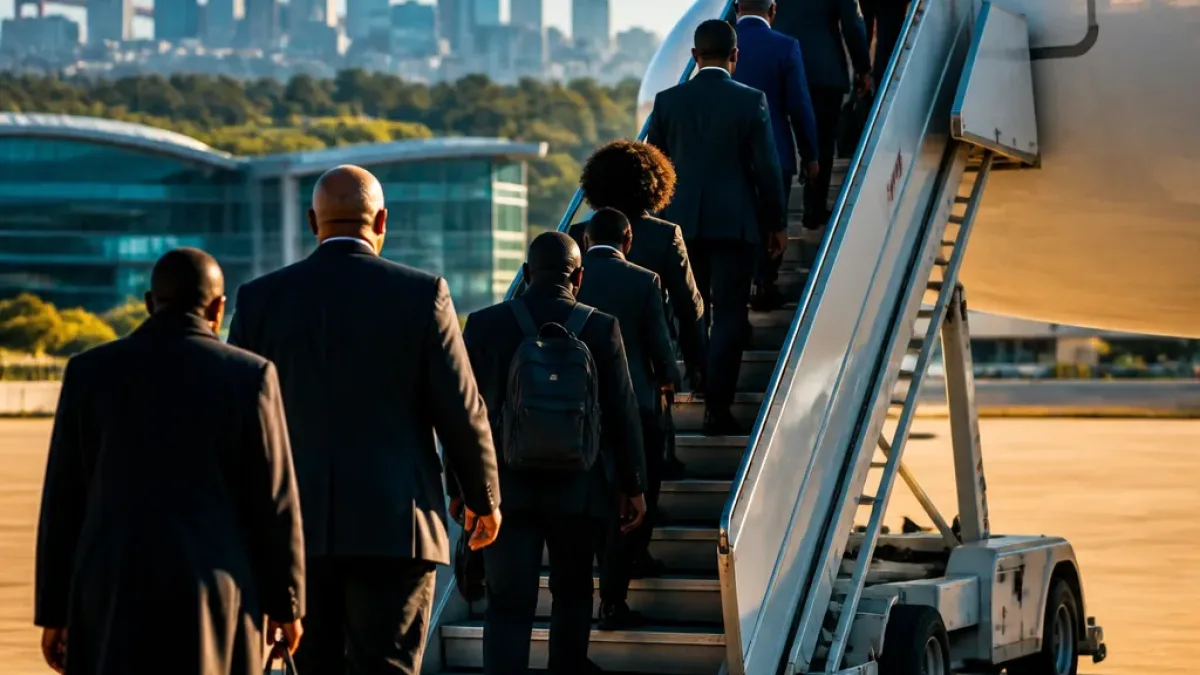
President Cyril Ramaphosa said he will lead a delegation to Silicon Valley after the local government elections to engage with leading artificial intelligence developers and technology companies, part of a push to better understand how AI could support growth, innovation and development in South Africa.
Who will go and why it matters
Ramaphosa said the delegation will include representatives from government, universities, business and young South Africans. He said the visit is intended to give the group direct access to technology developers so South Africa can assess how the fast‑moving field of AI operates and how it might be used to the country's advantage.
- Delegation composition: government, academics, business leaders and young people.
- Purpose: engage with AI companies and developers to understand capabilities and risks.
- Timing: planned after the local government elections.
"After the elections, I will be leading a group of people from government, from universities, young people and all, and business, and will take along some of my comrades as well to Silicon Valley, just to go and meet those big moguls of artificial intelligence, to get to understand exactly how it functions and how we can utilise it to our own benefit," Ramaphosa said.
Opportunities flagged by the President
According to Ramaphosa, AI offers significant opportunities in sectors that rely on information processing, research and communication. He highlighted potential uses including data analysis, trend identification, content translation and improving access to information — capabilities that could be valuable in South Africa's multilingual environment.
He also suggested practical benefits for specific professional groups, noting that AI could help journalists analyse large volumes of information and surface trends, and could assist with translation and information access across languages.
| Area | Potential AI contribution |
|---|---|
| Journalism and information | Analyse large datasets, identify trends, translate content |
| Research and development | Accelerate data processing and discovery |
| Public services | Improve access to information across languages |
Risks and the public interest
Ramaphosa also warned about the downsides of rapid AI advancement. He emphasised concerns over the spread of false or manipulated content, underscoring the technology's potential to affect public discourse and civic life. The visit to Silicon Valley, he said, aims not only to learn about the technology's promise but to better understand its risks.
The President noted the international scale of the issue: countries around the world are grappling with AI's growing influence on society, the economy and public life. By meeting companies and developers directly, the delegation seeks to return with clearer insights that can inform national policy, regulation and capacity building.
Context
Ramaphosa referenced South Africans with roots in Silicon Valley as an additional reason the trip could be instructive: prominent technology figures of South African origin were named as examples of the country's links to global tech. He framed the visit as an opportunity to learn from leading global AI actors while exploring ways to apply the technology to South Africa's needs.
How government will translate the trip's findings into concrete policy, regulatory proposals or public‑sector pilot projects was not detailed in the remarks. The delegation's planned engagement with companies and developers, however, indicates an intent to bring back technical and governance insights that could shape future decisions on AI deployment, oversight and how to mitigate harms such as disinformation.
As the country considers how to balance opportunity and risk, South Africans working in media, education, research and public service will be watching for concrete outcomes from the delegation that speak to language inclusion, data protection, digital skills and safeguards against manipulation.