
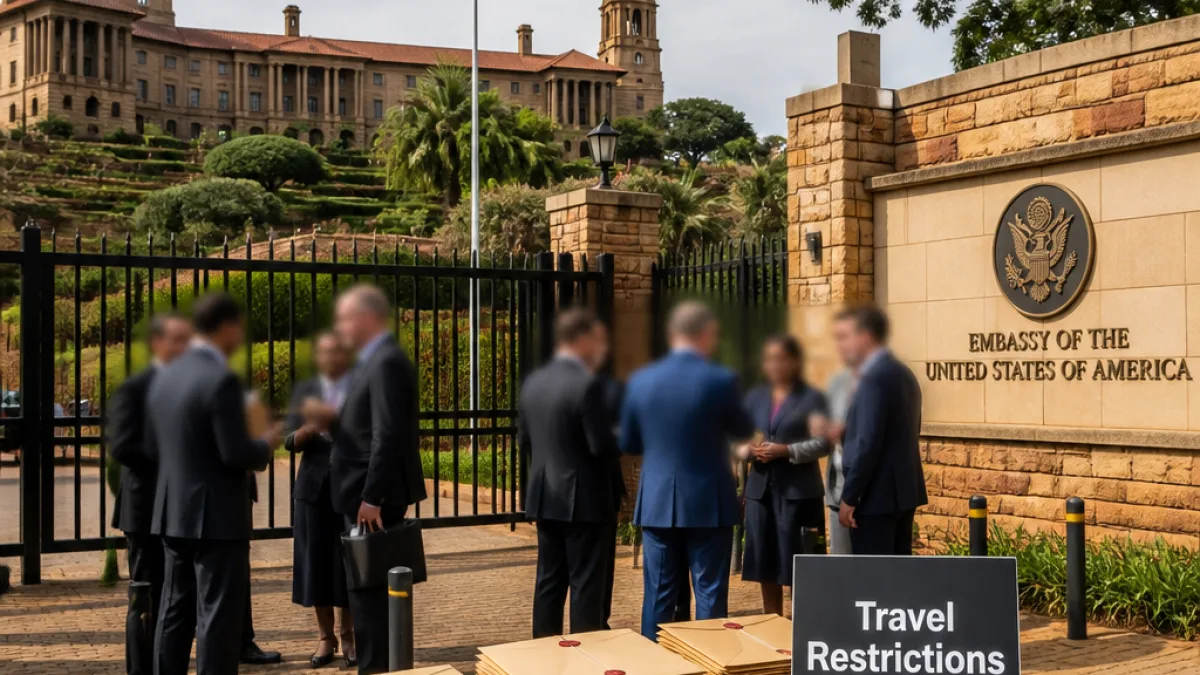
Pretoria demands diplomatic engagement after Washington announces visa limits
Pretoria has formally rejected the United States' decision to impose visa restrictions on certain South African nationals it says are connected to race and land policies, calling the move a mischaracterisation of the country's domestic affairs and urging that tensions be resolved through diplomacy.
The South African government said it had noted the announcement "with concern" and accused groups behind the Washington action of attempting to present themselves as representatives of minorities and Afrikaners broadly, according to reporting. The statement came after the US administration said it would restrict travel for "foreign nationals" it considers responsible for or complicit in laws or policies enabling uncompensated land seizures, race-based discrimination and the incitement of imminent violence against minority ethnic or racial groups.
Minister of International Relations and Co-operation Ronald Lamola said Pretoria rejects the characterisation of its policies and that bilateral tensions should be addressed through diplomatic channels. He stressed that South Africa's laws aimed at redressing historical inequality are rooted in the constitutional obligation to remedy the legacy of apartheid and centuries of racial injustice.
"It is our sovereign right to put in place laws that address the nation’s concern over centuries of racial injustice," Lamola said, adding that South Africans expect their sovereignty to be respected.
The US announcement was described by the source as being framed by US Secretary of State Marco Rubio, who said the South African government had failed to adequately address Washington's concerns and warned that the US would not allow what it called "such behaviour" to go unchecked.
Lamola pointed to recent South African legislation as part of a legal framework to confront race-related harms. In particular, he referenced the Prevention and Combating of Hate Crimes and Hate Speech Act, saying the act provides mechanisms to combat hate speech and prosecute hate crimes.
- Diplomatic response: Pretoria has emphasised engagement and formal diplomacy as the proper channel for resolving bilateral disputes.
- Legal defence: Government officials argue that land and race-related laws are constitutionally mandated redress measures, not unlawful discrimination.
- Concerns raised: Pretoria said it was concerned about certain groups portraying themselves as representative voices for minorities.
The announcement by Washington introduces tension into a relationship that involves trade, investment and long-standing diplomatic ties. The visa restrictions target individuals described by the US as linked to policies it views as enabling uncompensated land seizures and race-based discrimination; the South African government views such measures as an external misreading of domestic reform efforts.
Observers in Pretoria will watch for whether the United States provides a list of names or clarifies the scope of the restrictions, and whether the government will seek immediate bilateral consultations through the Department of International Relations and Co-operation. For now, the emphasis from the South African side is on insisting that domestic reforms be understood in the context of South Africa's constitutional commitments and socio‑economic transformation goals.
| Actor | Position | Summary of statement |
|---|---|---|
| Ronald Lamola | Minister of International Relations and Co-operation | Noted the restrictions "with concern"; defended laws addressing apartheid legacy; urged diplomatic resolution. |
| Marco Rubio | US Secretary of State (per report) | Said the SA government failed to address US concerns; warned against leaving the conduct unchallenged. |
For Pretoria residents, the immediate practical effects may be limited, but the incident underscores how South Africa's internal reforms can have international ramifications. It could affect bilateral engagements, exchange programmes, visits and high-level meetings if tensions persist. The government’s public posture indicates it intends to contest the US interpretation and preserve the principle that South Africa's post‑apartheid policy choices are matters of sovereign law and constitutional duty.
As events unfold, the minister's office and the US State Department will be the focal points for next steps. Pretoria has framed its response around sovereignty, the rule of law and the necessity of measured diplomatic engagement — a posture aimed at de‑escalating rhetoric while defending the legal and moral basis for South Africa's transformation agenda.












