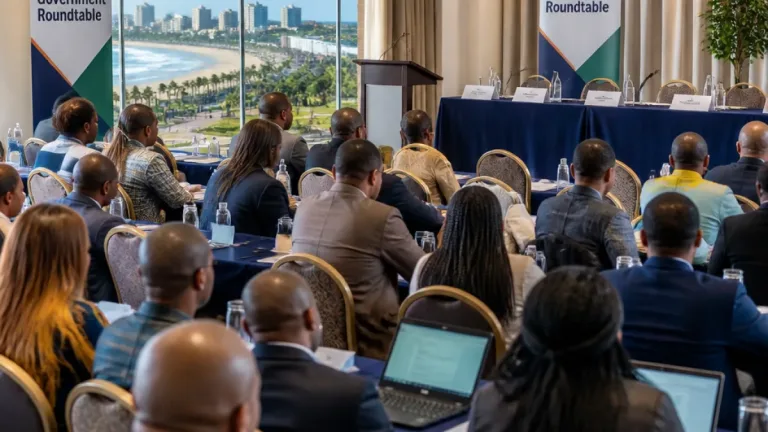
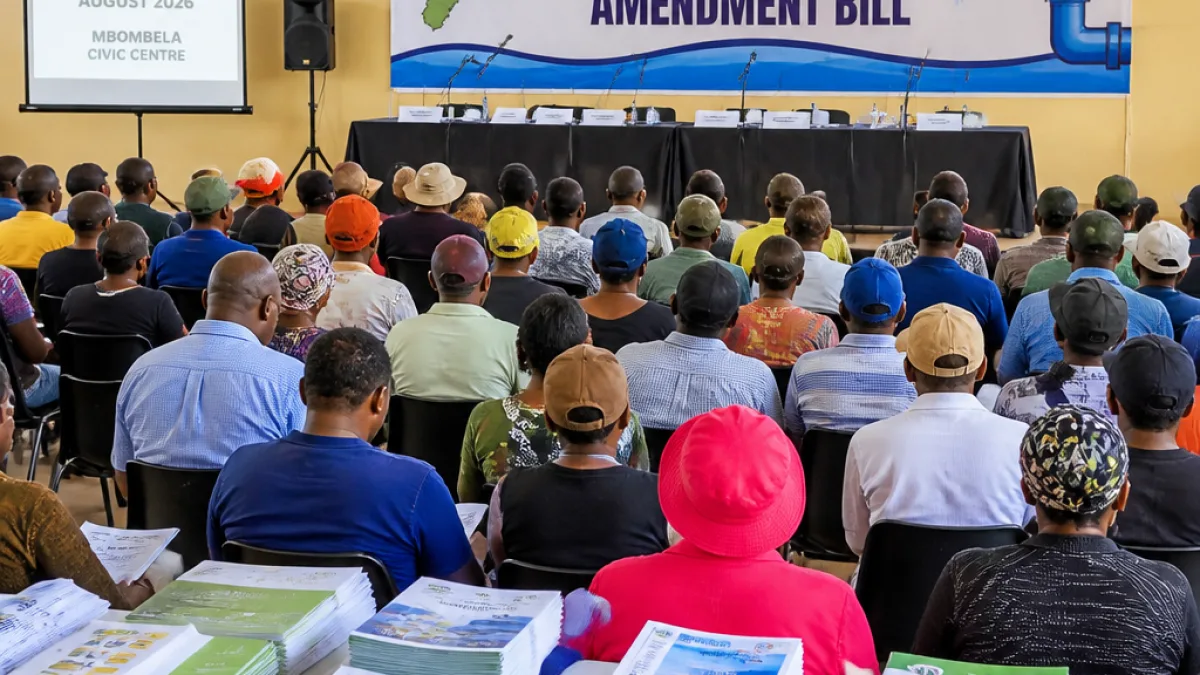
Parliament will convene the first public hearings on the Water Services Amendment Bill (B24–2025) in Mpumalanga from 14–16 August 2026, the National Assembly’s Portfolio Committee on Water and Sanitation announced on Tuesday.
Public participation at the centre of the process
The hearings form part of a nationwide engagement drive intended to involve communities directly in the legislative process. Parliament said the outreach aims to give residents the information needed to make “meaningful submissions” and to enable them to scrutinise proposed changes to how water and sanitation services are regulated.
Committee chairperson Leon Basson stressed public involvement as essential for building legislation that responds to community needs and national priorities. Parliament noted the exercise responds to Section 59 of the Constitution, which requires the National Assembly to facilitate public participation and to conduct its business openly.
“The country's water value chain has experienced various challenges. This Bill proposes measures that are intended to remedy these shortcomings, and it is important that people participate in crafting and strengthening the legislation,” said Mr Basson.
What the Bill aims to change
The Water Services Amendment Bill seeks to tackle persistent problems in South Africa’s water sector, including unreliable water and sanitation services, poor management and maintenance of infrastructure, declining water quality, gaps in accountability and weak enforcement mechanisms. Parliament has highlighted several of the Bill’s central measures aimed at strengthening oversight, professional standards and service delivery.
- Mandatory licensing for all water service providers, with a compliance period of 12 months once regulations are finalised.
- Minimum competency standards to professionalise the sector and reduce neglect of infrastructure.
- Clearer separation of roles between Water Services Authorities and Water Services Providers to improve accountability.
How the changes could affect Mpumalanga
For Mpumalanga residents — where rural supply gaps and ageing infrastructure remain a challenge — the proposed licensing and competency frameworks could mean tighter oversight of municipal and private providers. If implemented, clearer role definitions may also change how municipalities contract providers and manage maintenance responsibilities.
Parliament said it ran a series of educational programmes across the country ahead of the hearings to prepare communities to participate. Those sessions aim to equip local stakeholders, including residents, community organisations and municipal representatives, with the knowledge to evaluate the Bill’s implications for local services.
Key proposals at a glance
| Proposal | Intended effect |
|---|---|
| Mandatory licensing for providers | Standardise service delivery; enable enforcement |
| Minimum competency standards | Improve professional capacity; reduce infrastructure neglect |
| Separation of roles | Clarify responsibilities between authorities and providers |
What residents should know and expect
Parliament’s announcement did not specify the exact venues in Mpumalanga where hearings will be held, but confirmed the three-day programme will take place province-wide as part of the national schedule. Communities wanting to present submissions should monitor official parliamentary channels for details about venues, times and procedures for making oral or written contributions.
For residents and municipal officials, a few practical points are worth noting:
- Prepare concise written submissions where possible — these remain part of the formal legislative record.
- Ask how licensing would affect existing contracts with private providers and whether transitional arrangements are proposed.
- Seek clarity on how competency standards will be assessed and enforced, and what support will be available to municipalities to meet new requirements.
The Portfolio Committee’s decision to host the first public hearings in Mpumalanga places the province at the start of a process that could reshape how water services are regulated nationally. Given ongoing water-availability and infrastructure concerns across the country, the hearings offer an opportunity for communities to press for practical, enforceable measures that improve local supply and sanitation.
Parliament emphasised that the hearings are part of a constitutional duty to involve the public in law-making and said the educational programmes are designed to ensure contributions are well informed. Investigations and discussions arising from the submissions will feed back into committee deliberations as the Bill moves through Parliament.