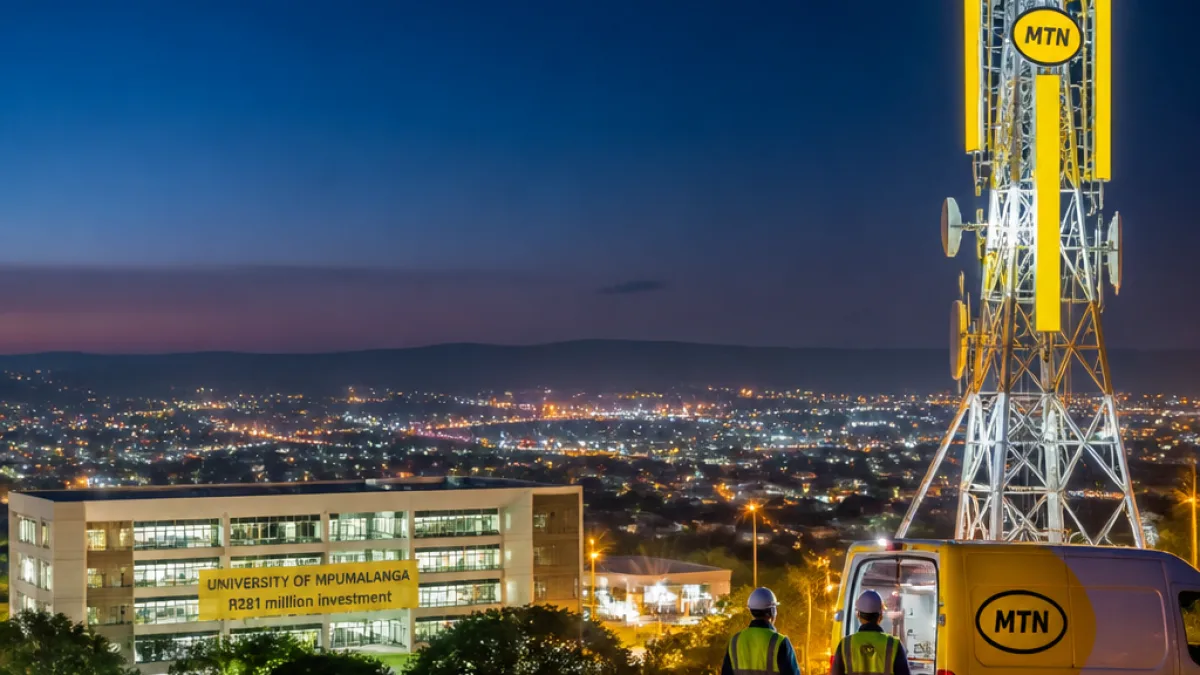
MTN South Africa has pledged R281 million in investment in Mpumalanga during the current financial year to expand network capacity, improve resilience and support growing demand for digital services across the province.
High-level visit and local engagements
The announcement followed a visit by MTN’s executive committee led by Deputy CEO Yolanda Cuba as part of the company’s multi-stakeholder engagement programme. During the visit, MTN officials met with business leaders, government representatives and institutions, including the University of Mpumalanga, to discuss priorities for the province’s digital development.
Company representatives said the planned spending will concentrate on strengthening the capacity and resilience of MTN’s network infrastructure in the province and enabling better connectivity for both urban centres and outlying communities.
What the investment will target
MTN described the funds as part of a broader commitment to advancing digital inclusion and expanding access to reliable connectivity across South Africa. In Mpumalanga the emphasis will be on:
- enhancing backbone and last-mile network capacity to cope with rising data demand;
- improving service resilience to reduce outages and support critical services; and
- working with local institutions to explore digital adoption and skills development.
Executives emphasised collaboration with provincial stakeholders to align infrastructure upgrades with economic and social priorities. The visits to the Free State, Northern Cape and Limpopo earlier this year formed part of the same engagement drive, MTN said, as it seeks to coordinate investment with local government and industry.
Local impact and practical considerations
For residents and businesses in Mpumalanga, the upgrade programme could mean faster mobile internet, better coverage in fringe and rural areas and fewer interruptions during peak usage. That has implications for tourism businesses, remote education initiatives and small enterprises that increasingly rely on mobile connectivity for payments and bookings.
However, changes to network performance do not happen overnight. Infrastructure rollouts typically involve site upgrades, installation of additional transmitters and sometimes new tower construction, all of which require planning approvals, cross‑provider coordination and, where relevant, community consultations.
Questions for local authorities and communities
Residents and municipal officials will want clarity on several points as the programme progresses, including timelines for upgrades in specific areas, how contractors will be appointed, whether new sites will require land access agreements, and how MTN intends to address any environmental or visual impacts from new infrastructure.
| Province | Nature of engagement |
|---|---|
| Mpumalanga | R281 million network capacity and resilience upgrades |
| Free State | Recent investment and stakeholder engagements (no amount disclosed) |
| Northern Cape | Recent investment and stakeholder engagements (no amount disclosed) |
| Limpopo | Recent investment and stakeholder engagements (no amount disclosed) |
MTN’s move follows a trend among South African network operators to prioritise regional upgrades as data demand grows and digital services become central to economic activity. Investment announcements such as this typically aim to reassure customers and institutional partners about service reliability and future capacity.
What residents can do now
As the rollout begins, consumers can keep track of planned improvements by contacting their local MTN outlets or municipal communications offices for schedules affecting their wards. Businesses relying on connectivity should also discuss contingency plans with their service providers and consider backup options for critical operations.
The R281 million pledge marks a significant step for Mpumalanga’s digital infrastructure. Clear implementation timelines and ongoing engagement with communities will determine how quickly residents and businesses see tangible benefits from the investment.