
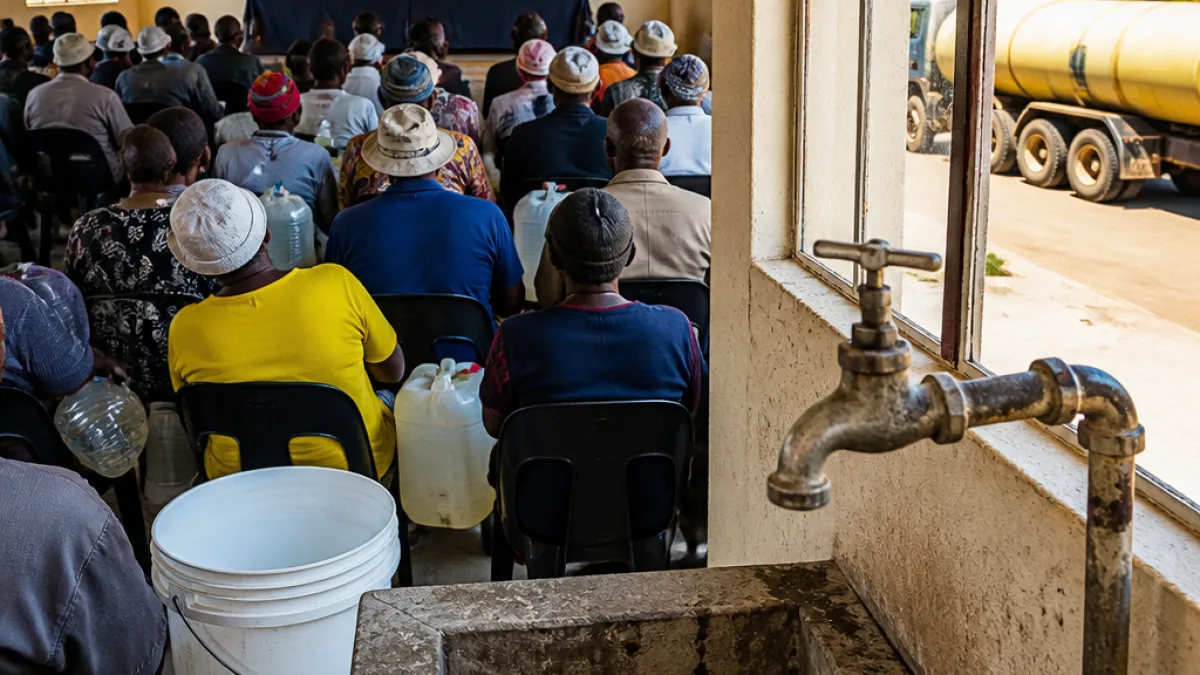
The Water Services Amendment Bill must translate into better taps and cleaner water for households across Mpumalanga, community representatives told the Water and Sanitation Portfolio Committee during public hearings held in Mbombela over the weekend.
Communities prioritise reliable supply over legal detail
Those who appeared at the hearings urged parliamentarians to focus on what will improve daily life for people who live with intermittent or no municipal water supply. Submissions highlighted the growing reliance on water tankers, concerns over the quality of tanker water and deep frustration with corruption and poor governance at municipal level.
Speakers welcomed several provisions in the proposed legislation, which seeks to ban private buying, selling and trading of water, and to give the national department stronger powers to revoke licences from failing providers and to intervene directly when taps run dry. But they warned that legal changes alone will not fix broken infrastructure or restore public trust.
Key concerns raised by Mpumalanga residents
- Dependence on water tankers whose supply often fails to meet acceptable quality standards.
- Corruption and poor municipal governance that perpetuate service delivery failures.
- Illegal tapping and unlicensed water sales by both businesses and individuals.
- Fear that without rapid action many communities could face escalation towards a Day Zero scenario.
Mpumalanga is among provinces where infrastructure and delivery problems have been blamed for significant water supply disruptions. The amendment bill aims to establish minimum competency standards for water services officials and to increase penalties for non-compliance and for unlicensed service providers.
"Whether it’s a mine or a farmer, I can tell you by December, we are going back to Day Zero if that is not attended to," the South African Local Government Association (SALGA) provincial representative, Walter Mngomezulu, said during the hearings, according to reports.
Legal tools, but practical gaps remain
Delegates at the hearings argued the bill's tougher regulatory framework — which allows the department to revoke licences and intervene directly in municipalities — is welcome, but stressed the need for better enforcement. Without consistent oversight and political will at local level, legal powers may remain ineffective.
Afriforum's district coordinator, Hennie Bekker, voiced support for the bill while emphasising that poor governance is a significant root cause of failing services. Submissions to the committee repeatedly linked governance failures to irregular maintenance, delayed capital projects and mismanagement of water infrastructure.
What the bill proposes (summary)
| Provision | Intended effect |
|---|---|
| Ban on private buying, selling and trading of water | Stop commodification of municipal water services |
| Revocation of licences for failing providers | Remove incompetent or reckless service providers |
| Departmental intervention powers | Enable national intervention when municipal supply fails |
| Minimum competency standards | Reduce neglect of infrastructure due to unskilled staff |
Community submissions illustrated a gap between the bill's intentions and the realities on the ground. Many households still receive water irregularly; some rely on tankers that are not subject to the same controls as municipal water, and the enforcement of standards for tanker supply is inconsistent.
Election context and accountability
With local government elections approaching, water access has become a frontline electoral issue. For voters in areas where taps run dry, service delivery is likely to influence decisions at the ballot box. Presenters at the hearings urged Parliament to ensure the Bill includes practical measures for implementation, clear timelines, and stronger oversight mechanisms to penalise municipalities and providers that fail communities.
Experts and civic groups told the committee that effective implementation will require coordinated action across national, provincial and local government, credible monitoring, and community involvement in service planning and oversight. They also called for transparent reporting on tanker quality and the addressing of illegal connections, including those by large water users such as mines or farms.
Next steps
The Water and Sanitation Portfolio Committee will continue to consider public input as it finalises the Bill. Proponents say the proposed amendments give the department sharper tools to protect water as an essential public good; critics caution that without stronger enforcement and improved municipal capacity, those tools may not reach the communities that need them now.
For Mpumalanga residents who depend on steady water supplies for household use and local tourism, the urgency is clear: legislative change must be matched by action on the ground.













