
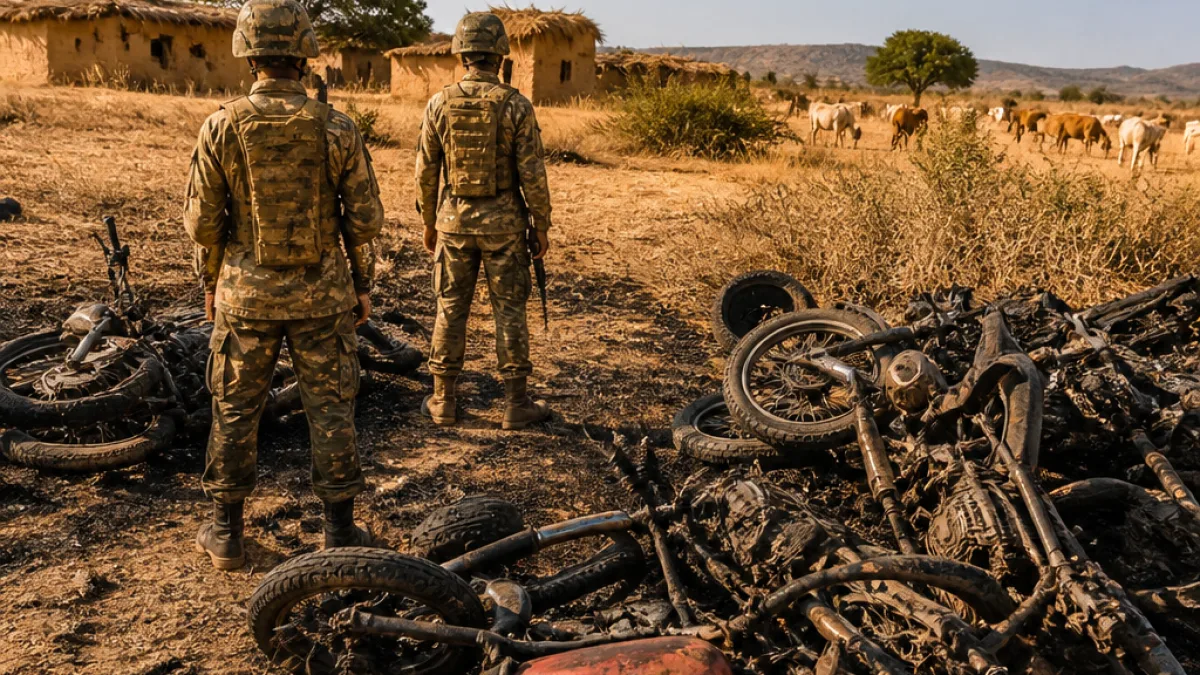
The Nigerian military says coordinated air and ground operations under Operation Fansan Yamma have eliminated more than 160 fighters in the North‑West over the past week and recovered roughly 300 motorcycles believed to belong to armed groups. The update, given by the military’s Director of Defence Media Operations, Maj.‑Gen. Michael Onoja, covers a series of armed reconnaissance and clearance patrols conducted in Mariga Local Government Area of Niger State.
Air strikes followed intelligence on large groups
According to the military statement, an armed reconnaissance mission carried out on 9 August targeted concentrations of fighters in the Sangeko and Baba‑Doka areas after intelligence indicated the presence of many individuals travelling on motorcycles. Aircraft engaged the group with rockets and cannon fire, disrupting their movement.
“Initial reports indicated the recovery of approximately 120 bodies and about 300 motorcycles at the location. Monitoring of the area is ongoing to further assess the outcome of the operation,” Maj.‑Gen. Michael Onoja said.
In a separate engagement on 13 August, air elements conducted reconnaissance around Maburya in the same local government area after detecting a large group moving with rustled cattle. A clearance patrol along the Kainji‑Daban Woko axis subsequently sighted fighters fleeing with the cattle and engaged them with onboard weapons, reportedly neutralising a further 46 fighters.
Operations across the north
The military also provided updates on actions elsewhere. In the North‑East, troops attached to Operation HADIN KAI are reported to have eliminated a fighter at a hideout in Kaniram East, Abadam LGA of Borno State following a probing attack on a military position at Mallam Fatori on 29 July. The statement says arms and ammunition were recovered and the hideout destroyed.
On the same day, troops engaged an armed group reportedly collecting illegal levies from herders along the Gaba‑Dzangola axis in Guyaku District, Gombi LGA of Adamawa State. The military said the group was forced to withdraw and weapons and ammunition were recovered. Arrests of suspected logistics facilitators were also reported in the update.
Summary of reported actions
| Operation | Location | Outcome |
|---|---|---|
| Fansan Yamma (Air component) | Sangeko & Baba‑Doka (Mariga LGA, Niger) | ~120 bodies recovered; ~300 motorcycles recovered |
| Fansan Yamma (clearance patrol) | Maburya & Kainji‑Daban Woko axis (Mariga LGA) | 46 fighters neutralised; rustled cattle sighted |
| HADIN KAI | Kaniram East (Abadam LGA, Borno) | 1 fighter neutralised; hideout destroyed |
Questions about verification and impact
The military account provides specific numbers and locations but does not include independent verification of casualties or a breakdown distinguishing combatants from possible bystanders. Recovery of a large number of motorcycles is consistent with known tactics in the region where armed groups rely on light, mobile transport. The mention of rustled cattle underscores the link between insecurity and livestock theft in rural areas.
- Humanitarian implications: Large‑scale engagements in rural areas risk civilian displacement and loss of livelihoods, particularly where cattle theft and fighting intersect.
- Security implications: The operations suggest sustained pressure on armed groups in Mariga LGA, but they also raise questions about follow‑up stabilisation and protection for affected communities.
- Verification: Independent confirmation of casualty figures and identities is not provided in the military briefing.
The military statement emphasises monitoring of the areas to further assess outcomes, suggesting operations may continue or that ground teams will follow up to consolidate gains and search for survivors, weapons caches or additional evidence.
Context and what to watch
Mariga and surrounding parts of Niger State have repeatedly seen attacks by roaming armed groups who use motorcycles and small arms to raid settlements, steal livestock and attack security posts. Aerial reconnaissance combined with targeted strikes is a component of the broader counter‑insurgency approach long used in the region.
Going forward, observers and humanitarian actors will be watching for:
- whether displaced civilians return or require assistance;
- confirmation from independent sources about casualties and recovered items;
- follow‑up operations that secure liberated areas and restore basic services.
The military’s update offers a snapshot of intensified operations in a difficult security environment. It highlights tactical successes claimed by authorities, but also underscores the continuing challenge of translating military action into lasting protection and stability for communities living in the affected rural zones.










