Policy postponement leaves student accommodation in limbo
The Executive Mayor, Sibongile Makushe‑Mazibuko, has postponed the tabling of Mbombela Local Municipality’s long‑awaited final policy on student housing, a move that has prompted renewed warnings from the Freedom Front Plus about risks to neighbourhoods and municipal services.
The policy is designed to regulate the rapidly expanding private market for student accommodation around institutions such as the University of Mpumalanga, the Tshwane University of Technology (TUT) and local TVET colleges. Municipal officials and political parties say the city will soon have to accommodate about 8 000 additional students, a number that has encouraged some operators to open developments without approved building plans or municipal consent.
Residents and services under strain
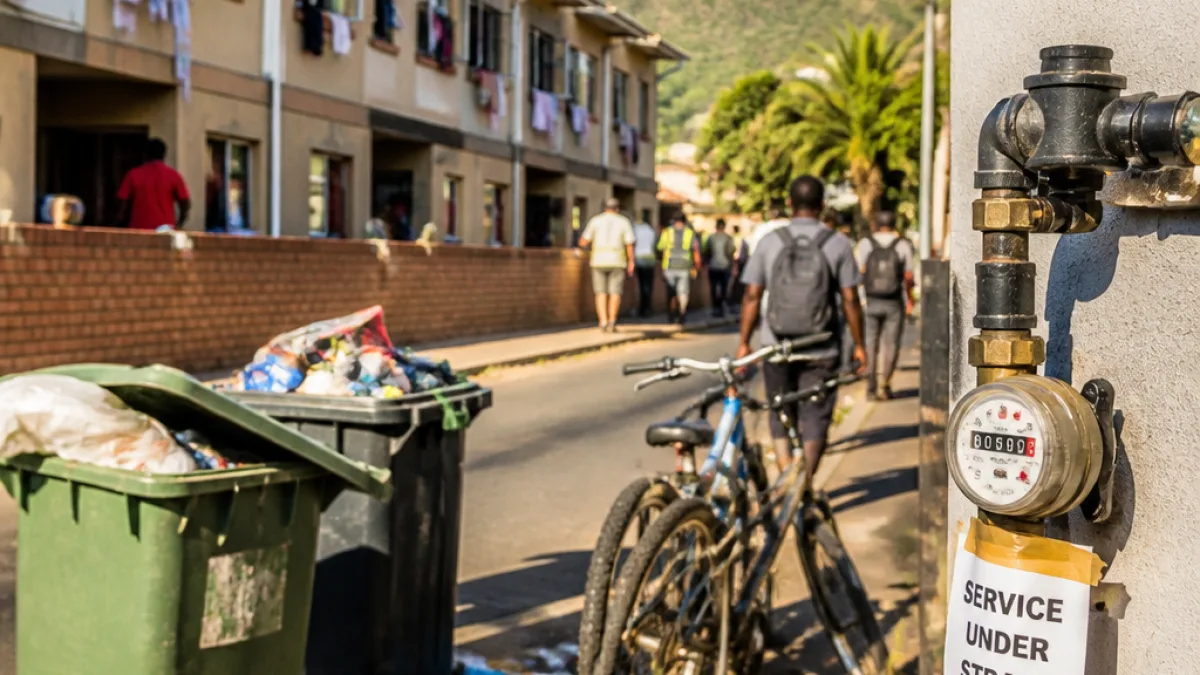
Freedom Front Plus representatives told the municipality’s Portfolio Committee on Urban Planning and Development they supported a final policy in principle but stressed that unresolved elements could intensify local problems. Primary concerns include the close proximity of student complexes to established residential properties, increased pressure on water and sewerage systems, and weak enforcement of by‑laws on noise, littering and parking.
- Proximity: Neighbouring homeowners have reported nuisance issues where complexes operate near residential streets.
- Infrastructure: The influx of students is expected to add load on municipal water and sanitation systems already under pressure.
- Enforcement: Failure to fill building inspector vacancies has limited the municipality’s ability to inspect and regulate existing and new accommodation.
"Facilities that do not comply with the applicable regulations should be ordered to shut down operations at once."
The postponement has left a regulatory vacuum: without a final policy councillors cannot fully implement zoning rules, and inspectors have limited grounds to act against unauthorised developments. The Freedom Front Plus argued that a clear policy would enable the municipality to attract responsible private investment while protecting neighbourhoods, provided it is strictly enforced.
What the delay means for Mbombela
Local residents and ward councillors are likely to face the immediate consequences of the delay. Increased student numbers change traffic patterns, add demand for waste collection and create parking pressure in suburbs close to campuses. Without formal approvals, some boarding houses or converted properties may not meet safety, health or fire standards.
At the same time, the private sector has shown readiness to invest in rental accommodation. The Freedom Front Plus noted that finalising the policy could stimulate local economic activity, bringing construction jobs and recurring rental income to the city—conditional on proper regulatory controls.
| Issue | Potential consequence |
|---|---|
| Unregulated developments | Health/safety risks; non‑compliance with building codes |
| Increased student numbers (~8 000) | Higher water/sewer demand; parking and waste pressure |
| Vacant inspector posts | Reduced enforcement; difficulty closing non‑compliant facilities |
Urban planning officials must also consider longer‑term spatial impacts. Concentrations of student housing near campus nodes can support local businesses and public transport, but if poorly located they can erode residential amenity and increase conflict between permanent residents and short‑term renters.
Next steps and what residents can expect
Municipal and political sources indicated the Department of Urban Planning and Development needs to fill critical vacancies for building inspectors before enforcement can be effective. In practice this means inspections and corrective action against non‑compliant facilities will remain limited until those roles are staffed and the policy is formally adopted.
For residents worried about noise, litter or illegal conversions, the immediate recourse remains reporting specific by‑law breaches to the municipality and engaging ward councillors. Should a final policy be tabled and adopted, enforcement tools and clear zoning rules would be available to manage future growth.
The debate highlights a familiar tension for a city that is expanding its higher education footprint: balancing the economic benefits of student populations with the environmental and service obligations that come with rapid urban change. The Mbombela council’s next decisions will determine whether growth is managed, or whether residents and services will shoulder unplanned consequences.