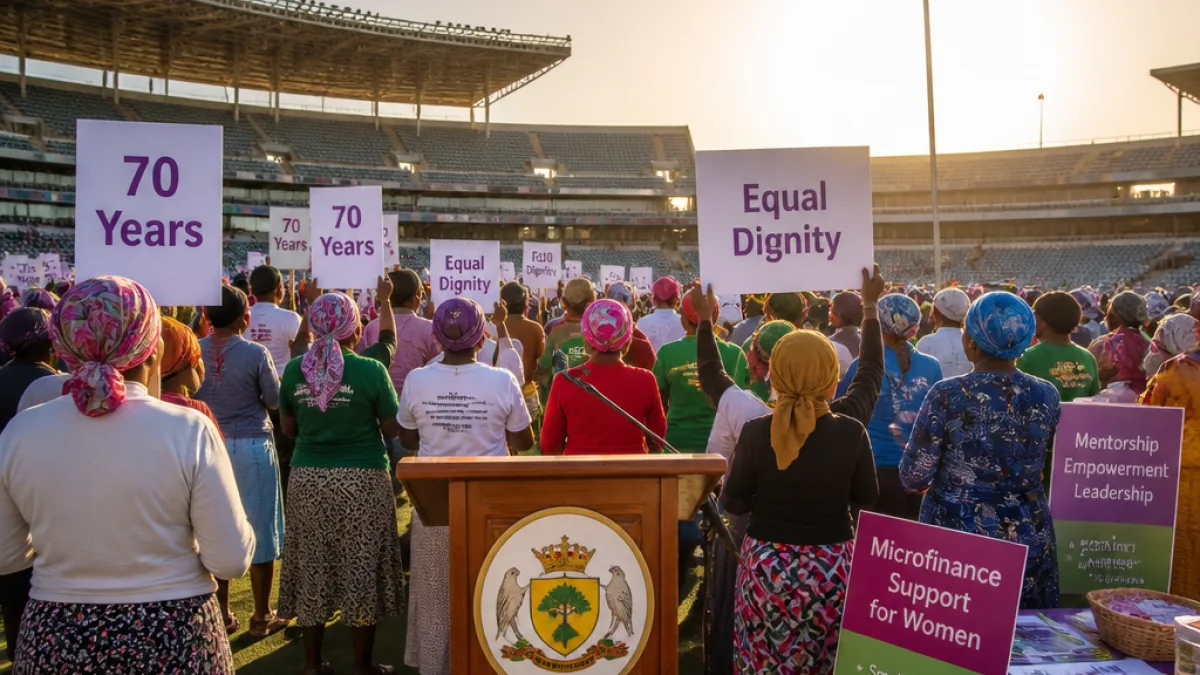
Limpopo Premier Dr Phophi Ramathuba has warned that while women in the province have advanced since the historic 1956 Women’s March, deep-rooted inequalities remain — particularly in senior leadership, economic access for rural women and in the fight against gender-based violence.
Commemoration and call to action
Speaking on 9 August 2026 at the 70th-anniversary commemoration held at Moses Monanyane Stadium in the Waterberg District, Ramathuba paid tribute to the women who led the 1956 protest, including Lilian Ngoyi, Helen Joseph, Rahima Moosa and Sophia Williams-De Bruyn, and framed their struggle as one for dignity, equality and freedom.
“We have made progress, but we are not yet where we need to be,”
Ramathuba said the event’s theme, “Empowered Women Empower Nations”, was a reminder that women’s economic and social advancement benefits the whole country.
Where progress still falls short
The premier highlighted several ongoing challenges facing women in Limpopo. According to her address, women remain underrepresented in Senior Management Service positions in provincial government, despite some gains: women now make up the majority of the provincial Executive Council and occupy more than 45% of SMS posts, she said.
Ramathuba also identified persistent problems in rural areas, saying many women still struggle to access finance, markets, infrastructure and opportunities — constraints that limit entrepreneurship and household resilience.
On gender-based violence (GBV), the premier used uncompromising language, calling the crisis “a war against women, against families and against our democracy” and insisting that no woman should fear returning home.
Programmes and promises
In response to these gaps, Ramathuba said the provincial government would continue investing in leadership development through mentorship and other programmes intended to increase women’s representation and influence in decision-making.
- Mentorship and leadership development for women in public service
- Efforts to expand access to finance and markets for rural women
- Commitments to improve performance across provincial departments to meet targets that affect women
She emphasised the desire for women to not merely participate in leadership but to shape it — signalling ongoing human-capital and institutional efforts inside the provincial administration.
Accountability and delivery concerns
Ramathuba acknowledged that half of provincial departments were still failing to meet performance targets, a shortcoming she linked to the wider obstacles women face in the labour market and in leadership pipelines.
Analysts and community leaders have long said service delivery, infrastructure and access to markets are crucial to improve livelihoods for women in rural Limpopo. The premier’s remarks underline that the provincial government sees these as priorities but still needs to turn commitments into measurable progress.
What this means for communities
For women in towns and villages across the province, the premier’s speech signals a continued focus on programmes that target leadership and economic inclusion. However, the repetition of longstanding problems — underrepresentation, unmet departmental targets and persistent GBV — suggests communities and civil society will monitor whether promised measures are implemented and evaluated.
Community organisations and women’s groups often call for clear timelines, budget allocations and local engagement to ensure provincial plans result in meaningful change. The premier’s pledge to increase mentorship and development will be judged against such practical indicators.
Officials at provincial level have previously worked with NGOs and national departments on GBV interventions and small-business support. Any new measures announced following this commemoration will need to be accompanied by monitoring mechanisms to track outcomes for women in rural and urban areas alike.
As the province marks the legacy of the 1956 march, the premier’s remarks made clear that commemoration must be paired with concrete steps to address inequality — from boardrooms and senior management suites to farms and informal markets across Limpopo.
Reporting from Limpopo.