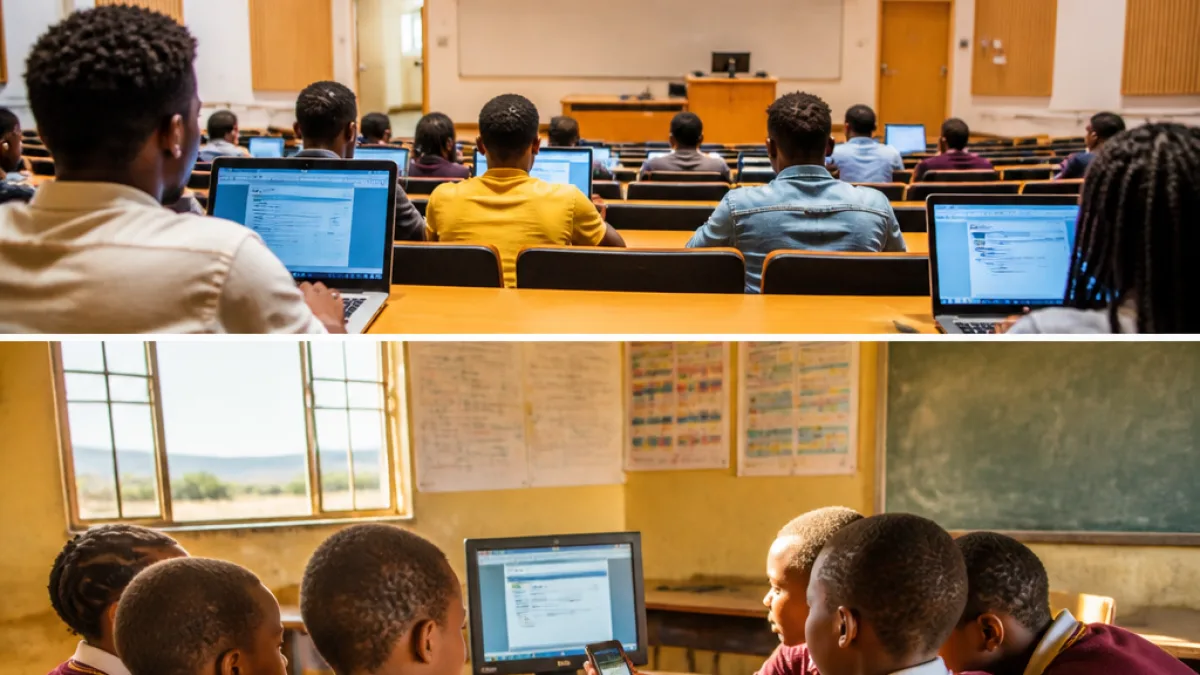
Limpopo — South Africa’s poor showing in international measures of digital skills is not, according to a University of Limpopo lecturer, the result of students’ inability to learn — but of unequal access to devices and connectivity.
Lecturer: capability present, access missing
Agosi Malatji, a lecturer and digital-literacy researcher in the Physiology and Environmental Health Department at the University of Limpopo, said the university’s experience with first-year students over more than six years shows that many entrants are perfectly capable of using digital tools. The difficulty, she told Review Online, is that a sizeable minority arrive at university without prior exposure to technological devices.
“Some schools are making efforts, mainly by introducing learners to basic knowledge of digital tools. Consequently, facilitators find that encounters with students who have engaged with technological devices for digital literacy purposes are not usually problematic.”
Malatji said when students do lack prior exposure, the problem is solved by training — but that training takes longer and requires resources that could otherwise be spent on deeper learning. She emphasised that where devices and practice exist at school level, students generally cope with higher-education demands on digital literacy.
National contradiction: high education spending, low digital outcomes
South Africa continues to invest heavily in public education, yet international comparisons place the country near the bottom on digital-skills development. Review Online reports South Africa ranks 67th out of 69 countries for digital-skills outcomes despite relatively high public spending on education.
The gap between spending and outcomes raises policy questions about whether resources are reaching the parts of the system that build practical digital experience — devices, connectivity and guided practice — rather than only traditional inputs.
Where schools are making a difference
According to Malatji, some schools are introducing learners to the basics of digital tools. These efforts mean that many students arrive at university with foundational knowledge, which reduces the time lecturers need to spend on basic digital induction.
- Basic exposure at school helps students adapt to university-level digital demands.
- Students without device access require remedial training, stretching staff and budgets.
- Artificial intelligence is changing what counts as a necessary digital skill.
She also noted the growing impact of artificial intelligence on the digital-skills landscape, a point that complicates decisions about what to prioritise in curricula and training. As new tools reshape tasks and learning methods, educators must decide which skills are essential and how to deliver them equitably.
Practical implications for Limpopo communities
For many rural and township learners in Limpopo, device access remains intermittent. Where schools or community centres can provide structured time on computers or tablets, students gain confidence and relevant competencies. Where such access is absent, students need extra time at university to reach the same baseline.
That has a knock-on effect: longer induction phases for digital literacy can delay progression in subject-specific learning, increase pressure on lecturers and consume limited institutional resources.
What this means for policy and planning
Malatji’s observations suggest policy responses should focus on closing the device and connectivity divide at school level, and on building consistent opportunities for supervised practice rather than only delivering devices without accompanying training. Partnerships between provincial education departments, municipalities and higher-education institutions could target the most disadvantaged schools for device hubs and teacher training.
| Measure | Reported position |
|---|---|
| Digital-skills ranking (international) | 67th of 69 |
| Public education spending | Reported as relatively high |
Addressing the mismatch between spending and outcomes requires clear tracking of how funds are spent on digital inclusion: devices, data, teacher development and maintenance. Without that, investment may not translate into practical competencies when learners need them.
Limpopo’s education stakeholders — from school governing bodies and teacher unions to district offices and universities — will need to coordinate on where to prioritise limited resources. For families and learners, the most immediate benefit comes from increased, supervised access to devices and practical lessons on how to use them for study.
Malatji’s research-based view adds an important nuance to public debate: the province’s students are not inherently digitally illiterate; they often lack the means to practise and consolidate those skills before tertiary study.
Polokwane — Reporting from the University of Limpopo area highlights the human and logistical dimensions of the digital divide: where exposure exists, students thrive; where it does not, they need time and resources to catch up.