
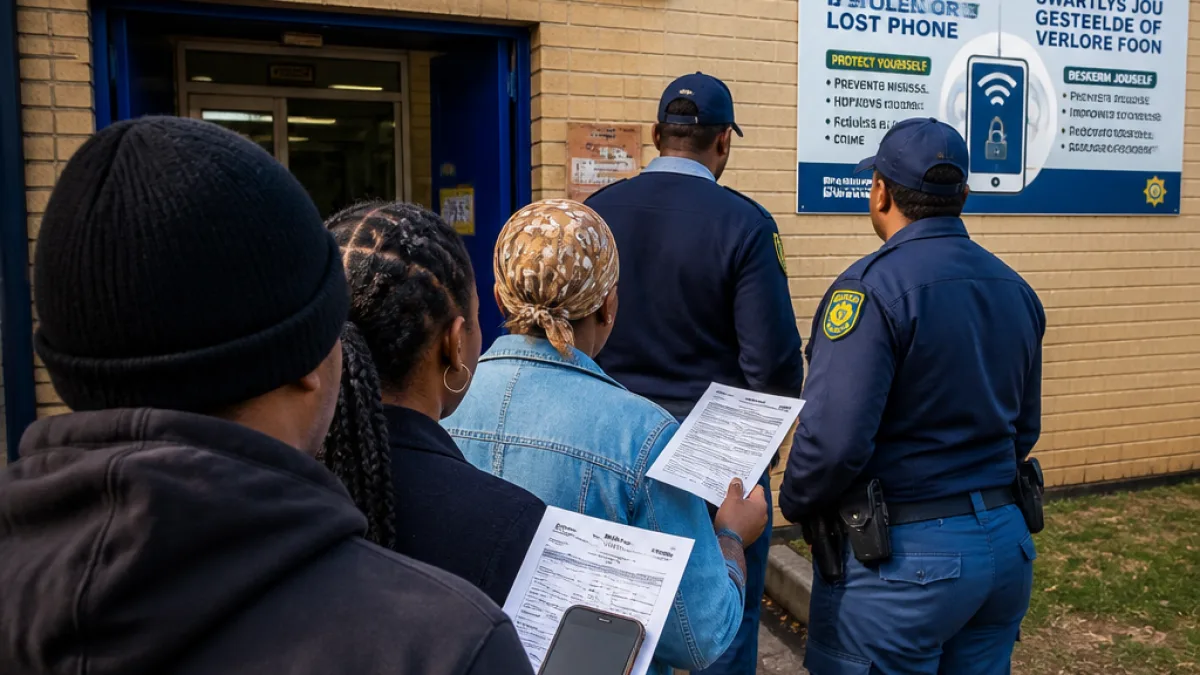
Police give step-by-step advice after phone thefts and SIM-swap incidents
Krugersdorp residents have been urged to act swiftly when mobile phones are stolen or when they suspect a SIM-swap after a continuing run of cellphone thefts in the CBD and surrounding areas. Acting station commander Colonel Jacques van den Berg said quick action can make the difference between a minor inconvenience and substantial financial loss.
“When your phone gets stolen or SIM-swapped, you should contact your network provider as soon as possible,” Van den Berg said, adding that network operators will issue a reference number showing the phone has been blacklisted. He told residents to take that reference to their nearest police station so officers can register a case.
“They will give you a reference number for proof that your phone has been blacklisted. Next, you should go to your nearest police station and give them that reference number, where police will register a case.” — Col Jacques van den Berg
Van den Berg stressed the importance of keeping contact details for mobile networks and banks handy when reporting thefts. If debit or credit cards are stolen along with a phone, bank contact information allows victims to freeze or cancel cards immediately.
Practical measures to reduce your risk
Police also urged residents to adopt straightforward security measures to lower vulnerability to fraudsters. Among the recommendations were the use of two-factor authentication, adding a SIM PIN and exercising caution when receiving messages asking for personal details.
- Contact your mobile network immediately to request blacklisting and obtain a reference number.
- Report the matter at your nearest police station and provide the network reference number so a case can be opened.
- If banking details or cards are lost, contact your bank right away to block accounts and prevent unauthorised transactions.
- Enable two-factor authentication on accounts wherever possible and set a PIN on your SIM card.
- Avoid sharing your phone number publicly or responding to unexpected requests for personal information.
Those steps are aimed at disrupting the criminal pathway that starts with a stolen or cloned SIM being used to intercept authentication messages and reset passwords on email, social media and banking apps.
| Action | Why it matters |
|---|---|
| Call network provider | Blacklists phone and issues reference number for police |
| Open case at police station | Provides official record needed by banks and insurers |
| Contact bank | Freeze or cancel cards and monitor accounts |
Krugersdorp police have flagged the CBD as a hotspot for cellphone snatches. Residents say opportunistic thieves often target people on the street, at transport hubs and in busy retail areas. While police continue patrols and investigations, the force emphasised that prevention and fast reporting are the best tools available to the public.
Van den Berg also warned against complacency online. He advised people not to respond to messages that request personal details and to be wary of unexpected calls or texts that ask them to confirm identity details. “Add a PIN to your SIM card to protect it, and don’t ever share your phone number online,” he concluded.
For many victims, the immediate practical benefit of these steps is limiting financial harm: a blacklisted phone cannot be used on networks, and a registered police case can be required by financial institutions when reversing fraudulent transactions or opening investigations. Residents who rely on their phones for banking, work and family contact are particularly vulnerable to the knock-on effects of theft and SIM fraud.
Police encouraged neighbours and local businesses to help by remaining vigilant, reporting suspicious activity, and reminding customers to guard their devices. Quick action by a victim or a helpful bystander can close the window of opportunity that SIM-swappers exploit.













