
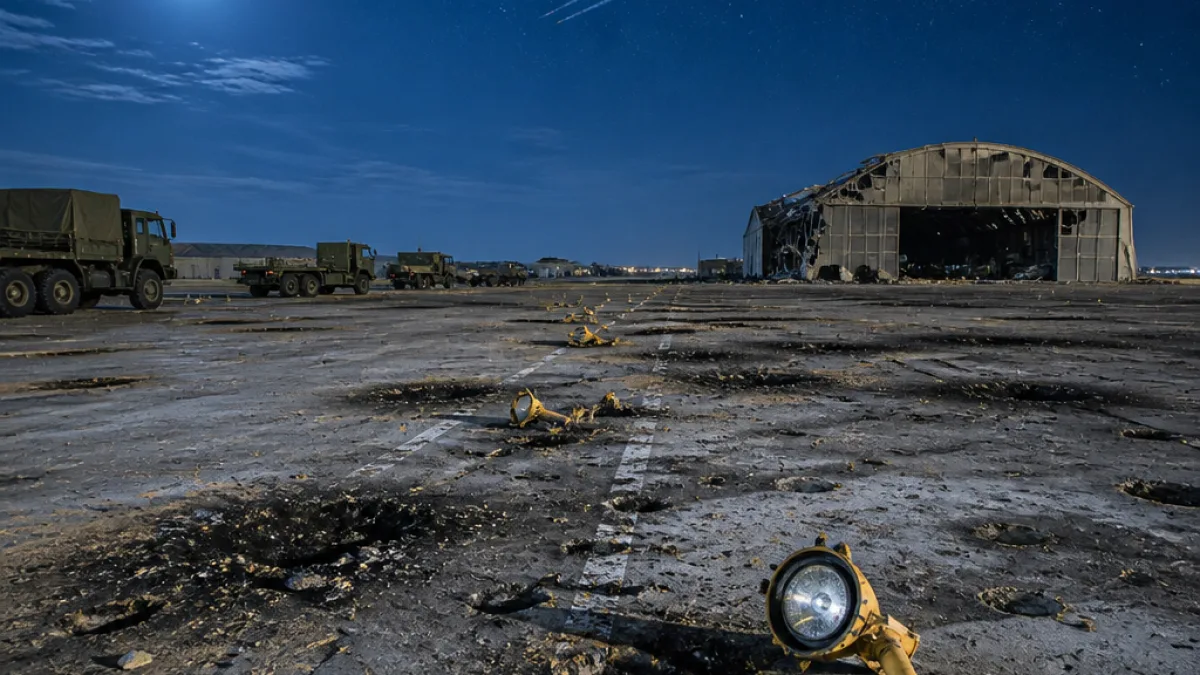
Damascus — Syrian authorities accused Israel of striking the Abu Duhur military air base in north‑west Syria on 18 August, saying the assault damaged airport infrastructure but caused no casualties. The incident comes amid a pattern of Israeli operations inside Syria since late 2024 and follows reports that a Turkish delegation recently inspected the disused facility.
What happened
State television in Damascus reported that Israeli aircraft targeted the runway with multiple strikes early on 18 August. A Syrian military source quoted by state media said the attack produced material damage to the airfield but that there were no injuries.
"the attack resulted in material damage to the airport’s infrastructure, without causing casualties."
The Abu Duhur air base, located in Idlib province, has been out of service since 2012. Syrian Defence Ministry forces are reported to be protecting the site, but an overseas monitoring organisation said the strikes followed a recent visit to the base by a Turkish military delegation as part of efforts to reactivate it.
Context and regional implications
Israel has carried out numerous strikes inside Syria since the overthrow of Bashar al‑Assad's government in December 2024, according to monitors. Targets have included military sites and several airfields. Israeli officials have said they will maintain forces in a so‑called security zone in southern Syria, citing security concerns along the frontier.
Damascus condemned the latest strike in strong terms. The Syrian Foreign Ministry described the operation as an unjustified act of aggression and called for international response. The attack adds to tensions in a theatre already shaped by competing foreign interests, including those of Türkiye, Russia, Iran and Israel.
Why the Abu Duhur base matters
Although the airfield has been out of use for over a decade, its reactivation would be significant. Observers say any effort to refurbish or recommission bases in Idlib could alter local military balances and complicate de‑escalation efforts in an area that has seen protracted conflict and shifting control among armed groups.
Türkiye has strengthened ties with newly emergent authorities in parts of Syria and has an active security interest in the Idlib theatre. The reported Turkish visit to Abu Duhur suggests Ankara is assessing options that could include logistics, reconstruction or security arrangements — moves likely to alarm Israel if it perceives a shift that might enhance hostile capabilities near its borders.
- When: 18 August (reported)
- Where: Abu Duhur air base, Idlib province, north‑west Syria
- Damage: Material damage to runway and infrastructure (Syrian state media)
- Casualties: None reported
Reactions and statements
Syrian state media carried a Foreign Ministry statement condemning the strikes and calling them an act of aggression. International responses were not detailed in initial reports. The Syrian Observatory for Human Rights, an independent monitoring group, linked the strikes to a recent Turkish delegation visit and said that may have prompted the Israeli action.
Israel has previously justified strikes inside Syria as preventive measures to stop arms transfers and to limit the footprint of groups it regards as threats. Damascus rejects incursions and routinely protests to foreign capitals and international bodies when attacks occur.
Looking ahead
While the immediate physical damage appears limited to infrastructure, the strike may carry broader consequences if it deepens distrust among regional actors or prompts reciprocal actions. Any attempt to refurbish or reactivate airfields in contested provinces could produce further Israeli responses.
| Item | Reported detail |
|---|---|
| Target | Abu Duhur air base (runway and infrastructure) |
| Responsibility | Accused: Israeli aircraft (reported by Syrian state media and independent monitor) |
| Casualties | None reported |
| Notable context | Followed a reported visit by a Turkish military delegation |
The situation remains fluid. Further reporting is likely as more information emerges from on‑the‑ground monitors and foreign ministries. For communities and observers in regions already affected by conflict, renewed strikes underscore the fragility of security and the challenges of stabilisation in north‑west Syria.










