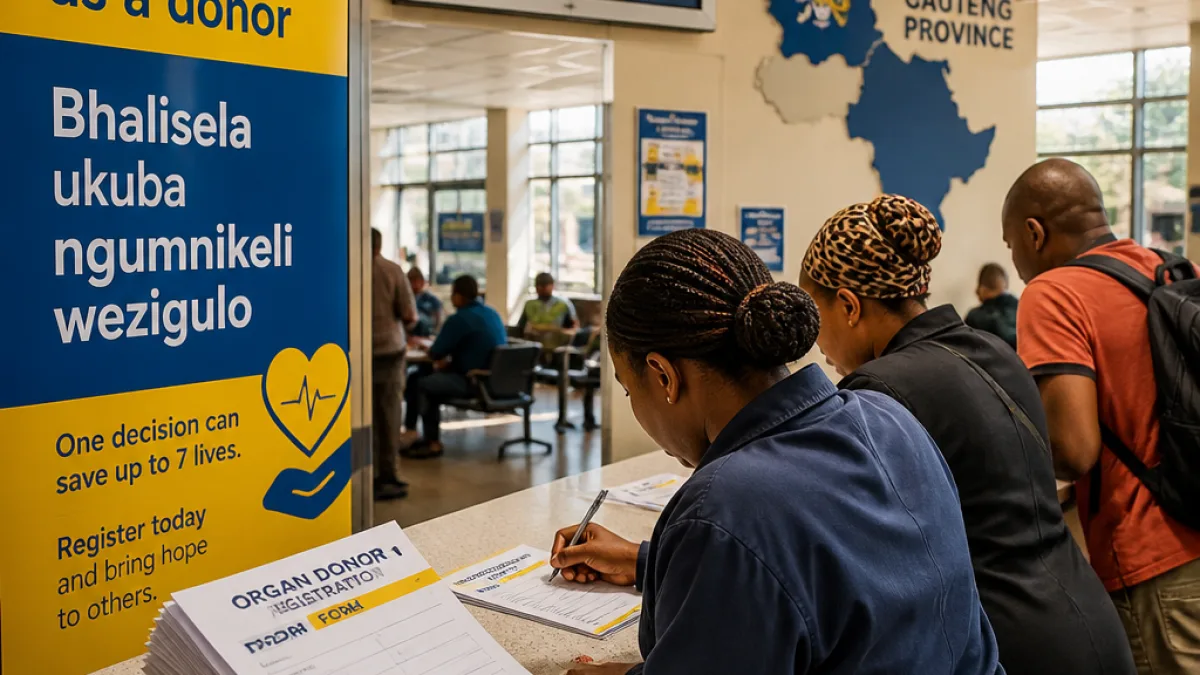
Thousands on waiting lists as donor supply lags demand
The Gauteng Department of Health has warned that a sharp shortage of donor organs is leaving many patients without lifesaving transplants. According to provincial figures, about 1,100 people in Gauteng either need kidney transplants or are being assessed before they can be placed on the official transplant waiting list.
The pressure is part of a national picture: health officials say roughly 6,500 patients around South Africa currently require organ or tissue transplants, but only a small fraction receive surgical treatment. In 2024 a total of 317 organ transplants were performed countrywide at both public and private hospitals.
“The number of patients who require transplants far exceeds the number of donor organs available,” the department reported, emphasising the gap between need and supply. Gauteng authorities are appealing to residents to register as organ and tissue donors and to have frank discussions with family members about their wishes.
What can be donated?
Medical teams stress that a single donor can benefit multiple recipients. Organs commonly transplanted include:
- Heart
- Lungs
- Liver
- Kidneys
- Pancreas
In addition, tissues such as skin, bone, blood vessels and parts of the eyes and heart can be donated to restore function and improve quality of life for others.
Age and medical conditions are not automatic disqualifiers
To address common fears, the department said neither older age nor the presence of a medical condition automatically rules out donation. Medical specialists assess potential donors at the time of death to determine what can safely be used.
The Organ Donor Foundation of South Africa has repeatedly warned that myths, misinformation and cultural concerns deter many people from signing up. The foundation urges anyone considering donation to explain their choice to family members, because relatives are often consulted when donation is being considered.
| Measure | Number |
|---|---|
| Gauteng patients needing or being assessed for kidney transplants | 1,100 |
| Patients nationwide awaiting organ/tissue transplants | 6,500 |
| Organ transplants performed in South Africa (2024) | 317 |
Why family conversations matter
Even when a person is registered as a donor, clinicians said family support is crucial. When death occurs, relatives are often asked to confirm the donation — and if they oppose it, the process can be delayed or halted. Health officials therefore want donors to inform family members of their decision to reduce uncertainty at a critical moment.
Practical steps the department recommends for those considering donation include registering with accredited donor organisations, carrying donor documentation and speaking to next of kin about the decision.
For many patients on the waiting list, time is a determining factor. Kidney disease, for example, often forces patients onto dialysis while they wait for a transplant. A successful transplant can significantly improve life expectancy and quality of life compared with long-term dialysis.
Health authorities in Gauteng said they will continue public education efforts and work with non-profit organisations to dispel myths and increase registration among residents. The department reiterated that assessments to determine donor suitability are made by medical professionals at the appropriate time, not by family members alone.
Anyone wanting more information about registering as a donor or discussing donation options is advised to contact provincial health services or recognised organisations such as the Organ Donor Foundation for guidance on the registration process and what it entails.