Retired Hawks head Lieutenant-General Dr Godfrey Lebeya has alleged that former national police commissioner Riah Phiyega deliberately sidelined him from investigations into a string of political killings in Mpumalanga. He made the claim while testifying before the Madlanga commission on Thursday.
Deputy given task, then cut out
Lebeya said the events took place in 2012, when he held the post of Deputy National Commissioner responsible for the Detective Service and Forensic Service. He told the commission that Phiyega had, in the presence of then police minister Nathi Mthethwa, instructed him to take charge of the investigations into the province's political killings.
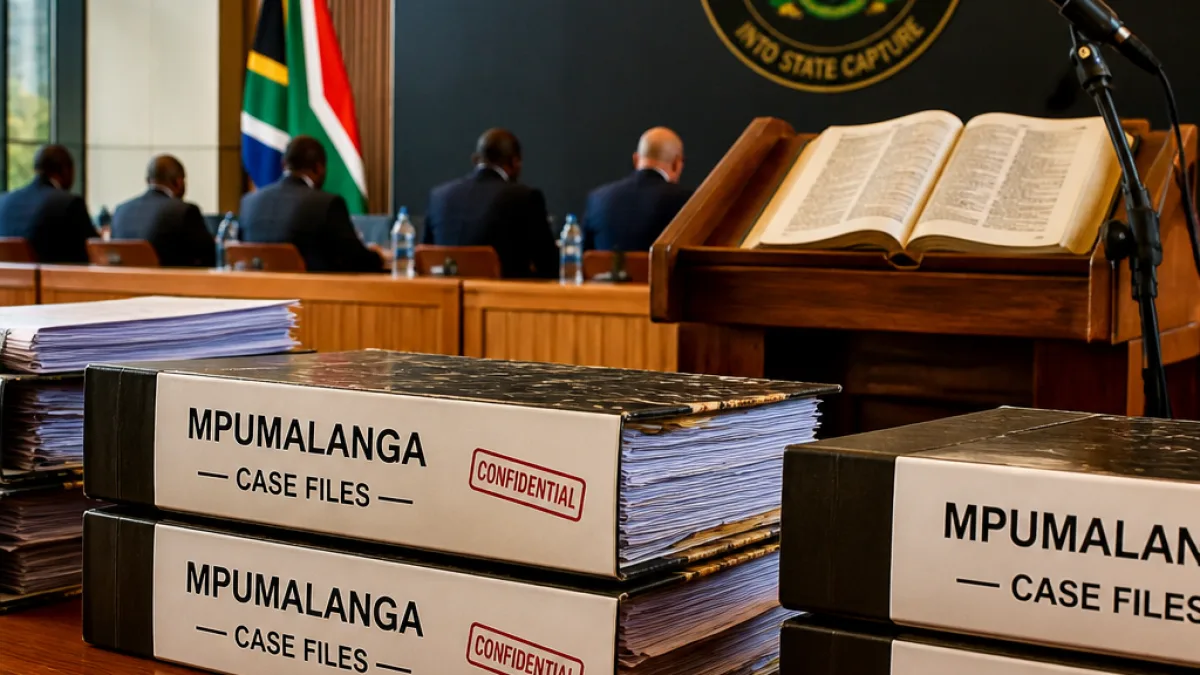
But, according to his testimony, the arrangement changed when he sought copies of the relevant case files from the provincial head of the Directorate for Priority Crime Investigation (DPCI) in Mpumalanga.
“When I asked for copies of these cases from the provincial head of the DPCI in Mpumalanga, he advised me that the divisional commissioner had asked for the copies already,” Lebeya told the commission.
Lebeya said that on querying the divisional commissioner of the detective service he was told that the national commissioner had tasked that divisional commissioner — a move Lebeya interpreted as deliberate exclusion.
Allegation of political interference
Lebeya told commissioners he believed the sequence of events signalled more than just a breakdown in internal communications. He said the decision to task a divisional commissioner who reported to him suggested he had been blocked from a matter that fell within his responsibilities.
“It was a divisional commissioner who reports to me who was tasked by the national commissioner, signalling that she was politically instructed not to task me on matters resorting under my responsibility,” he said in his testimony, according to reporting of the commission proceedings.
The allegation, made under oath at a public commission of inquiry, raises questions about command responsibility, chain of custody for sensitive files and whether political considerations influenced operational decisions during a period of violent political contestation in the province.
What is being examined
The Madlanga commission was established to inquire into allegations of unlawful conduct and possible capture within the South African Police Service. Lebeya’s testimony focuses specifically on how national leadership handled investigations into politically linked killings that shook communities in Mpumalanga.
Key elements emerging from the testimony include:
- Lebeya’s appointment by Phiyega, in the presence of Minister Nathi Mthethwa, to manage the Mpumalanga political killings probe in 2012.
- His discovery that case files had already been requested by a divisional commissioner who reported to him.
- His interpretation that the national commissioner’s instructions effectively excluded him from supervising cases that fell under his mandate.
The commission’s broader remit includes assessing whether decisions and actions by senior police leadership were lawful and in the public interest. Lebeya’s account will be weighed alongside other evidence and testimony before the commission.
Local impact and wider implications
For communities in Mpumalanga still affected by a legacy of politically motivated violence, questions about who led and controlled the investigations are not only legal but practical: they affect case continuity, the preservation of evidence and public confidence in law enforcement. If senior officials diverted control of sensitive enquiries, that could have delayed accountability and eroded trust.
Lebeya’s allegations also touch on institutional accountability at national level. The Madlanga commission has been hearing testimony on a range of matters implicating senior leaders in SAPS; findings could inform recommendations for disciplinary action, policy change or criminal investigation by relevant authorities.
As proceedings continue, the commission will consider whether there is corroborating evidence that files or investigative control were deliberately redirected and whether any such conduct was influenced by political actors or motives. Any party implicated by testimony will have the opportunity to respond as the inquiry progresses.
Reporting from the commission continues, and future hearings may clarify who requested the files, the reasons given for shifting control and how those decisions affected investigations into the assassinations that prompted national concern over safety and governance in Mpumalanga.
Nomsa Mahlangu, Mpumalanga Correspondent