
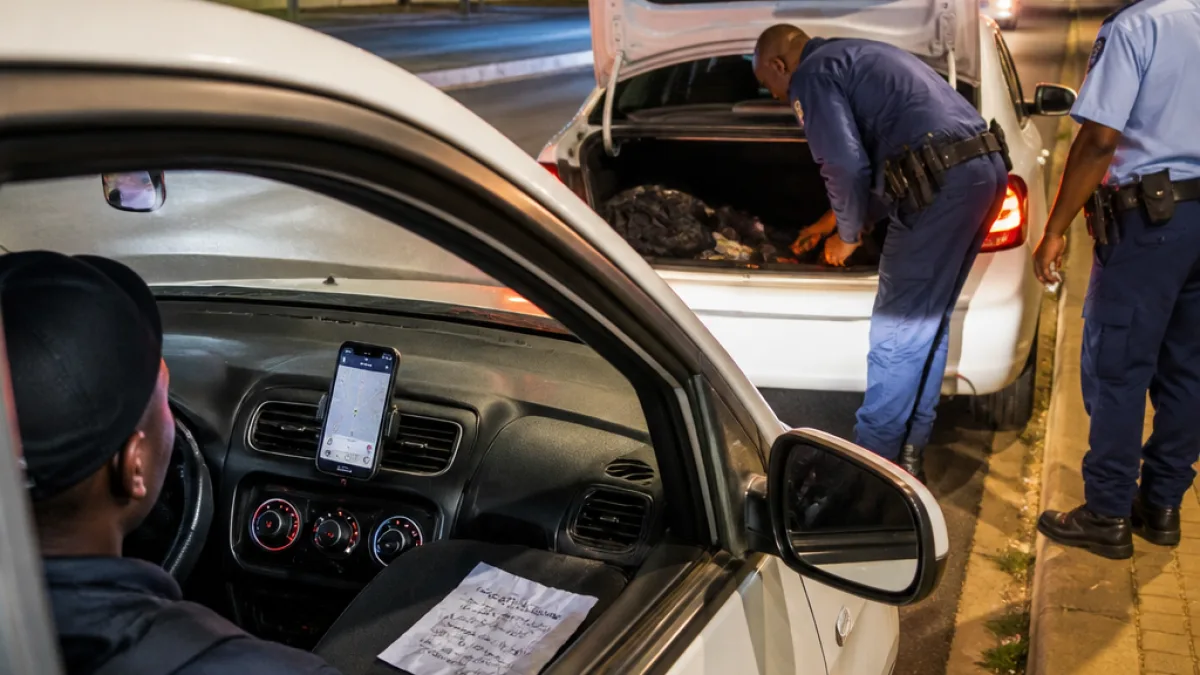
Drivers say they have little control over who books their cars
E-hailing drivers in eMalahleni have told reporters they are increasingly at risk of becoming unwitting couriers for drugs and stolen goods, and that false booking details make it difficult to prove their innocence when police investigations follow.
One driver, Theo Mlambo, said riders regularly book trips using names and addresses that are not their own. He described a period when he was followed by the police for months before officers questioned him about the whereabouts of a former passenger alleged to be linked to drug dealing.
“They request rides using their names, women’s names, and sometimes other people request them. They often use addresses that are not theirs,” Mlambo said.
Mlambo said he had to explain repeatedly that he had no relationship with the passengers and that he was simply doing his job. He also said he is struggling to open a case against the police in relation to being repeatedly targeted.
Drivers call for platform safeguards and clearer co-operation with police
Drivers told Witbank News they have limited ability to verify who is booking their vehicles through e-hailing platforms, and feel the platforms have inadequate safeguards to prevent misuse of the service. Many drivers say they suffer reputational damage and the stress of being associated with crimes they did not commit.
Drivers are calling for stronger measures, including:
- Stricter identity verification by e-hailing platforms;
- Faster and clearer information from platforms to drivers when bookings are disputed;
- Formal channels for co-operation between platforms, drivers and the police to resolve suspected misuse without immediately criminalising drivers.
Witbank SAPS’ spokesperson, Warrant Officer David Ratau, urged e-hailing operators to co-operate with the police to clear drivers’ names when incidents arise, according to reporting by Witbank News.
Local consequences for work and safety
The problem presents practical and reputational consequences for e-hailing drivers in a city where many rely on platform work for income. Beyond the immediate threat of being mistakenly linked to criminal activity, drivers also face:
| Issue | Consequence for drivers |
|---|---|
| False booking details | Difficulty proving who was in the vehicle at a given time |
| Being followed by police | Stress, loss of business while under suspicion |
| Lack of platform support | Limited recourse to challenge or investigate suspect bookings |
Drivers say the cumulative effect is a sense of vulnerability. Some report being reluctant to accept certain trips, which reduces earnings and can leave passengers in outlying areas without transport options.
What would reduce the risk?
Drivers and observers suggest practical steps that could reduce misuse and protect operators without hampering legitimate passengers:
- Enhanced ID checks at registration and random verification;
- Clearer trip records and rapid access for drivers to booking metadata when police inquiries occur;
- Designated liaison channels between platform companies and Witbank SAPS for quick verification so drivers are not immediately suspected in investigations.
These measures would require co-operation from e-hailing companies, which operate digitally and at scale, and from local law enforcement. The balance sought by drivers is simple: be able to work safely while not being criminalised for the actions of passengers.
As eMalahleni continues to expand services that depend on digital platforms, the experiences recounted by drivers highlight the need for local policy conversations that link transport, policing and the digital safety of workers. Closer co-operation, transparent processes and rapid verification mechanisms were among the remedies drivers said would help restore trust and protect livelihoods.













