
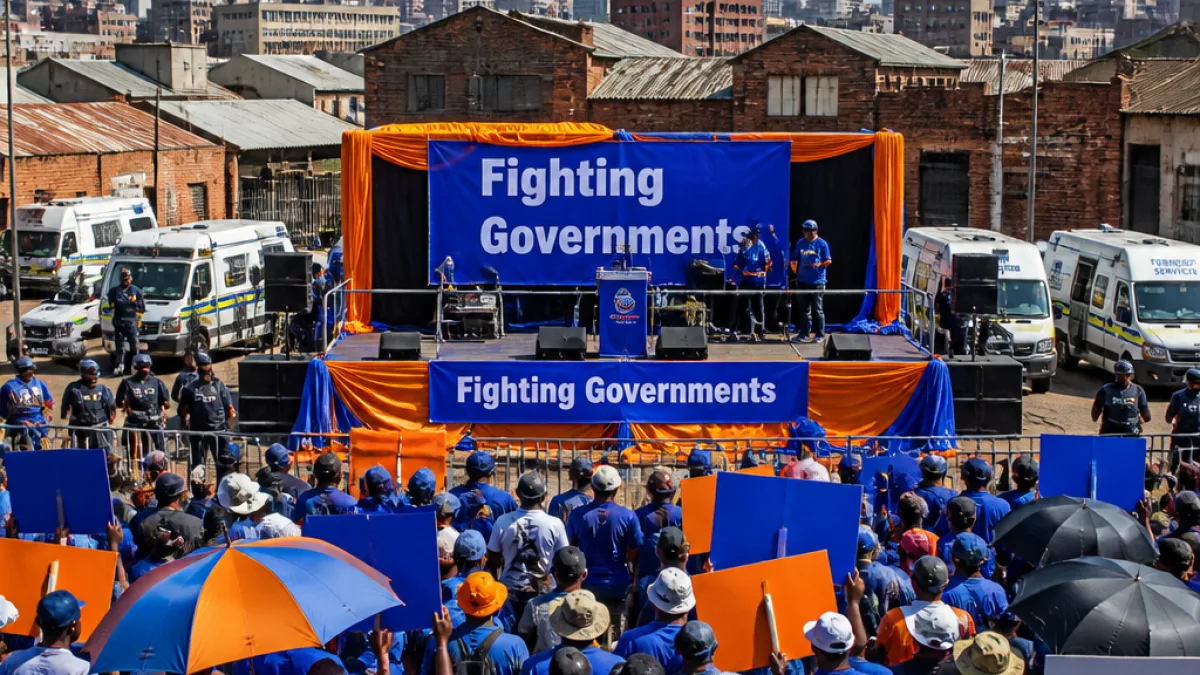
JOHANNESBURG — The DA used a manifesto launch in Newtown on Saturday to cast its upcoming municipal election contest as a battle against corruption and criminal syndicates allegedly embedded in Gauteng’s metros. At the event in Mary Fitzgerald Square, the party’s mayoral candidates signalled a tougher approach, promising what they described as “fighting governments” that will pursue those profiting from municipal failure.
What the party announced
The event, attended by senior party figures and supporters, featured speeches from DA mayoral candidates including Helen Zille, and other contenders named by the party. The launch framed the DA’s municipal campaign around restoring service delivery, fighting corruption and dismantling criminal networks operating within municipal systems.
While the party laid out its thrust in public remarks, details on operational plans were limited at the launch. The DA characterised its pledge as a departure from what it called passive municipal management, promising instead an assertive posture by elected administrations.
Why this matters for Gauteng residents
Gauteng is home to South Africa’s three largest metros, where residents rely on municipal services such as water, sanitation, electricity distribution at a local level and municipal roads and clinics. Any commitment by incoming administrations to pursue corruption and crime carries direct implications for how quickly services recover and how municipal finances are protected.
- Service delivery — Residents are likely to expect clearer plans on how municipalities will stop theft of assets and improve maintenance of infrastructure.
- Accountability — Promises to pursue syndicates raise questions about investigative capacity, co‑operation with SAPS and the Hawks, and the role of oversight bodies such as the Auditor‑General.
- Political stakes — Tough anti‑syndicate language will shape coalition negotiations in metros where no party secures an outright majority.
The DA launch sought to connect municipal dysfunction to organised criminal behaviour, arguing that tackling syndicates is a precondition for restoring order and services. That argument resonates with residents who have experienced inconsistent utilities, blocked drains, waste collection failures and other disruptions linked to weak municipal administration.
Questions left unanswered
At this stage, the party has not published a detailed, public operational plan spelling out how its proposed “fighting governments” would be staffed, resourced or legally empowered to act. Important considerations include:
- How municipal administrations would co‑operate with SAPS and the Hawks on investigations;
- Whether the DA plans to prioritise rapid disciplinary and criminal referrals for implicated officials;
- How anti‑syndicate measures will be balanced with protecting lawful municipal employees and due process.
Experts and oversight institutions typically emphasise that effective anti‑corruption work requires sustained forensic accounting, whistleblower protections and interagency co‑operation — measures that demand time and budget allocations rather than short‑term political declarations.
Political context and the metros
The DA’s manifesto launch comes as voting intentions and coalition possibilities in Gauteng’s metros are under close scrutiny. Municipal administrations in the province have faced service delivery challenges and financial strain in recent years. Parties across the political spectrum make combatting corruption a campaign plank; the DA’s approach emphasises a combative posture against criminal networks operating within municipal ecosystems.
| Element | What voters will watch for |
|---|---|
| Policy detail | Specifics on investigative units, budgets and timelines |
| Interagency co‑operation | Agreements with SAPS, the Hawks and oversight bodies |
| Implementation | Early, visible results in stopping theft and improving services |
For residents, the immediate test will be whether campaign rhetoric translates into transparent plans and measurable improvements in local services. Municipal managers, councillors and provincial oversight structures will also be watching to see if promised action conforms to legal and administrative norms.
The DA’s launch in Johannesburg has set the tone for a municipal season that may be fought as much on security and governance narratives as on traditional service slogans. Voters keen on tangible change will look for practical, evidence‑based interventions rather than broad promises.
Reporting from Newtown, Johannesburg.












