
The African National Congress (ANC) in the North West has entered a new and uncertain phase after the provincial executive committee's (PEC) term expired at midnight. The party's national executive committee (NEC) is expected to appoint a provincial task team (PTT) by Tuesday to run the provincial structures temporarily, a move that has triggered a fresh round of lobbying and internal contestation.
Regional arithmetic and the race for the PTT
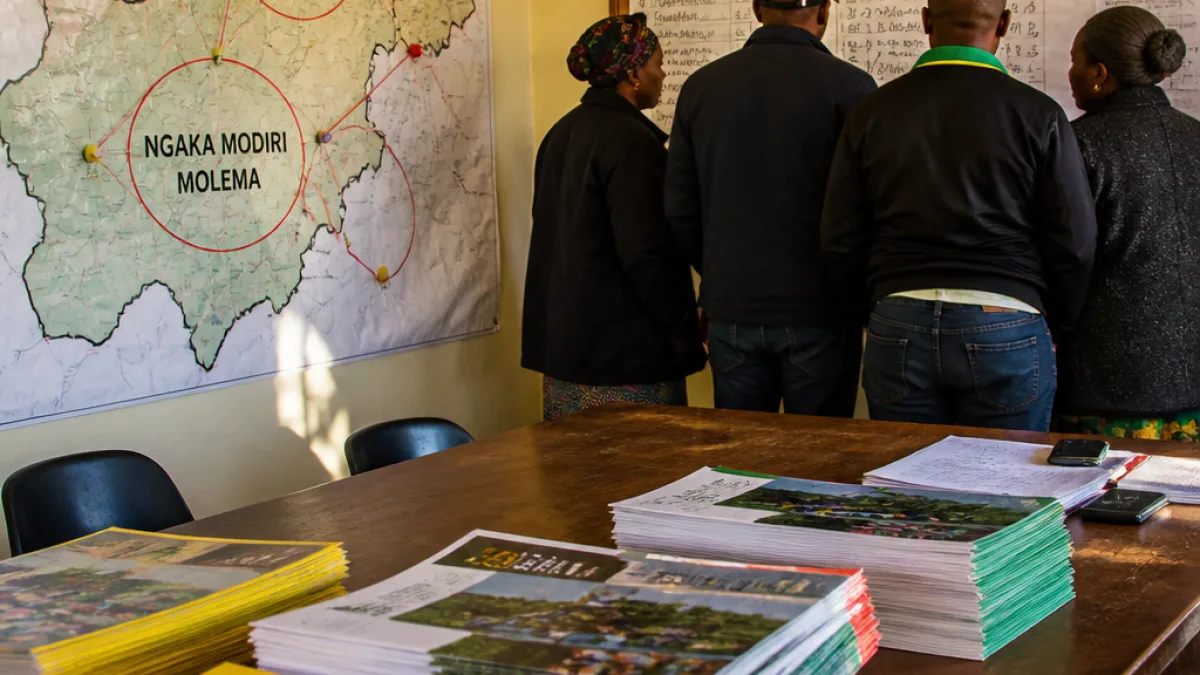
The PTT will be appointed rather than elected, but sources involved in the internal manoeuvring say the process already resembles a conference campaign: names are being canvassed, regional strengths measured, and alliances tested. The Bojanala region — the ANC's largest in the province — and Ngaka Modiri Molema are described as pivotal in determining who will lead the interim structure.
Supporters of Premier Lazarus Mokgosi are pressing for the PTT to be structured in a way that gives him influence. One insider described the argument for Mokgosi as a case in which provincial government performance has improved even as party structures have weakened — a contrast his backers believe makes him a suitable convenor of the ANC locally.
“In terms of government there’s improvement but in terms of the ANC there’s a decline,”
That view underpins a campaign to secure the coordinator role for leaders aligned with the premier. The name of former MP Philly Mapulane has been circulated in discussions, particularly among delegates looking to balance regional representation.
Two broad camps and shifting tactics
Observers describe two broad camps: one coalescing around Mokgosi with roots in Bojanala, and another associated with former ANC Youth League president Collen Maine and allies of provincial chairperson Nono Maloyi. The Maine-Maloyi grouping is said to be thinking beyond simply retaining current provincial leadership and is positioning for longer-term influence at the next elective conference.
Lobbying is occurring on two fronts: organising downward among regions and lobbying upward to NEC members who will make the PTT appointments. That means regional arithmetic — the ability to deliver delegates and sway local structures — is as important as national support.
What is at stake for the province
The contest over the PTT is not only about party titles. Control of the interim leadership can shape candidate selection, influence provincial policy direction, and determine access to patronage networks that matter for jobs and contracts across municipalities and state entities. For communities and workers, who have grown weary of factional battles, the outcome may determine whether political stability translates into improved service delivery.
- Control of the PTT could set the agenda for the next provincial conference.
- Regional coalitions — notably Bojanala and Ngaka Modiri Molema — will be kingmakers.
- Premier's influence is being pitched as a reason to entrust the premier with convening powers.
Regions and representation
Smaller regions such as Dr Kenneth Kaunda and Dr Ruth Segomotsi Mompati are likely to provide the additional votes needed to form winning coalitions. Insiders say none of the big camps can prevail without at least partial support from these areas, which makes them key bargaining chips.
| Region | Role in contest |
|---|---|
| Bojanala | Largest ANC region; pivotal for any winning coalition |
| Ngaka Modiri Molema | Second major bloc; essential for balance |
| Dr Kenneth Kaunda | Smaller share; often decisive in close contests |
| Dr Ruth Segomotsi Mompati | Similar role to Kenneth Kaunda; can tip scales |
How the NEC weighs regional representation, experience and factional balance when naming the PTT will be watched closely. The PTT's composition may also signal whether the national leadership prioritises stability, service delivery, or factional appeasement ahead of a future elective conference.
What to expect next
If the NEC follows the current timetable and appoints the PTT by Tuesday, the immediate focus will shift to how the interim team manages party processes and prepares for a return to internal elections. For members and residents who have borne the brunt of political infighting, there is a clear demand that the appointed structure work to rebuild ANC organisational capacity across the province.
As the contest unfolds, communities, labour structures and civic organisations will be watching whether internal manoeuvring in the ANC translates into renewed attention to service delivery and job creation, or merely entrenches factional control of party resources.
Whatever the NEC decides, the provincial succession contest in the North West has already begun to shape political alignments. The question now is whether a nationally appointed interim structure can restore cohesion and set the party on a path to credible local renewal ahead of the next elective conference.













