
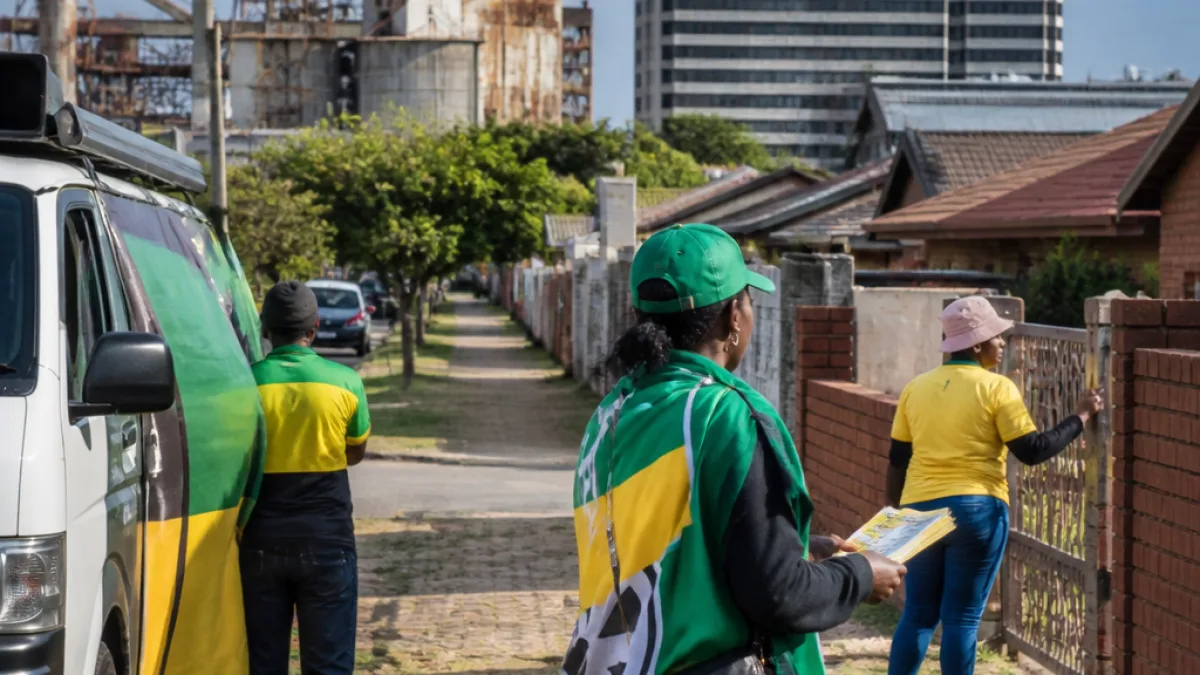
ActionSA has formally entered the Free State contest for the 2026 Local Government Elections, with the party’s deputy president, Dr Mbahare Kekana, and provincial leadership campaigning door-to-door in Welkom to woo voters ahead of the 4 November poll.
New challenger promises short delivery horizon
Speaking during the weekend campaign, Kekana framed ActionSA’s offer as a limited-term mandate: the party is seeking a five-year window to remedy what it says are long-standing governance and service delivery failures in the province. He identified high youth unemployment, poorly functioning municipalities and closed or non-functional factories as core problems the party intends to address.
“We’re only asking for five years. Five years to fix this municipality. Five years to restore basic service delivery, bring accountability back to local government, and show residents what true governance is about.”
The campaign in Welkom places ActionSA directly in the Free State political battleground for the first time, signalling a concentrated effort to expand beyond its existing strongholds. The party says it aims to contest metros in the province and to install mayoral teams focused on service delivery.
Key priorities and local focus
Kekana told residents the party’s principal priorities are to restore governance, improve delivery of basic services and create employment opportunities for young people. He repeatedly pointed to visible local problems — illegal dumping, potholes and youth loitering — as evidence that the incumbent administration has not delivered.
The campaign emphasises three practical interventions:
- Service delivery restoration — fixing municipal services such as refuse removal and road maintenance;
- Job creation — reopening or revitalising factories and creating work opportunities for youth;
- Accountability and governance — instituting stronger local government oversight and responsive municipal management.
| ActionSA campaign pledge | Expected outcome |
|---|---|
| Five-year mandate | Rapid implementation of service projects and governance reforms |
| Reopen non-functional factories | Job creation for youth; local economic revival |
| Field mayoral candidates | Municipal leadership focused on delivery |
Campaigning strategy and tone
ActionSA’s approach in Welkom is grassroots: Kekana and provincial secretary Lerato Mosala are reported to be engaging residents through door-to-door visits. The party positions itself as willing to collaborate with other actors where necessary, describing its role as a partner aiming to provide services rather than as self-styled saviours.
While the party cast criticism at the long-governing African National Congress in its messaging — citing service gaps and municipal decline — its public statements framed the intervention as practical and time-limited rather than a wholesale ideological repositioning.
Local implications
Welkom and surrounding municipalities face chronic service backlogs and economic challenges, common in parts of the Free State. A focused campaign on reopening factories and creating employment would require municipal coordination, provincial support and, likely, national engagement, depending on the scale of the interventions.
Residents considering ActionSA’s offer will weigh short-term promises against the practical difficulties of reviving closed industrial capacity and the complexity of municipal finances and procurement. If the party were to win control of metros or form part of governing coalitions, it would inherit inherited budget constraints, infrastructure backlogs and administrative challenges that affect the delivery of services.
What voters can expect before 4 November
- Increased canvassing by ActionSA across targeted wards in the Free State, beginning with Welkom.
- Public pledges and localised promises aimed at addressing immediate service concerns such as waste removal and road repairs.
- Debates and campaigning from other parties responding to ActionSA’s challenge in the province’s metros.
ActionSA’s entry into the Free State contest highlights how local elections are increasingly centred on tangible service outcomes and employment concerns. Voters will judge party claims against delivery capacity and the realism of proposed interventions, particularly where municipal administration and funding constraints remain significant.
Coverage of the party’s ongoing campaign, candidate announcements and any coalition discussions will be closely watched in the weeks leading up to 4 November, as voters weigh options for municipal leadership across the province.













