
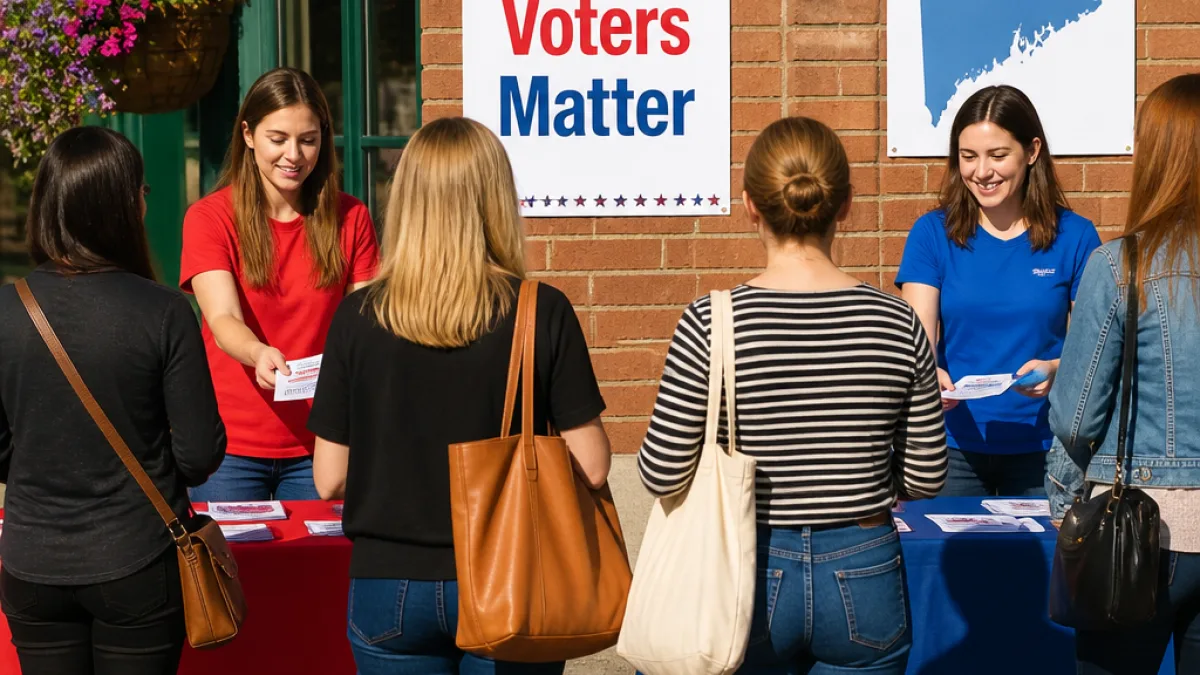
BANGOR, Maine — As the high-profile Senate contest between Republican Sen. Susan Collins and Democrat Troy Jackson moves toward November, both campaigns are focused on a single, influential voting bloc: women in Maine.
Why women voters matter in Maine
Women make up a disproportionate share of Maine’s electorate and have proven decisive in recent statewide contests. According to exit polling from the 2020 election, women accounted for nearly 60% of total turnout. That year, women voters broke strongly for the Democratic presidential ticket — favoring Joe Biden by 23 percentage points — yet they also provided Collins a razor-thin margin, delivering her a three-point advantage in her 2020 re-election bid.
The seeming paradox underscores why both campaigns view outreach to women as essential. For Jackson, a progressive former state senator and the Democratic nominee, the task includes rebuilding support after an early intra-party controversy. For Collins, a four-term incumbent often described as a moderate Republican, maintaining her edge among women remains a strategic priority.
Local supporters weigh the contest
On an 89-acre farm in Belmont, floral designer and political organizer Stacy Leafsong described her path from supporting an earlier Democratic candidate to rallying behind Jackson following the suspension of that campaign.
“He really needs to speak to the women in Maine, and really convince them that he’s going to advocate well for them,”
Leafsong, who characterized herself as a survivor of domestic violence, said that women’s concerns in Maine go well beyond singular issues such as childcare or abortion. Her view illustrates a broader trend: many women voters weigh a range of economic, health and safety issues when choosing candidates.
What the candidates are doing
Campaigns for both parties have intensified direct outreach to women across the state. That has included tailored messaging, targeted events and policy proposals meant to address issues identified as priorities by female voters, including healthcare access, caregiving supports, and economic security. Because Maine’s electorate skews older and women constitute a larger share of the voting population, both campaigns see persuasive engagement with women as essential to building coalitions.
- Democratic strategy: Consolidate progressive and swing female voters, shore up support after a turbulent primary season, and emphasize Jackson’s record on affordability and services.
- Republican strategy: Preserve Collins’ cross-party appeal among women, highlight her incumbency and constituent services, and focus on messaging that resonates with moderate and independent female voters.
Political analysts and local leaders weigh in
Political observers note that shifts among women voters have been pivotal in other states this cycle. In Maine, the combination of a high female turnout rate and the state’s independent streak makes this electorate particularly volatile. Local Democratic figures say outreach must be careful and comprehensive; Republican strategists aim to sustain Collins’ historical ability to attract women across ideological lines.
Emily Cain, a former state senator, emphasized the numerical realities underpinning campaign efforts: women are the majority of voters and cannot be overlooked by either side.
Implications for the general election
For Jackson, the challenge is twofold: winning back voters who supported other Democrats and persuading women who have previously voted for Collins that he can champion their priorities at the federal level. The suspension of an earlier Democratic campaign after allegations against that candidate added urgency to Jackson’s task of uniting the party and reassuring concerned voters.
For Collins, retaining support among women — particularly independents and moderate Democrats who have backed her in past cycles — is central to her path to victory. Her narrow margin among female voters in 2020 indicates there is limited room for erosion.
| Data point | 2020 figure |
|---|---|
| Share of voters who were women | Nearly 60% |
| Women’s margin for Biden | +23 points |
| Women’s margin for Collins | +3 points |
As the campaign season tightens, both parties are investing time and resources in precincts and communities where women’s votes could determine the outcome. With Maine’s electorate once again likely to play a meaningful role in the control of the Senate, the decisions of women voters here will carry consequences that extend beyond the state.
Reporting from Bangor.

















