
CHARLESTON, W.Va. — West Virginia students overall have recovered ground lost during the COVID‑19 pandemic, state education officials said Wednesday as they released the annual assessment results for the school year.
Gains in math, steady English, slight science decline
The West Virginia Department of Education reported an uptick in math proficiency compared with last year, while performance in English held steady and science saw a slight decline, according to the summary released by state officials.
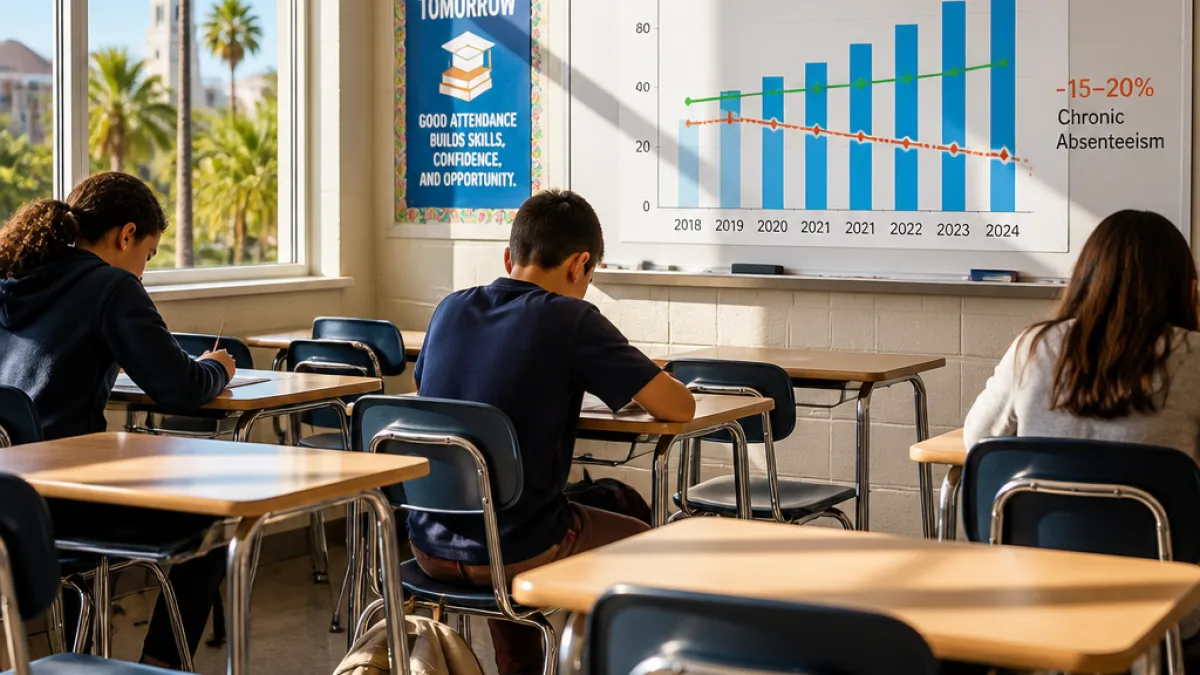
State officials attributed the results to a combination of student performance across all grades and the outcomes of the state’s summative assessments. They also pointed to a persistent problem that officials say is depressing proficiency statewide: chronic absenteeism, which they estimate lowers proficiency rates by roughly 15–20% across grades.
The department encouraged districts, schools and families to examine the full set of assessment data and local results to guide instruction and interventions, and directed readers to the official release for complete details.
What officials emphasized and what it means locally
Educational leaders framed the results as a step forward, particularly in mathematics, where gains suggest recovery from pandemic learning disruptions. Yet the widespread impact of students missing school remains the central concern for teachers and administrators, who say regular attendance is essential for academic progress.
District leaders across West Virginia will now face decisions about where to focus resources — whether to expand attendance initiatives, bolster math interventions that appear to be working, or address the downturn in science performance.
- Math: Overall increase in proficiency compared with last year.
- English: Performance remained steady year over year.
- Science: Slight drop in proficiency noted.
- Chronic absenteeism: Cited as lowering proficiency by an estimated 15–20% across grades.
Officials did not provide a detailed breakdown of gains and declines by grade level or county in the summary, but emphasized that the combined nature of the data — covering multiple grades and statewide summative exams — drives the overall picture.
How absenteeism influences proficiency
State officials warned that chronic absenteeism remains an ongoing challenge for educators and families. The department’s statement estimated the effect of persistent absences at roughly 15–20 percentage points reduction in proficiency across grades, a figure that underscores the scale of the problem but does not replace local analysis of root causes.
Attendance problems can reflect a wide range of issues, including health needs, transportation barriers, family economic stressors and school climate. Local school systems will need to pair outreach and support services with classroom interventions if they hope to counter that impact on learning.
Next steps for districts and parents
Superintendents and school boards will likely use the assessment snapshot to set priorities for the coming year. Possible actions include targeted tutoring, summer learning opportunities, teacher professional development in math and science instruction, and family engagement strategies to reduce absences.
| Subject | State Trend | Officials' Note |
|---|---|---|
| Math | Up | Largest reported gains compared with last year |
| English | Steady | No major change from prior year |
| Science | Slight decline | Small downward movement noted |
Families and community members seeking a deeper dive into the numbers should consult the department’s full assessment release for district‑level and grade‑level data. State and local leaders say those detailed reports will be central to planning targeted supports in the months ahead.
The results mark a notable milestone in the state’s recovery from COVID‑era learning disruptions, but officials and educators say the work continues — particularly in tackling absenteeism, which they characterize as a leading factor holding back student achievement.
As districts begin the new school year, attention will turn to translating the statewide trends into classroom practices and support systems tailored to local needs.















