
MORGANTOWN — When Joni Morris discovered a diminished, overgrown family burial plot behind a retail development on Lawless Road, she said it sparked a determination to act. The Breakiron cemetery — by Morris' account significantly smaller than it should be and sitting uncomfortably close to a sediment pond — became the starting point for a wider effort to document and preserve small, often-forgotten graveyards across the state.
Grant funding keeps community preservation alive
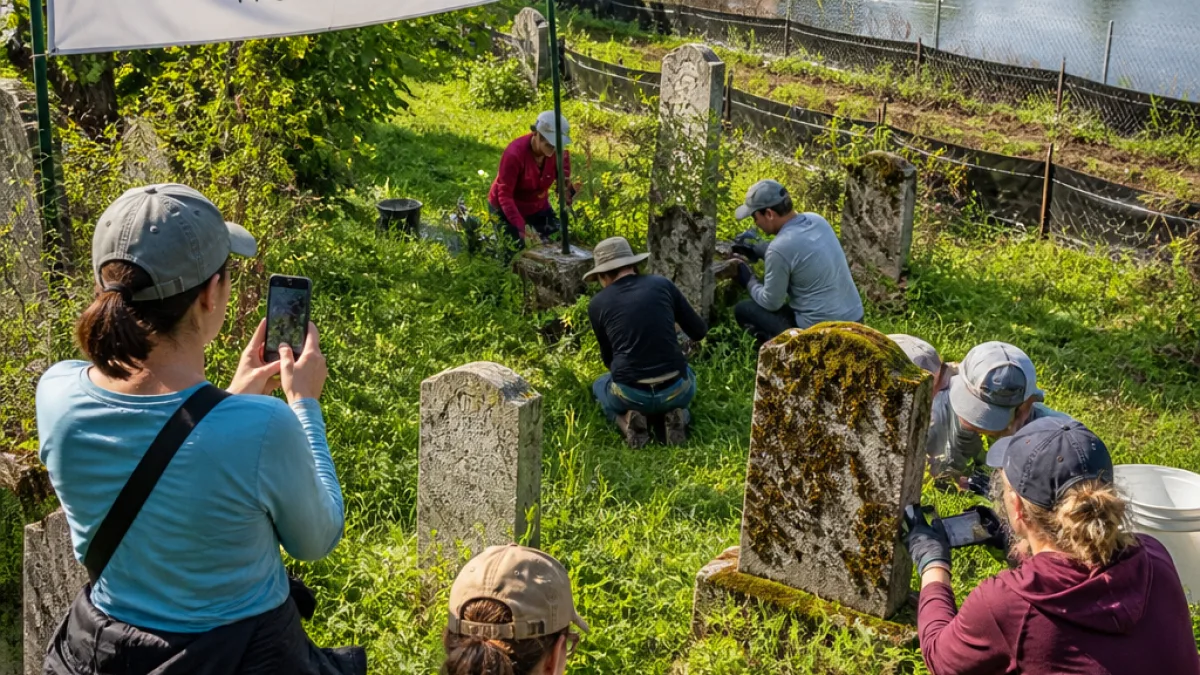
Morris now leads cemetery conservation work through the Preservation Alliance of West Virginia (PAWV). Her workshops teach residents how to document gravesites using phone apps and how to perform basic stone clearing and repairs. She credits recent funding from the West Virginia Humanities Council, the state affiliate of the National Endowment for the Humanities, with making the continuation of those workshops possible.
"I found out about this, and it kind of lit a fire under me because I didn't want something like this to happen to somebody else's family cemetery," Morris said.
The WVHC distributed a series of small awards — known as "mini grants" — across the state during its latest funding round. In this cycle, 27 grants of $2,000 or less were awarded to nonprofits and community groups to support public humanities projects, according to program materials provided to WE NEWS. Morris' West Virginia Cemetery Documentation & Preservation Project was among the recipients.
Training, technology and hands-on conservation
Morris developed her preservation workshops after service with AmeriCorps and additional training in physical conservation techniques. The sessions combine instruction on how to use popular cemetery documentation apps — such as Find a Grave and BillionGraves — with practical demonstrations in resetting stones and clearing vegetation. She said the mixed approach helps community volunteers manage sites for posterity.
Participants learn to photograph and log headstones, transcribe inscriptions, and place site information into searchable databases. Those digital records can help families, historians and municipalities locate and protect burial grounds that might otherwise be lost to development or neglect.
Why small grants matter
While the dollar amounts are modest, organizers say the grants have outsized effects in rural communities where budgets for cultural work are limited. The mini grants provide seed money for programming, outreach and materials — allowing local groups to host events, buy tools, and reach volunteers without waiting on larger funding cycles.
- Funds support workshops that teach documentation with mobile apps.
- Grants enable hands-on training for stone cleaning and repair.
- Recipients include historical societies, nonprofits and grassroots projects.
Morris described how the WVHC award enabled her to continue offering the workshops she developed, saying the grant allowed the Preservation Alliance to expand training opportunities and keep outreach affordable or free for attendees.
Broader impact across West Virginia
The WVHC's program aims to strengthen the public humanities statewide by supporting projects that connect residents with history, culture and civic life. Small-scale projects — from cemetery documentation to local history exhibits, oral-history programs, and community reading events — benefit when organizations receive direct, timely funding.
For communities, the practical outcomes are tangible: improved records for family researchers, stabilized gravestones, safer site conditions, and greater awareness of local burial grounds. Organizers say that documentation also creates evidence that can help when municipalities or preservation partners seek to protect or remediate threatened sites.
| Grant type | Number awarded | Maximum award |
|---|---|---|
| Mini grants | 27 | $2,000 |
Those figures reflect the most recent disbursement round and show the WVHC's emphasis on spreading modest resources across multiple local projects rather than concentrating larger sums in a few places.
Practical information for residents
Residents interested in participating in preservation workshops should contact the Preservation Alliance of West Virginia or the West Virginia Humanities Council for schedules and funding opportunities. The PAWV and similar organizations often post event calendars and volunteer opportunities on their websites and social media pages.
Morris emphasized that anyone can begin documenting a family cemetery with a smartphone and basic guidance: photograph markers, record inscriptions, and enter the information into a recognized database. For physical repairs and resetting of stones, she recommends training and adherence to best practices so that restoration does not cause further harm.
The WVHC's mini-grant model demonstrates how targeted, smaller awards can catalyze community-based stewardship of history. For projects like Morris', that seed money is the difference between a one-time event and a sustained program that helps preserve West Virginia's local heritage.















