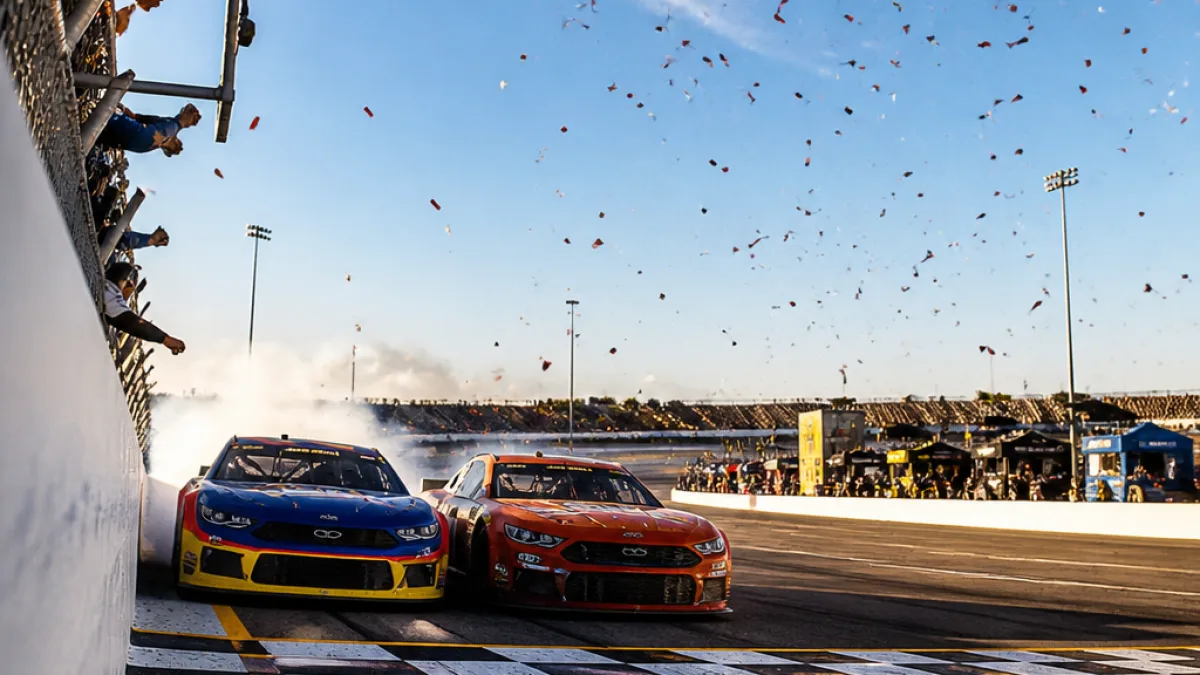
Ty Gibbs used a late pit strategy to take the lead and held off Christopher Bell by just two-tenths of a second to win the NASCAR Cup race in Iowa. Gibbs’ decisive move came on a two-tire stop during the final round of green-flag pit cycles, vaulting him past the field and into a victory that was secured in the closing laps.
Final sprint and pit strategy
The finish was tight: Gibbs completed the scheduled distance in 2:57:48.643, crossing the line only 0.253 seconds ahead of Bell. The late two-tire call provided Gibbs with the track position he needed on the short oval, while Bell — who led a race-high 108 laps — settled for second and extended a season-long pattern of near-misses.
Ryan Blaney finished third after collecting the most laps led during the race (129 laps), while Josh Berry and Denny Hamlin rounded out the top five. The top 10 also included Chase Briscoe, Ross Chastain, AJ Allmendinger, William Byron and Austin Dillon.
Who ran up front
Leadership in the race was concentrated among a small group of drivers. In total, just six different drivers led laps, and the bulk of the time up front was shared between Bell and Blaney. A quick breakdown of laps led shows the race was dominated by a handful of contenders:
- Christopher Bell: 108 laps led
- Ryan Blaney: 129 laps led (most laps)
- Ross Chastain: 40 laps led
- Darrell Wallace Jr.: 35 laps led
- Ty Gibbs: final 20 laps
- Chase Elliott: 18 laps led
Attrition and incidents
Traffic and contact took several boats out of contention. Only ten cars finished on the lead lap. Three drivers failed to finish the event because of crashes: Alex Bowman, Tyler Reddick and Erik Jones. Those retirements factored into the final standings and the points picture for teams and drivers further down the order.
Other notable performances included Connor Zilisch, who completed the race one lap down but managed a solid run, and a number of teams that executed long green-flag runs. Blaney and Bell split the stage victories, with Blaney collecting the most laps led despite not converting that pace into the victory.
Official top 10
| Pos | Driver | Manufacturer | Laps Led |
|---|---|---|---|
| 1 | Ty Gibbs | Toyota | 20 |
| 2 | Christopher Bell | Toyota | 108 |
| 3 | Ryan Blaney | Ford | 129 |
| 4 | Josh Berry | Ford | 33 |
| 5 | Denny Hamlin | Toyota | 37 |
| 6 | Chase Briscoe | Toyota | 40 |
| 7 | Ross Chastain | Chevrolet | 43 |
| 8 | AJ Allmendinger | Chevrolet | 29 |
| 9 | William Byron | Chevrolet | 32 |
| 10 | Austin Dillon | Chevrolet | 33 |
Context and immediate implications
The result enhances Gibbs’ season résumé with a win delivered through strategic pit calls and late-race composure. For Bell, the runner-up result marked his seventh second-place finish of the season, a string of high finishes that has yet to produce a victory.
From a team perspective, the race highlighted the value of pit strategy at short-track events where track position is often decisive. Blaney’s dominance in laps led shows the Ford entry ran strong speed for long stretches but could not convert pace into the checkered flag. Meanwhile, crashes that removed Bowman, Reddick and Jones from contention will affect their teams’ short-term plans and points trajectories.
What to watch next
Attention now turns to how teams will adjust setups and strategy for upcoming dates on the schedule, particularly as road-course and intermediate-speedway events require different approaches. For viewers and fans, the race offered a reminder that short ovals can produce close finishes and that late pit calls can swing outcomes even after long green-flag runs.
The official finishing order and lap statistics will be incorporated into the series standings and championship calculations as the season moves forward.
— Meredith Kowalski, State Correspondent