
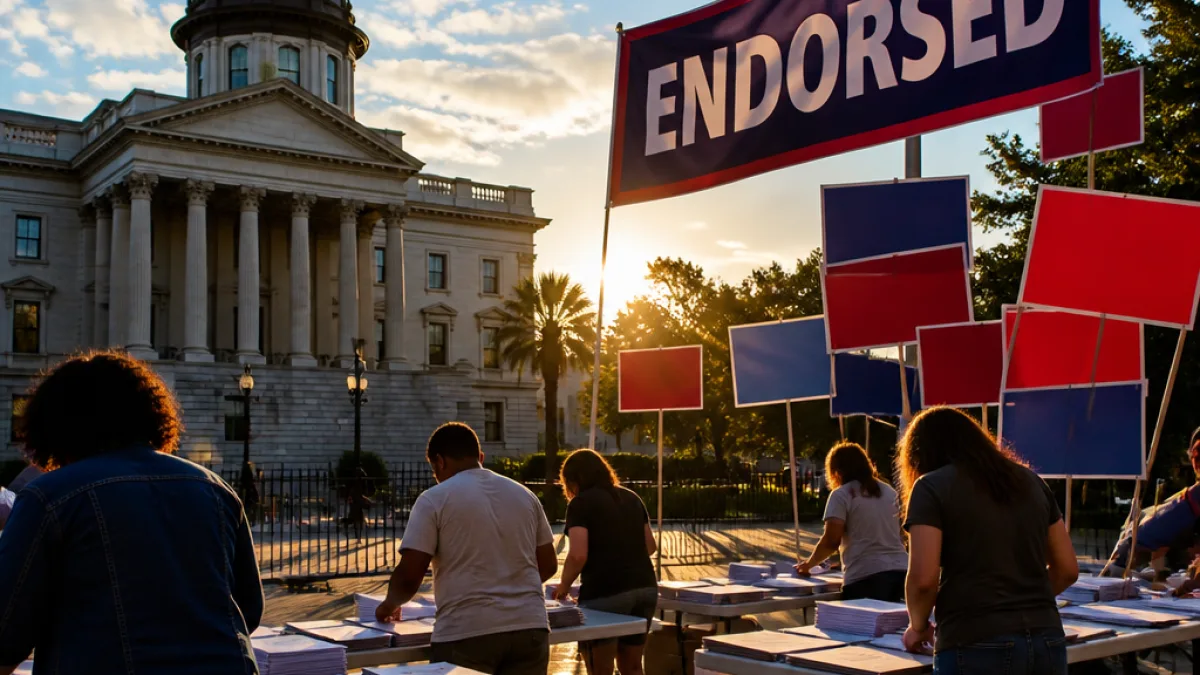
President Donald Trump scored two significant Republican runoff victories Tuesday as his preferred candidates prevailed in South Carolina and Oklahoma, outcomes that underscore his continued influence within the GOP even after a string of recent endorsement setbacks.
Trump’s backing proves decisive
In South Carolina, Sen. Darline Graham defeated Rep. Ralph Norman by nearly 5 percentage points to secure the Republican nomination for the seat she was appointed to fill following the death of her brother, Sen. Lindsey Graham. In Oklahoma, former state Sen. Mike Mazzei narrowly defeated Attorney General Gentner Drummond by roughly 0.5 percentage points, according to Decision Desk HQ projections reported by U.S. outlets.
Both contests were widely viewed as tests of Trump’s standing among Republican primary voters. Trump campaigned in South Carolina alongside Graham and held a phone rally before the runoff, urging supporters to vote as if his own name were on the ballot. His super PAC, MAGA Inc., invested in the South Carolina contest—more than $827,000 on voter outreach, the largest deployment by the group so far this election cycle.
“South Carolina is truly Trump country,” Darline Graham said during her victory remarks, adding that the win would not have been possible without the former president’s support.
Context and consequences
These victories arrive after a bruising stretch for Trump’s endorsements. National coverage earlier in the cycle noted a series of high-profile losses for Trump-backed candidates; the recent run of primary defeats had raised questions about how consistently his support translates into wins. The dual successes Tuesday — one in a state with deep ties to the Graham family and another in a heated Oklahoma gubernatorial fight — will be interpreted by allies as evidence that his political clout remains strong in important local contests.
In South Carolina, Graham’s campaign had faced scrutiny over her relative lack of political experience and a stumble during a recent debate, but the candidate rebounded with high-profile backing and donor resources. In Oklahoma, the gubernatorial runoff had become one of the most expensive intraparty contests of the primary cycle; reporting indicates more than $9 million was spent on the race since the June round, reflecting the high stakes and national attention.
What this means locally
- South Carolina: Graham’s win secures the GOP nomination and positions her for the general election, preserving a seat that has been associated with the Graham name for years.
- Oklahoma: Mazzei’s narrow victory sets up a general election campaign that will draw scrutiny from both state and national Republican factions given the large sums spent and the close margin.
For South Carolina voters, the result both validates a concerted effort by national conservative networks and removes the prospect of a potentially embarrassing primary loss for Trump in a state where he invested heavily. In Oklahoma, the outcome underlines how competitive and costly intraparty battles have become, with even narrow margins decisive after extensive outside spending.
Numbers at a glance
| State | Winner | Opponent | Reported margin | Notable outside spending |
|---|---|---|---|---|
| South Carolina | Darline Graham | Ralph Norman | ~5 percentage points | MAGA Inc.: $827,000 on calls/texts |
| Oklahoma | Mike Mazzei | Gentner Drummond | ~0.5 percentage points | Race total reported: >$9 million since June |
What to watch next
Both winners now head toward tough general-election campaigns. Observers will be watching whether these victories shift momentum for Trump’s preferred slate of candidates in other upcoming primaries and whether the spending patterns seen in Oklahoma become a template for future intraparty runoffs. Local party leaders and national funders will also assess how the results affect strategy and investment decisions leading into November.
As South Carolina moves toward the general election, the Graham name — long associated with the late senator — will remain central to the state’s Republican politics. In Oklahoma, the close finish leaves open questions about the strength of the governor’s race and how quickly both parties will consolidate behind their nominees.
Local voters and political watchers should anticipate intensified campaigning, fundraising appeals and national attention as both contests evolve toward the fall midterms.

















