
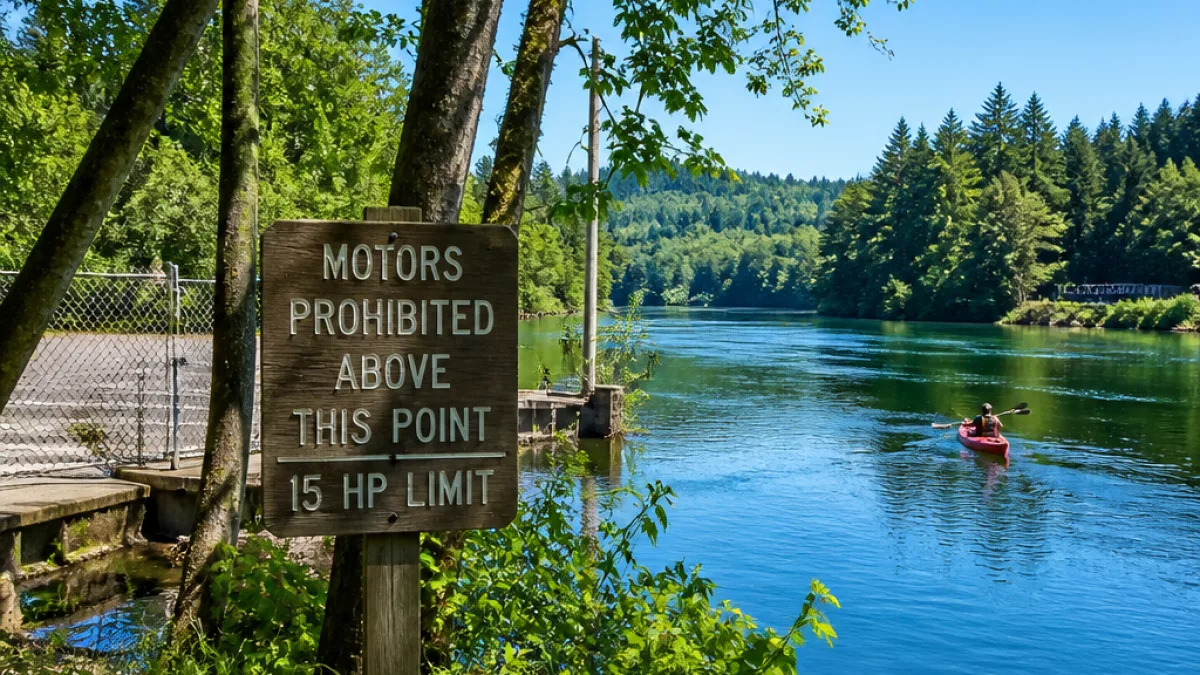
The Oregon State Marine Board on July 30 approved new restrictions on motorized boats on portions of the Siletz River, north of the town of Siletz, that will take effect March 31, 2027. The decision bans motors above Old Mill Park, limits motors to under 15 horsepower between Old Mill Park and Jack Morgan Park, and prohibits motors on tributaries above Jack Morgan Park.
What the ruling does and where
The board’s action outlines a tiered approach to motor restrictions on this roughly 16-mile stretch of river commonly used for fishing, recreation and access to tribal and private lands. It preserves motorized access downstream of Jack Morgan Park.
| River segment | Motor restriction |
|---|---|
| Above Old Mill Park | All motors banned |
| Between Old Mill Park and Jack Morgan Park | Motors limited to under 15 horsepower |
| Downstream of Jack Morgan Park | No change |
| Tributaries above Jack Morgan Park | Motors banned |
The OSMB also set aside up to $500,000 in boating facility grants intended to revamp Old Mill Park in Siletz. The board cited planned improvements including upgraded parking areas, a replaced boat ramp and a new vault toilet.
Tribal concerns and long-running conflicts
The move comes after years of petitions by the Confederated Tribes of Siletz Indians asking the board to limit motorized use on the river to protect fish habitat and reduce user conflicts. Angela Sondenaa, the tribe’s natural resources director, told the board and media the tribe has repeatedly sought restrictions and remains disappointed in the latest ruling.
"It does not address the concerns that were raised in the petitions. Specifically, the impacts to the spawning fish,"
Sondenaa said motorized traffic has disrupted salmonid species for two decades, naming steelhead, coho and Chinook salmon as particularly vulnerable. According to the tribe, motorboats travel upstream through shallower rapids where fish spawn, and motorized users have been observed moving repeatedly through high-value fishing holes, hindering other anglers and altering bank access for both tribal members and private landowners.
Board history and earlier petitions
The OSMB has rejected four prior petitions from the tribe to restrict motors above the river’s tidewater. In February 2025 the tribe petitioned again for a full ban above Jack Morgan Park, which the tribe identifies as the transition point where tidewater ends and sensitive spawning areas begin. The new ruling does not implement the full ban the tribe sought above that park.
The conflict illustrates the difficult balance regulators face between recreational and subsistence uses of waterways and efforts to protect fish habitat. Motor restrictions can reduce noise, wake and sediment disturbance, but they also affect boaters, anglers who rely on motors to access remote holes, and businesses that serve motorized river recreation.
Local impacts and what to expect
- Motorized boaters planning trips above Old Mill Park will need to switch to non-motorized craft or avoid that stretch starting March 31, 2027.
- Anglers who rely on motor access between Old Mill Park and Jack Morgan Park will be limited to craft with engines under 15 horsepower.
- Old Mill Park is slated to receive improved facilities funded in part by OSMB grants, which could change how boaters and day users access the river.
The OSMB’s decision leaves downstream uses unchanged, so river users accessing stretches below Jack Morgan Park should not see new motor limits. The board’s investment in Old Mill Park indicates a parallel focus on improving access while changing the character of upper river segments.
Tribal leaders and conservation advocates may continue to press for stricter protections in future rulemaking or through renewed petitions. The board’s ruling represents a compromise that reduces motorized presence on key upper segments but stops short of the broader bans the Confederated Tribes sought to protect spawning habitats.
As the March 2027 start date approaches, state and local officials, the tribe and recreational groups will likely coordinate public outreach about new rules and how they will be enforced. Boaters should monitor the OSMB website and local notices for final maps, signage plans and any guidance about permitted craft and enforcement protocols.


















