
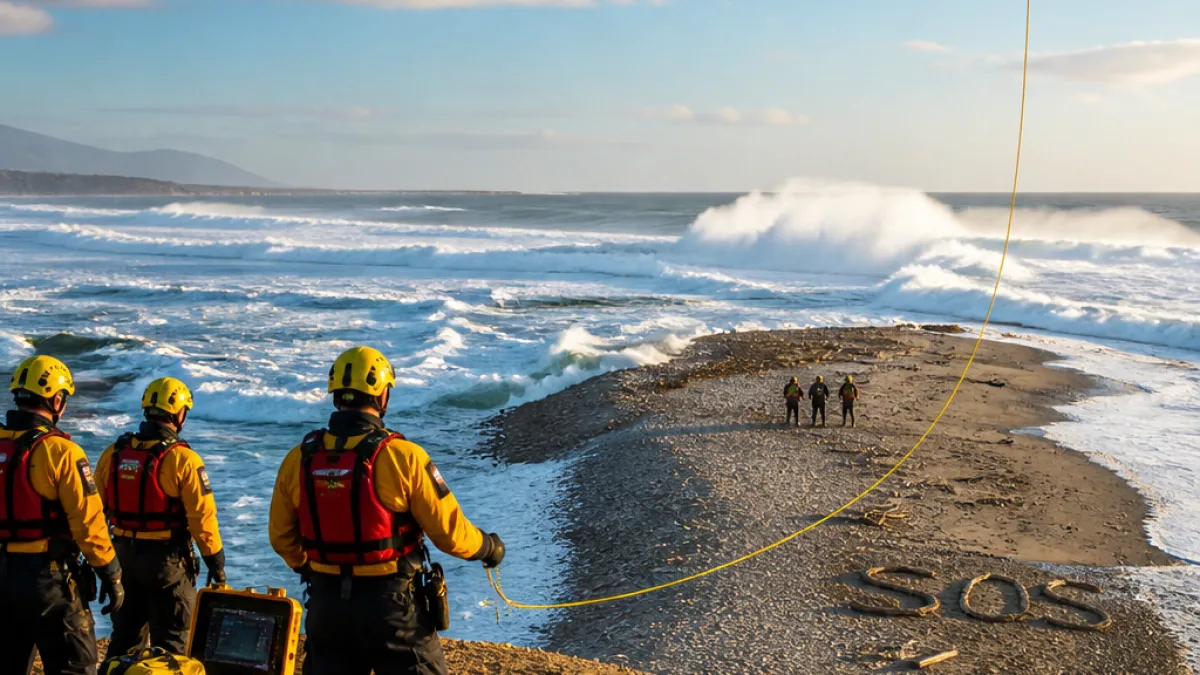
OCEANSIDE, Ore. — Emergency crews performed a high-risk rescue last week after three tourists became stranded on Lost Boy Beach, an isolated stretch just north of Oceanside, when an incoming tide and heavy surf cut them off from the mainland.
Drone locates stranded visitors; conditions delayed approach
Netarts-Oceanside Fire District personnel launched a drone and used a satellite emergency device signal to pinpoint the location of the group, who were in their 20s. The visitors had spelled “SOS” on the sand with driftwood to attract attention while waiting for help.
The terrain and surf made immediate access hazardous. As rescuers scouted from above, the team monitored falling temperatures and gusty winds that raised the risk of hypothermia. Officials said large waves forced crew members to pause before rounding a rock face and reaching the stranded group.
“That team made their way to a rock face, and we had to wait a little while, about 40 minutes, for the wave action to recede, because we were having large waves that afternoon,”
After conditions improved, rescuers equipped the tourists with life vests, tethered them for safety, and escorted them back to shore.
Why remote beaches are hazardous
Officials warned that remote coastal areas can become dangerous very quickly. Even on days that appear calm, ocean conditions can shift within minutes because of tides, swell, wind and local bathymetry.
- Rapidly rising tides: Can cut off access routes and strand visitors on headlands and pocket beaches.
- Strong surf and currents: Make approach by land or sea risky for rescuers and those needing help.
- Hypothermia risk: Cooler temperatures and wet clothing reduce survival time, especially for prolonged exposures.
Netarts-Oceanside Fire District Chief Jeff McBrayer emphasized the need for vigilance, saying crews are watching a pattern of social-media posts drawing people to lesser-known beaches.
Response tools and timeline
Authorities credited the quick activation of technology and on-scene judgment for preventing a worse outcome. Using a satellite communicator, one of the trapped tourists alerted 911. The drone’s aerial view allowed crews to confirm the victims’ location and condition without immediately exposing rescuers to the full force of the surf.
| Event | Approximate timing |
|---|---|
| Call from satellite device | Within minutes of entrapment |
| Drone deployment and location confirmation | Minutes after dispatch |
| Delay for wave action to recede | About 40 minutes |
| Tethered extraction and return to shore | After improved surf conditions |
Public-safety message for visitors and locals
Officials reminded anyone planning to visit Oregon’s beaches — particularly those less frequented — to check tide charts, plan exit routes and consider how quickly conditions could change. Posting images and videos that promote remote spots can unintentionally encourage others to take similar risks.
Surf-related rescues often strain small coastal agencies that depend on volunteer crews and limited resources. In addition to the immediate dangers to the public, responders cautioned that every such incident places emergency personnel at risk when ocean conditions are marginal.
Netarts-Oceanside Fire District said it would continue to monitor social-media trends that point people toward isolated areas and will use public outreach to discourage risky behavior on the coast.
Anyone planning a beach visit is advised to:
- Consult tide tables and local forecasts before arrival.
- Avoid cliff and headland approaches at high tide.
- Carry a means of emergency communication; know that cell service can be unreliable.
The tourists were recovered without reported serious injury. The incident underscores the narrow margin for error on Oregon’s shoreline and the value of technology and patient operational decisions in saving lives.


















