
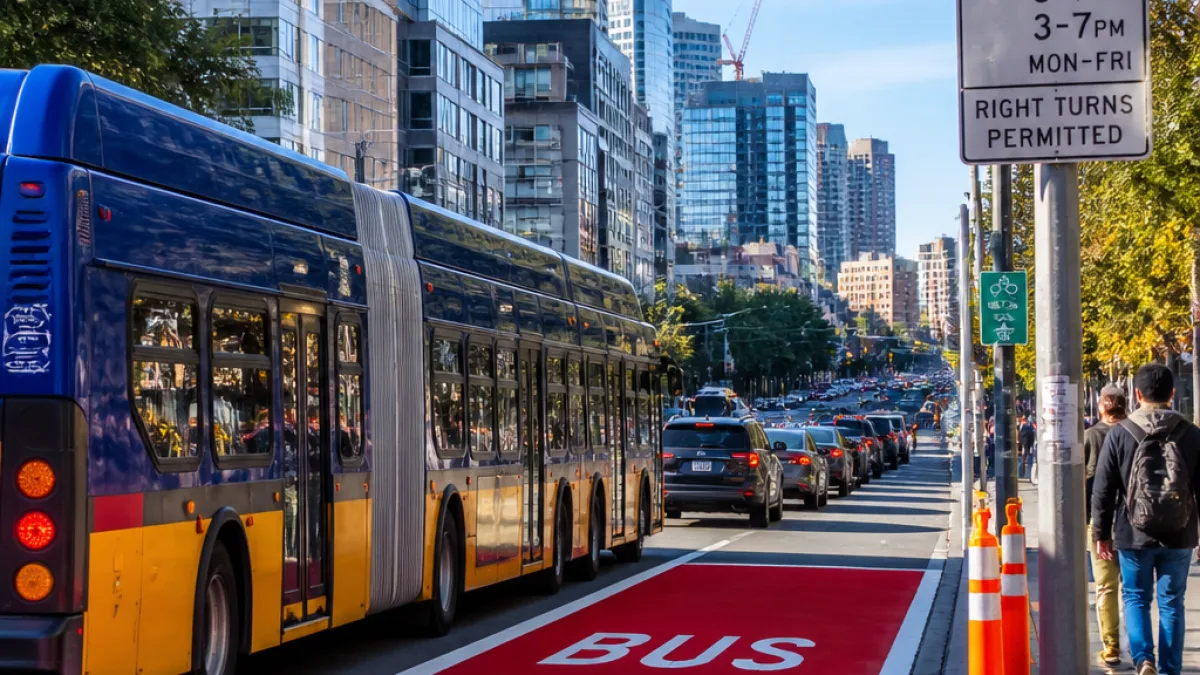
New lane configuration aims to speed buses, change how drivers navigate central corridor
Seattle drivers and transit riders are adjusting to a new traffic pattern on Denny Way after city officials reallocated a full lane to buses from roughly 5th Avenue to Interstate 5. The change, which took effect Monday, leaves drivers with a single lane of general traffic through a busy stretch of the city while giving buses an exclusive lane intended to reduce conflicts and improve transit reliability.
Mayor Katie Wilson backed the reconfiguration as part of a city effort to prioritize public transit on crowded arterials. City officials say the dedicated lane should help overall traffic flow by minimizing lane switching and reducing turning conflicts that can slow vehicles and buses alike.
- Location: Denny Way, roughly 5th Avenue to I-5
- Primary transit impact: Route 8, which serves about 7,000 daily riders
- Traffic change: General-purpose traffic reduced to one lane; some left turns removed
Immediate reactions: mixed from drivers and riders
Reactions among drivers on Monday afternoon ranged from bafflement to frustration. Some motorists appeared unaware of the new lane configuration; others reported longer waits or heightened congestion at intersections.
"it really sucks it creates mroe traffic. We already have traffic with two lanes!"
The remark was offered by a driver who identified himself only as Antonio as he waited near the Westlake intersection. Other drivers expressed a more measured view. Brendan Rushing said the intent of the change — to reduce congestion created when buses and cars compete for space — made sense and that he had not observed a dramatic overall increase in traffic.
Transit focus: Route 8 and rider expectations
The new lane directly affects Route 8, a corridor that city materials and transit advocates have long highlighted for on-time performance challenges. The route carries roughly 7,000 passengers daily and has been colloquially referred to by some riders as the "Late 8" because of frequent delays.
At least one regular bus rider said he plans travel timing with the route’s delays in mind. Daniel Top, who rides the bus multiple times a week, said he often builds extra time into his schedule because the line can be unpredictable.
| Measure | Before | After |
|---|---|---|
| General-purpose lanes on Denny Way | Two lanes (approx.) | One lane |
| Dedicated bus service | No continuous full-lane bus only | Full lane reserved for buses, 5th Ave to I-5 |
| Route 8 daily riders | — | ~7,000 |
City rationale and potential trade-offs
City officials argue that consolidating autos into a single lane reduces the need for drivers to weave between lanes or make conflicting turns, both of which can generate delays and safety hazards. Eliminating some left turns along the corridor is part of that strategy.
The trade-offs are familiar in urban traffic planning: reallocating space to move more people efficiently can slow individual drivers but increase overall person-throughput when buses carry many riders. How those trade-offs play out on Denny Way will depend on whether bus travel times improve noticeably and whether drivers adjust their routes or travel times to avoid bottlenecks.
For now, the implementation has produced a split of personal impressions and realignment of traffic patterns. City transportation staff will likely monitor speeds, bus on-time performance and crash and conflict reports to assess whether the change meets its goals and whether additional adjustments are needed.
No official ridership or travel-time results have been released yet; the early indicators are anecdotal. Officials and riders seeking relief from frequent bus delays will be watching Route 8 closely as the new lane takes effect.


















