
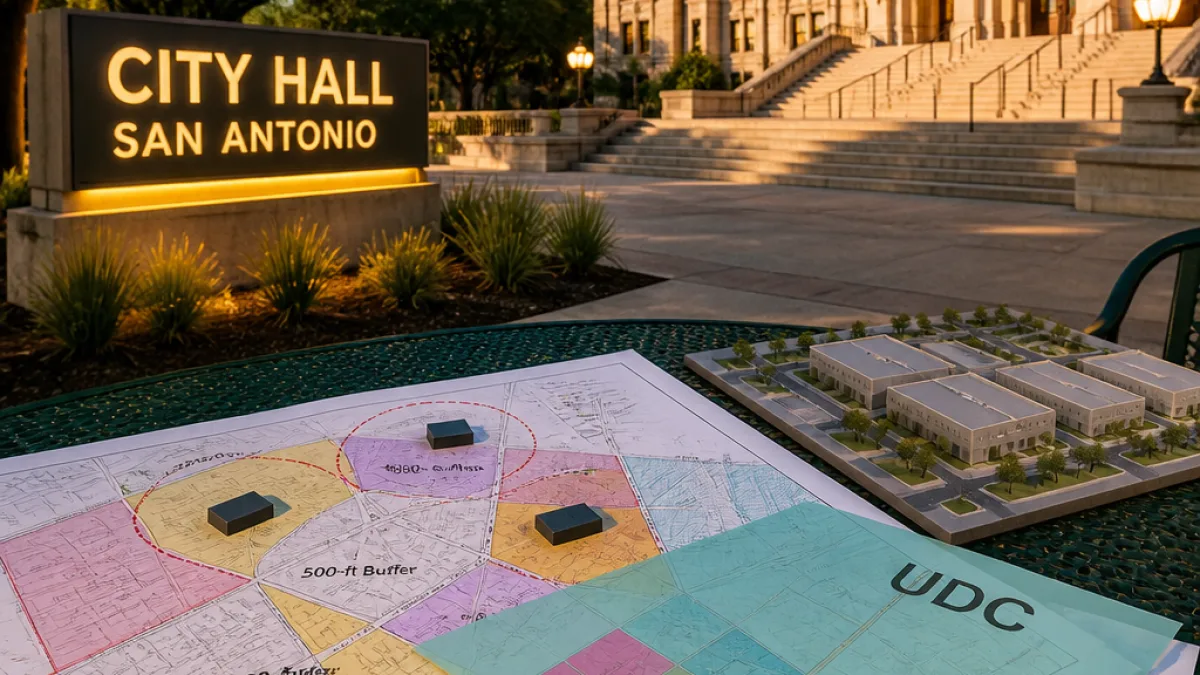
Council majority favors code changes over a temporary moratorium
The San Antonio City Council signaled broad support Tuesday for regulating the rapid growth of data centers through changes to the Unified Development Code (UDC) rather than pursuing a lengthy building-permit moratorium.
City staff told council members a moratorium would be temporary and limited — lasting 90 to 180 days — and would not halt projects already in progress. Instead, staff recommended amending the UDC to create lasting development rules that would control where data centers may locate and what protections must be in place.
"Compared to the UDC, if we put some restrictions in the UDC, those are permanent. Those are in our code, and we can control where they're going to develop the data centers," said Amin Tohmaz, director of Development Services.
What changes are under consideration
City staff have already convened stakeholder meetings and floated specific proposals for the UDC update. Potential measures discussed this year include:
- Limiting data centers to certain commercial or industrial zones
- Requiring a minimum separation — about 500 feet — from residences, schools and other sensitive uses
- Prohibiting data center construction over the Edwards Aquifer recharge zones
Officials said the proposed code amendments could be ready for a council vote by mid-October.
Council reactions reflected a mix of urgency and caution
Among council members, responses varied. Councilman Jalen McKee-Rodriguez (D2) urged swift action and explicitly voiced support for a moratorium alongside other measures, saying the city has a "very clear and present moral obligation to take action where we can".
Other members pressed for additional analysis or preferred relying on the UDC process. Councilwoman Sukh Kaur (D1) said she wanted more data and study before committing to a moratorium, and Mayor Gina Ortiz Jones asked what more could be accomplished through permanent code changes first.
City staff emphasized that a moratorium would be a stopgap: it could slow new permits in the near term but would not provide long-term direction for siting, resource use or community protections.
Why San Antonians are watching data center growth
Data centers have become a contentious topic in many Texas communities as the industry expands. Residents and local officials have raised concerns about:
- Utility demands — large power consumption and potential strain on electricity systems
- Water use — some facilities require substantial water for cooling
- Local impacts — noise, traffic and potential effects on nearby neighborhoods and schools
- Environmental risk — siting over aquifer recharge zones could raise groundwater protection questions
By choosing to pursue UDC amendments, the council would be opting for a framework that shapes where data centers can locate and what operational or buffer requirements they must meet — rather than relying on a short-term halt to construction.
Next steps and timeline
City staff indicated a timeline that could bring proposed UDC language back to council for consideration by mid-October. If adopted, the amendments would become part of San Antonio's permanent development code and guide future permitting and review.
| Issue | Possible approach | Timing |
|---|---|---|
| Immediate slowdown | Building-permit moratorium (90–180 days) | Short term |
| Long-term regulation | UDC amendments (zoning, buffers, aquifer protections) | Proposed by mid-October |
As the council moves forward, residents and neighborhood groups are likely to watch the process closely. The choice between a temporary moratorium and permanent code changes carries different consequences for existing applicants, local utilities and communities near proposed data center sites.
Staff and council members will continue stakeholder outreach and technical analysis as they craft specific UDC language aimed at balancing economic development with community and environmental safeguards.

















