
Oregon’s wildfire season continued to escalate over the weekend as new fires ignited in the Cascade Mountains and several of the state’s most active blazes expanded, pushing the statewide total to a record 2.3 million acres burned as of Aug. 10.
New fires near Estacada prompt closures
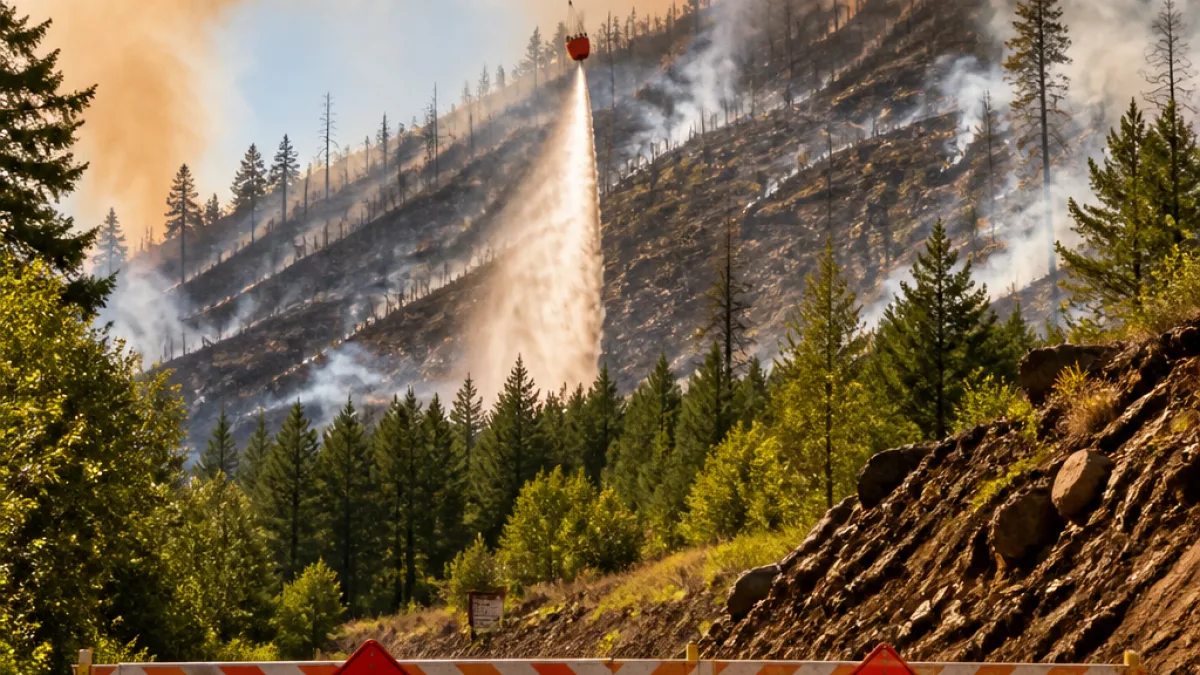
A cluster of three fires that started Aug. 8 and 9 in the Clackamas River area outside Estacada led managers to close roads and recreational sites while firefighters worked to contain the outbreaks. The largest of the three, the Austin Fire, was estimated at about 250 acres and was burning on slopes above Forest Road 46, within the burn scar from last year’s Riverside Fire. Helicopters were dropping water on the blaze as crews worked from the ground where safe.
Smaller blazes in the group included the Mitchell Fire, reported at roughly 10 to 15 acres near Shellrock Lake, and the Narrows Fire, estimated at about 5 acres in steep, hazardous terrain. Smokejumpers parachuted into the Mitchell Fire area to assess and begin building fireline, authorities said.
"However, it is currently threatening very little. Helicopters continue to keep it in check with water bucket drops."
Closures and local impacts
Fire officials closed Forest Road 46 between U.S. Forest Service roads 63 and 4660, affecting access on the boundary of the Mount Hood and Willamette national forests. Hideaway Lake and Shellrock campgrounds were closed due to the Mitchell Fire; Lake Harriet Campground remained open.
- Forest Road 46 closed between USFS roads 63 and 4660.
- Hideaway Lake and Shellrock campgrounds closed; Lake Harriet remains open.
- Helicopter bucket drops and smokejumper operations in the Clackamas River area.
State’s largest, most active fires
Across the state, several large incidents continued to consume forestland. The Grasshopper Fire near Mount Hood and the Wrights Spring Fire near Klamath Falls remained active and were consuming timber. On the Oregon-Idaho line, the Big Grass Fire exceeded 500,000 acres, one of the largest individual fires currently burning in the region.
| Fire | Location | Reported size (as of Aug. 10) |
|---|---|---|
| Austin Fire | Clackamas River area (near Estacada) | ~250 acres |
| Mitchell Fire | Near Shellrock Lake | ~10–15 acres |
| Narrows Fire | Clackamas River area | ~5 acres |
| Grasshopper Fire | Near Mount Hood | Active — size changing |
| Wrights Spring Fire | Near Klamath Falls | Active — size changing |
| Big Grass Fire | Oregon–Idaho state line | Surpassed 500,000 acres |
Firefighting tactics and conditions
Fire teams leaned heavily on aviation for the newly ignited Cascade fires, using helicopters to drop water on flames in terrain that is difficult or dangerous for ground crews. In steeper spots with hazardous snags and limited ground access, managers relied on bucket drops and limited direct attack while prioritizing firefighter safety.
Smokejumpers were used in the Mitchell Fire to enable early assessment and construction of fireline in remote wilderness areas. That tactic is commonly deployed to quickly establish containment when ground access is slow or hazardous.
Statewide context and outlook
With the statewide burned acreage at an unprecedented 2.3 million acres, Oregon is experiencing its most severe fire season in the modern era of record keeping. Officials noted that as weather moderates this coming week, fire activity is expected to ease compared with recent days, though individual incidents will continue to require active management.
Western Oregon saw some improvement in air quality as winds and weather shifted, offering temporary relief to communities that have endured episodic, unhealthy smoke over recent weeks. Still, residents near active incidents should expect closures and travel impacts to persist while crews work to secure lines and protect communities.
Officials urge recreationists and residents in fire-affected zones to follow closures and advisories from the U.S. Forest Service and local incident command teams. Road and campground closures can change rapidly depending on fire behavior and firefighter needs.
As Oregon continues to battle multiple large blazes, aviation support, targeted ground operations and early initial attack remain critical tools in limiting spread and protecting communities, while the statewide tally underscores the scale of this year’s wildfire crisis.


















