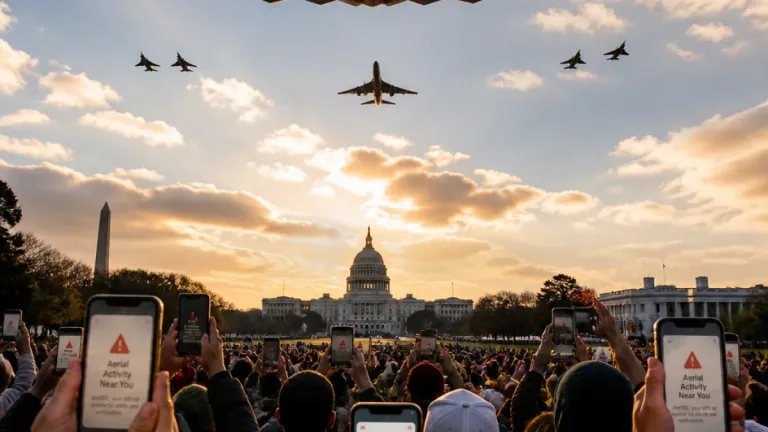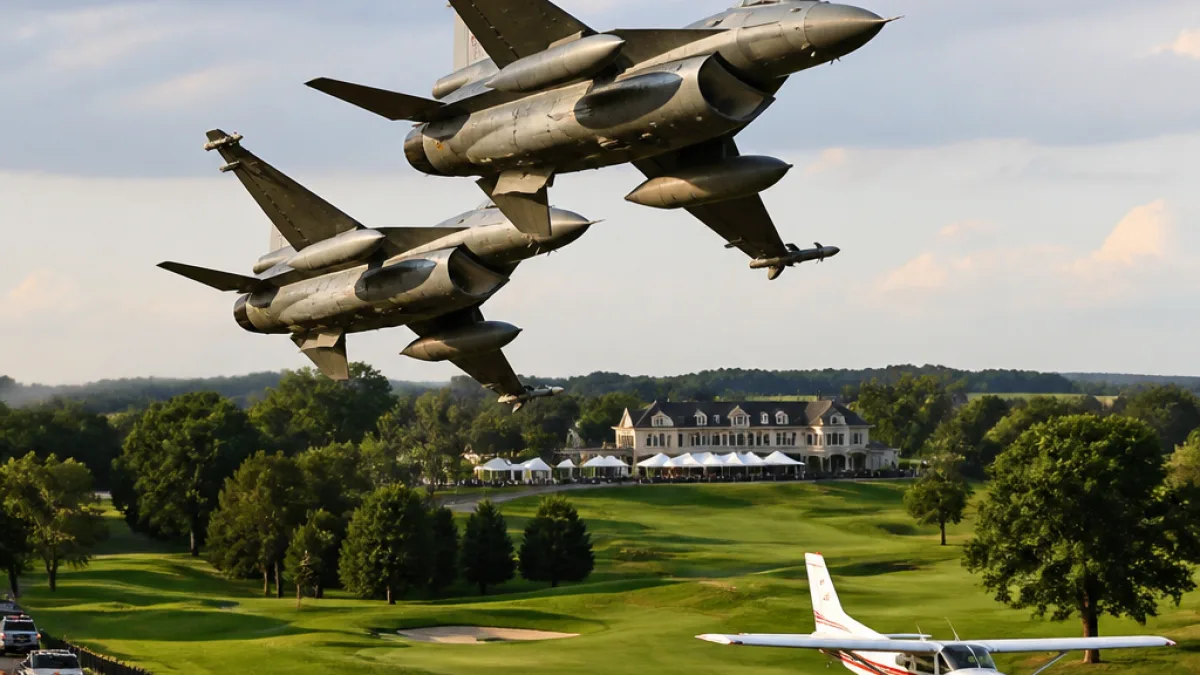
Fighter jets dispatched by the North American Aerospace Defense Command intercepted two aircraft that entered a temporary flight restriction (TFR) near the golf club in Bedminster where former President Donald Trump spent the weekend, military officials and U.S. media reported Sunday.
What happened
NORAD confirmed that F-16 fighter aircraft intercepted the two planes and escorted them out of the restricted airspace. The military did not disclose the number of fighters involved or provide further details about the aircraft that violated the flight restrictions.
Fox News and the New York Post reported the intercepts occurred near Trump’s Bedminster property, where temporary security-related airspace restrictions were in place. Authorities routinely impose such TFRs when presidents or former presidents are at a location to guard against potential airborne threats.
Why temporary flight restrictions matter
- Temporary flight restrictions are used to protect locations where U.S. presidents and other high-risk individuals are present.
- They limit or prohibit certain aircraft operations within a designated radius and altitude for safety and security reasons.
- Violations are often intercepted by military aircraft and can lead to investigation or enforcement action.
NORAD officials urged pilots to check for any airspace restrictions before flying. The command emphasized that pilots are responsible for ensuring they do not enter TFRs.
"NORAD urged pilots to check relevant airspace restrictions before every flight."
Local impact and context
While the interception did not result in any reported injuries or damage, the event highlights how national security protocols affect communities near facilities that become the focus of presidential or high-level security operations. Residents and local airspace users can experience temporary changes to air traffic patterns and may notice increased military or law enforcement activity during such periods.
Temporary flight restrictions are not uncommon and often involve smaller general aviation aircraft that inadvertently enter the zone. In this instance, military jets safely escorted the two aircraft away from the restricted area without further incident.
What pilots and residents should know
Pilots and operators of all types of aircraft should routinely check Notices to Airmen (NOTAMs) and other guidance before departure to avoid entering TFRs. The Federal Aviation Administration maintains real-time information on restricted airspace, and many flight-planning tools incorporate TFR alerts.
| Item | Detail |
|---|---|
| Intercepting agency | NORAD |
| Aircraft used | F-16 fighter jets |
| Location | Bedminster, New Jersey |
| Reported outcome | Two aircraft escorted out of restricted airspace; no injuries reported |
Because the military provided limited detail, some basic questions remain unanswered, including the precise nature of the aircraft involved and whether pilots will face any administrative or legal consequences. NORAD and other agencies often withhold specific operational details while they assess incidents or for security reasons.
How the incident fits broader patterns
Incursions into TFRs around presidential sites occur sporadically and vary in severity. Many are the result of pilot error, outdated flight plans or unfamiliarity with temporary restrictions. On rare occasions, such incursions can trigger more serious responses if aircraft pose a credible threat.
The Bedminster intercept serves as a reminder that coordination between civilian aviation and military air defense remains critical. It also underscores the need for ongoing public awareness about how and when airspace restrictions are imposed, particularly around high-profile locations.
As the investigation and any follow-up proceed, NORAD and local authorities will likely review the circumstances surrounding the incursion to determine whether additional steps are needed to prevent future violations.
Reporting from Bedminster and military sources contributed to this article.