
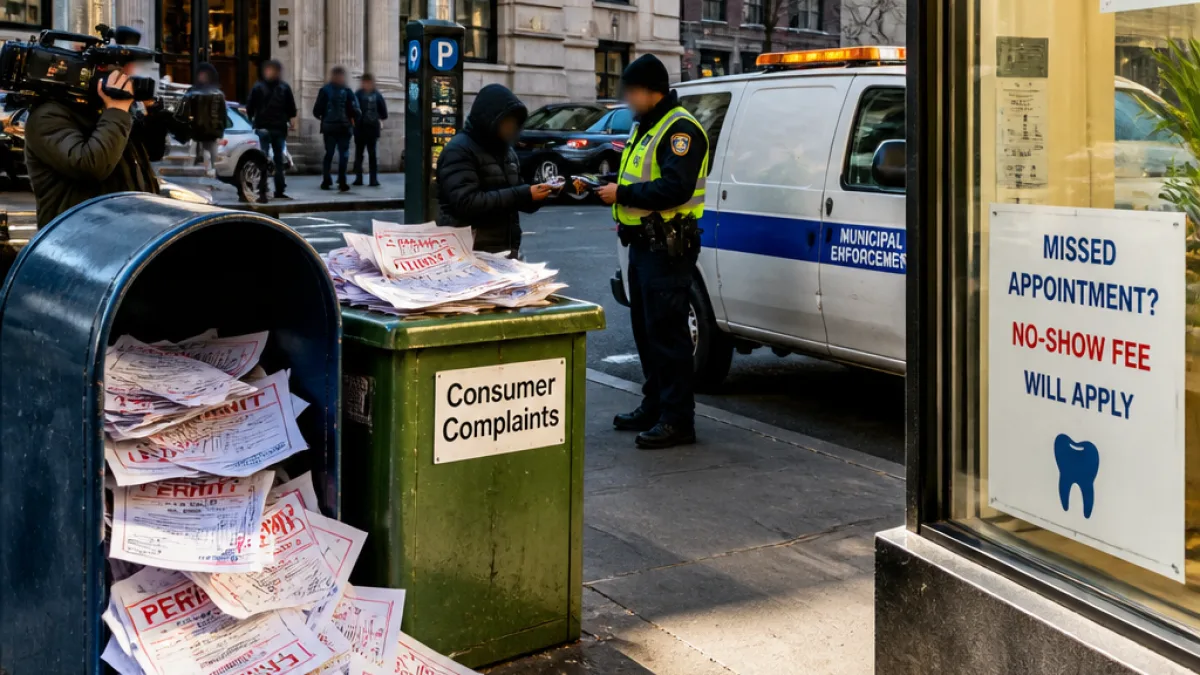
Mayor focuses on "pocketbook potholes" to build goodwill
The Zohran Mamdani administration has turned its attention to the minutiae of daily life in New York, pursuing enforcement and rule changes aimed at fees, scams and bureaucratic hurdles that many residents say make the city harder to live in. The push, described by City Hall aides as an effort to improve material conditions for New Yorkers, ranges from cracking down on noncompliant parking lots and dentists to simplifying consumer-facing policies such as cancellation rules.
New Yorkers often describe the city as a place where small, recurring irritations — confusing permits, opaque contract terms, upcharges and hustles aimed at tourists — add up. The mayor’s office is treating those irritants not as mere nuisances but as political opportunity: tangible wins that can demonstrate the practical value of government and build public trust for larger policy initiatives.
Targeting everyday problems
Reporting and statements from the administration point to a variety of concrete targets. The city is moving against businesses and practices that residents flag on social media and to the mayor’s office — a process that, in some cases, results in quick enforcement action. Examples highlighted by the administration include:
- Duplicate and unnecessary permitting requirements, such as the need for two permits to sell ice cream.
- Complex or punitive cancellation policies that trap consumers into continuing services.
- Rule-breaking parking lots and sketchy dental practices.
- Confusing or misleading introductory rates for storage units and other household services.
Administration officials argue that addressing those issues is not merely performative. "If government can do the things that materially improve the lives of New Yorkers, we can be trusted to do more," said
Julie Su, New York City deputy mayor for economic justice.
Political calculation and limits
The strategy — sometimes called "pocketbook pothole politics" — is deliberate. City Hall’s aim is to deliver frequent, visible fixes on everyday problems so the public sees tangible benefits from municipal action. That, in turn, is expected to create political capital to pursue more ambitious or politically contentious measures later on.
But the approach has limits. Addressing low-level scams, regulatory oddities and customer-service frustrations will not in itself solve the city’s deeper structural issues, including housing affordability and broader economic pressures. Some critics describe such moves as politically gratifying but modest in scope, likening them to a long game of whack-a-mole: fix one problem here, and another one soon appears.
From social media complaints to enforcement
Officials say the administration is also responsive to problems that residents spotlight online. Posts and videos tagging the mayor about local issues — from potholes to blocked drains — sometimes prompt accelerated city responses. That rapid turnaround can be credited with making city government appear more accessible and effective to the public, even if the items addressed are relatively minor.
| Problem | Administration response |
|---|---|
| Duplicate permits (e.g., ice cream vendors) | Streamline permitting or enforce compliance |
| Convoluted cancellation rules (gyms, services) | Crack down on unfair practices and clarify rules |
| Deceptive business practices (storage teaser rates, sketchy dentists) | Enforcement and consumer-protection actions |
The administration’s defenders say these moves are practical governance: fix everyday sources of friction so people feel immediate improvement in their lives. Skeptics counter that such fixes can distract from larger policy needs and may be easier to announce than to sustain.
What it means for New Yorkers
For residents, the initiatives could result in fewer bureaucratic headaches, clearer contracts and swifter action when businesses flout city rules. Whether that translates into lasting political support for the mayor and his agenda depends on two things: the administration’s ability to deliver consistent, measurable improvements at scale, and whether the public connects those small wins to the capacity for broader reforms.
Addressing the small indignities of city life can yield concrete relief for individuals who encounter them daily. But the campaign also raises a familiar political question for New York: can a string of incremental fixes add up to the kind of change that addresses the larger, systemic challenges the city faces?
















