
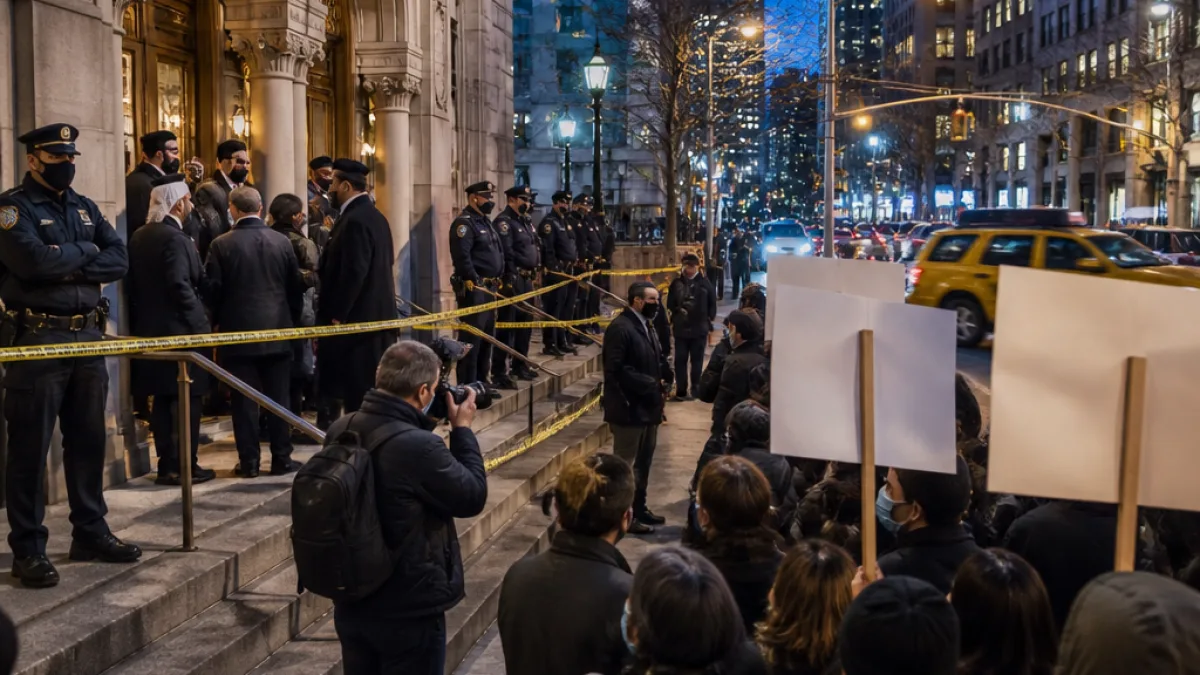
New York Mayor Zohran Mamdani faced immediate criticism after publicly condemning a violent assault at Manhattan's Central Synagogue on Friday, as political opponents and some community leaders said his prior statements risked helping to create an environment that can fuel threats against Jewish New Yorkers.
Backlash follows mayoral condemnation
In a brief statement shared after the attack, Mamdani said he was "horrified by the assault at Central Synagogue during services today" and pledged his administration would do "everything in our power to keep Jewish New Yorkers safe."
"I am horrified by the assault at Central Synagogue during services today,"
The mayor’s statement was met with swift pushback online and from officials in the diplomatic community. Ofir Akunis, Israel’s consul general in New York, publicly blamed Mamdani’s rhetoric for contributing to the violence, calling the assault "a direct result of Mayor Mamdani's sustained campaign of incitement," according to reporting.
Critics pointed to earlier comments made by the mayor in which he drew comparisons between domestic policing and Israeli actions abroad. A research fellow cited Mamdani’s previous remark that "When the boot of the NYPD is on your neck, it's been laced by the IDF," resurfacing it in the wake of the attack as evidence that the mayor’s language can inflame tensions.
Community leaders had warned of escalation
The backlash carried particular weight because Central Synagogue leadership had warned the mayor weeks earlier about the possible consequences of inflammatory rhetoric. In a July 23 statement addressed to Mamdani, Senior Rabbi Angela Buchdahl urged him to stop language that "demonizes Jews and the Jewish state" and warned it could "help create the climate in which threats and violence flourish."
At a public appearance in Queens on Saturday, Mamdani did not directly respond to accusations that his rhetoric encouraged the attack. He said his focus remained on "delivering for Jewish New Yorkers across the five boroughs" and pointed to the work of his Office to Combat Antisemitism.
Political and civic implications for New York
The episode underscores growing scrutiny of public officials' language around highly charged international and local issues and the ways statements can be interpreted by different communities. It also places renewed attention on municipal efforts to protect houses of worship and to maintain public safety during an especially tense period.
- Mayor's response: Condemned the assault and pledged action to protect Jewish New Yorkers.
- Criticism: Opponents and diplomats said prior mayoral remarks contributed to a hostile climate.
- Earlier warning: Central Synagogue's rabbi had warned Mamdani on July 23 about rhetoric that could fuel threats.
The incident also highlights the role of city agencies that handle hate crimes and community safety. While the mayor emphasized his office’s ongoing work, community leaders and elected officials will likely press for concrete steps to reassure worried residents and congregations.
| Item | Detail |
|---|---|
| Event | Assault during services at Central Synagogue (Manhattan) |
| Mayor's reaction | Condemned the attack; pledged protection for Jewish New Yorkers |
| Community concern | Rabbi Angela Buchdahl warned Mamdani on July 23 about rhetoric fostering threats |
As the city moves to address safety and communal tensions, officials from multiple agencies and faith communities will likely be called upon to coordinate responses. The dispute over cause and responsibility also signals a continuing political battle over how public leaders should discuss international conflicts and local policing — and how those discussions reverberate in New York’s diverse neighborhoods.
For residents, the episode is a reminder that municipal rhetoric, protective measures and community outreach intersect in real and often immediate ways when incidents of targeted violence occur.
















