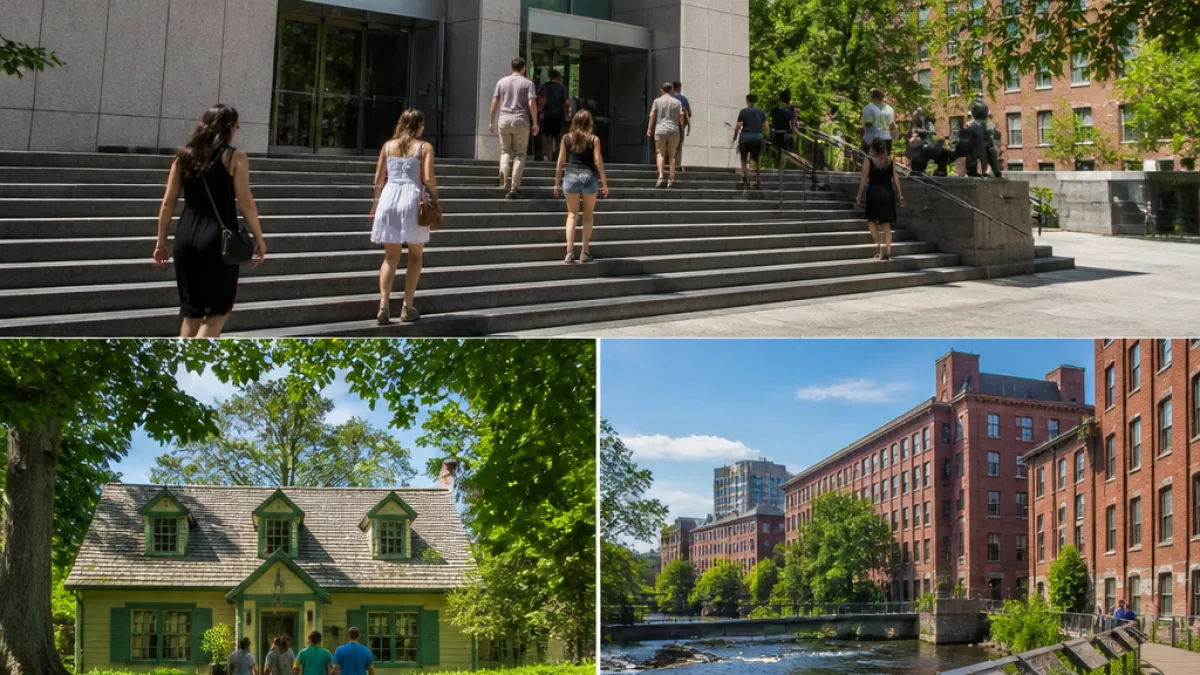
A new compilation of Manchester attractions singles out cultural and historical anchors that residents and visitors should consider first when planning a day in the city. Updated in July 2026, the list ranks the top 15 experiences and places the Currier Museum of Art, the Frank Lloyd Wright–designed Zimmerman House and the Millyard Museum among the top three stops.
"Nearby Manchester rewards travelers who look past its airport and treat the city as an art, architecture, industrial-history and riverfront base."
What the top picks reveal about Manchester
The three highest-ranked sites on the list reflect different aspects of Manchester’s history and ongoing identity. The Currier anchors the city’s visual arts scene with a mix of European, American and contemporary collections; the Zimmerman House offers an architectural touchstone as a small-scale Frank Lloyd Wright design; and the Millyard Museum frames Manchester’s rise as a textile and industrial center.
Each site is noted for being manageable in scale and for pairing well with nearby attractions, the roundup says. The writing recommends verifying hours before visiting and notes practicalities such as timed tours and admission programs. Those caveats underline how these institutions operate in the post-pandemic era, when scheduling and capacity considerations remain common practice.
- Currier Museum of Art — Listed as the top cultural institution in Manchester; collections span European, American and contemporary art. The guide suggests allocating 2 to 3 hours and checking current gallery and cafe hours. Admission is listed between $15 and $30.
- Zimmerman House — Ranked for its Frank Lloyd Wright architecture; guided tours are the recommended way to experience the privately scaled interior. Tours are timed, with advice to book in advance. The guide lists a typical tour price range of $30 to $50.
- Millyard Museum — Positioned as the best site for understanding Manchester’s industrial emergence; exhibitions cover Indigenous settlement, Amoskeag’s textile operations, labor and immigration. It is located within the surviving mill complex and the guide suggests visitors allow 2 to 3 hours. Admission is described as under $15.
Practical details at a glance
Visitors are advised to check each institution’s current hours and visitor rules. The roundup specifically mentions photography limits at the Currier and possible bag checks, and it points out access constraints at the Zimmerman House that may affect mobility-impaired visitors.
| Site | Typical visit time | Approx. admission |
|---|---|---|
| Currier Museum of Art | 2 to 3 hours | $15–$30 |
| Zimmerman House | 2 to 3 hours | $30–$50 |
| Millyard Museum | 2 to 3 hours | Under $15 |
For Manchester residents, the list serves as both validation of long-standing local assets and a prompt to review current visitor policies. For business owners and cultural organizations, ranked guides like this can affect visitor patterns and seasonal planning. While the roundup frames Manchester as more than a transit point, it implicitly highlights how arts and history-focused sites can be leveraged in local tourism strategies.
What to keep in mind
The guide recommends practical steps before visiting: verify current hours and any seasonal closures, confirm admission programs, and book timed tours in advance where required. Those steps apply broadly across Manchester’s cultural landscape as institutions continue to manage operations and visitor flow.
Residents and travelers interested in following the roundup’s ordering should use each institution’s official channels to check up-to-date information on hours, tickets and accessibility. The list is a reminder that Manchester’s arts, architecture and industrial history remain central to the city’s character and appeal.