
Augusta, Maine — A plan by the state House Progressive Democratic caucus to hire a privately funded policy and communications director has prompted interparty questions and a review by campaign finance regulators over whether the position could constitute lobbying under state law.
Novel arrangement draws scrutiny
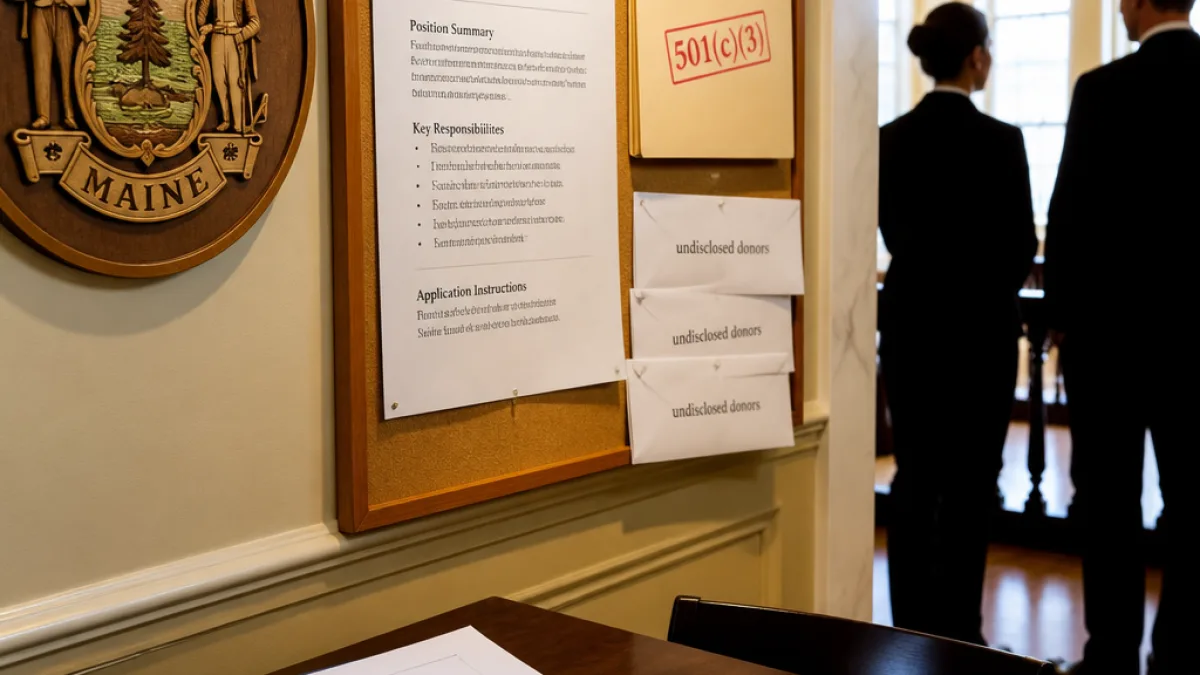
The seven-member caucus posted the job in late July after raising about $100,000 from donors who have not been publicly identified, according to caucus materials and reporting. The salary would be paid through the 501(c)(3) arm of the progressive Maine People’s Alliance, a structure that legislative leaders and ethics officials say is unusual and raises legal and transparency concerns.
Lawmakers from both parties have flagged the setup as challenging the customary State House staffing model, where legislative staff are typically employed by the Legislature itself. Emails and letters circulated among leaders and the Maine Ethics Commission indicate officials are negotiating what the new hire would be permitted to do and whether some activities could trigger lobbying-disclosure obligations.
Lawmakers demand a meeting
Senate Minority Leader Trey Stewart, R‑Presque Isle, formally asked Democratic leaders to convene a panel of legislative leaders to examine the arrangement. In his letter, he said Mainers deserve to know who is funding a staffer who would help shape and promote public policy — and pressed for answers after caucus members declined to identify donors.
“Mainers deserve to know who is paying someone to help lawmakers develop and promote public policy,”
House Speaker Ryan Fecteau, D‑Biddeford, and Senate President Mattie Daughtry, D‑Brunswick, replied that the questions were important and merited discussion by leadership. Both said they had no role in the hiring process and were not aware of the funding arrangements.
Ethics commission weighs duties and limits
Officials from the Maine Ethics Commission have been in conversations with caucus members about the scope of the job and the commission’s interpretation of state lobbying laws. The core issue is whether a privately paid staffer would engage in activities that meet the statutory definition of lobbying, which would require registration and public disclosure.
According to correspondence reported by the Bangor Daily News and shared with legislative leaders, the sides are negotiating what the hire can and cannot do if hired under the proposed structure.
Political context and potential implications
The dispute underscores long-running tensions between Gov. Janet Mills and progressive lawmakers over fiscal and social policy. It also arrives as Maine approaches a competitive 2026 governor’s race, where progressive influence could matter to primary and general election dynamics.
Progressives say the caucus needs staffing to research, craft and communicate policy priorities. Critics counter that outside funding for what appears to be a quasi-legislative staff role blurs the line between private influence and public decision-making.
- Who posted the job: Seven-member Progressive House caucus
- Funding vehicle: Maine People’s Alliance 501(c)(3)
- Amount raised: About $100,000
- Key question: Would job duties trigger lobbying-disclosure rules?
Practical next steps
Fecteau and Daughtry told Stewart the matter would be placed on the agenda for the Legislative Council’s next meeting; officials said timing would depend in part on unrelated hires for other top legislative posts. The council, composed of legislative leaders, has the authority to set House and Senate administrative practices.
| Actor | Role | Known fact |
|---|---|---|
| Progressive House caucus | Employer (proposed) | Posted policy and communications director job |
| Maine People’s Alliance (501(c)(3)) | Funding vehicle | Would pay salary |
| Maine Ethics Commission | Regulatory reviewer | Advising on lobbying disclosure implications |
| Legislative leaders | Oversight | Will discuss at Legislative Council |
As the Legislature considers the proposal, questions about donor disclosure and the exact duties of the proposed staffer are likely to shape public debate. For voters and journalists, the situation raises practical concerns about transparency: whether citizens can identify who pays for staff work that may influence lawmaking, and whether existing statutes adequately cover modern arrangements between outside groups and lawmakers.
The issue is expected to remain on the Legislative Council’s agenda when its members meet to consider the matter, though no meeting date has been set. Lawmakers and the ethics commission declined to provide immediate additional details beyond correspondence reviewed by reporters.
State residents who want to follow developments can watch for updates from the Legislative Council and filings with the Maine Ethics Commission as the negotiation continues.

















