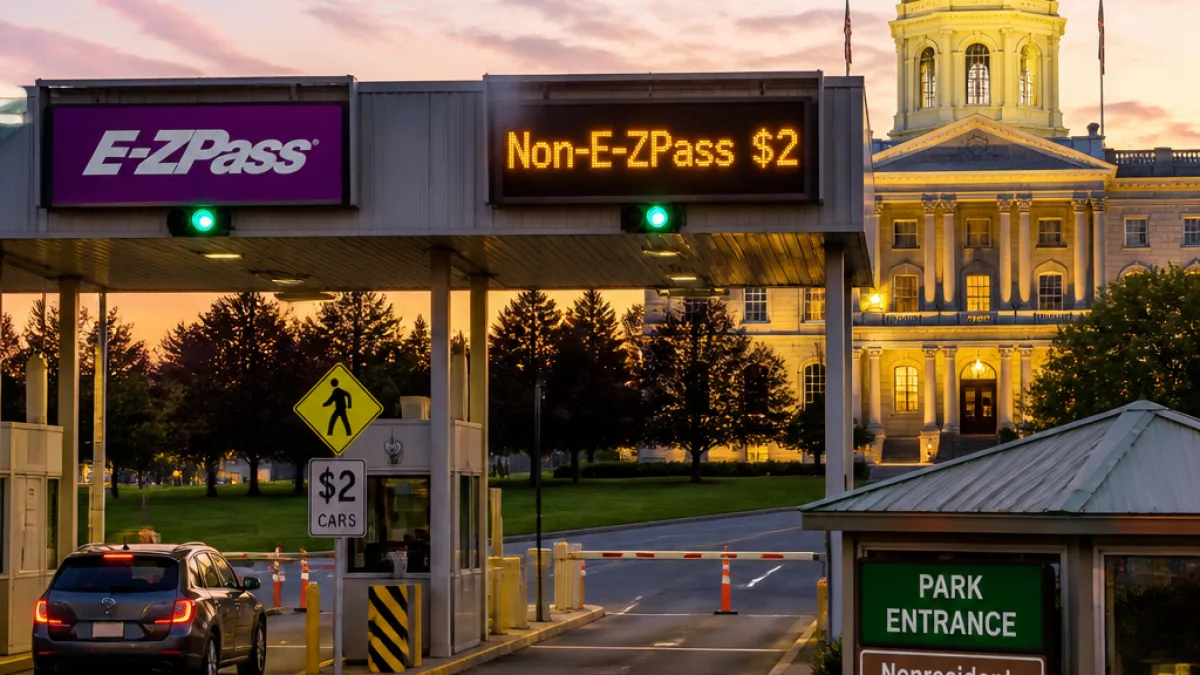
CONCORD — The Republican-controlled New Hampshire Legislature has overridden two vetoes to approve laws that will increase tolls for drivers who do not use a New Hampshire E‑ZPass and require state parks to charge nonresidents twice what residents pay.
Under one of the measures, effective Jan. 1, vehicles passing through toll plazas without a New Hampshire E‑ZPass will be billed $2 instead of $1. The other law directs the Division of Parks and Recreation to set nonresident fees at double the rates charged to state residents. Both actions came after Republican Gov. Kelly Ayotte vetoed the legislation; the Legislature subsequently voted to override those vetoes.
Governor warned of tourism, affordability impacts
In publicly recorded comments during the bill review, Gov. Ayotte said the toll increase would run counter to efforts to keep New Hampshire affordable and attractive to visitors. She argued the changes risked discouraging tourism in a region that competes with neighboring states for travel and recreation dollars.
“I wanted to make the state affordable for all and a destination for tourists in the region.”
The governor issued similar concerns about the park fee change, noting that steeper rates for out-of-state visitors could discourage overnight stays and day trips that support local businesses around state parks. The Legislature nonetheless moved forward, overriding the vetoes.
Practical changes for drivers and park visitors
The toll bill specifically targets vehicles that pass through toll plazas without a New Hampshire E‑ZPass account. While the state will continue to accept out-of-state E‑ZPass transponders issued by other jurisdictions, the new law sets a higher administrative charge for vehicles without a New Hampshire-issued transponder.
The state has emphasized that motorists who travel frequently on New Hampshire toll roads can obtain a New Hampshire E‑ZPass even if they do not live in the Granite State. That option remains available and, under the new law, may spare frequent users from the higher $2 billing rate when passing toll locations.
For visitors to state parks, the statute requires park managers to apply a nonresident multiplier to established resident rates. The practical effect is that many day-use and camping fees for nonresidents will increase to twice the resident charge, though exact fee schedules remain subject to the Division of Parks and Recreation’s implementation rules.
Local fiscal and economic considerations
Supporters of the measures, including several Republican lawmakers, have framed the changes as steps to ensure that nonresidents contribute a greater share toward the upkeep of roads and recreational resources that they use. Tolls and park fees are revenue sources for transportation and conservation budgets, and proponents argued the increases will bolster maintenance funds without raising taxes on residents.
Opponents countered that higher user fees could have ripple effects on small businesses that rely on tourists and on commuters who work across state lines. They warned that the new pricing could make New Hampshire less competitive with neighboring states that market lower travel and recreation costs.
What residents and visitors should know now
- Starting Jan. 1, vehicles without a New Hampshire E‑ZPass will be billed $2 at toll plazas instead of the current $1.
- Nonresidents visiting state parks will be charged twice the resident fee; exact amounts will depend on fee schedules set by the Division of Parks and Recreation.
- Out-of-state drivers can obtain a New Hampshire E‑ZPass; doing so may avoid the higher billing rate for nontransponder users.
State agencies are expected to publish guidance and implementation details in the weeks and months ahead. That information will include how toll billing will be handled for casual visitors, the process for obtaining a New Hampshire E‑ZPass, and the timetable and schedules for revised park fees.
| Item | Previous | New (effective) |
|---|---|---|
| Toll billing for vehicles without NH E‑ZPass | $1 | $2 (effective Jan. 1) |
| Nonresident state park fees | Same rate as residents (variable) | Double resident rate (division to set schedules) |
Lawmakers and state officials will likely face follow-up questions about administrative details, the timeline for agencies to finalize rules and how enforcement will be handled at parks and toll facilities. For now, motorists and visitors should prepare for higher out-of-state user charges and monitor official state channels for implementation notices.
The overrides underscore a broader legislative approach to user-fee policy in Concord, one that places emphasis on charging nonresidents more for use of state-managed infrastructure and recreation assets. How that choice shapes travel patterns and local economies will be closely watched by municipal leaders and business owners in communities that depend on tourism and pass-through traffic.
— Bethany Sokolov, WE NEWS