
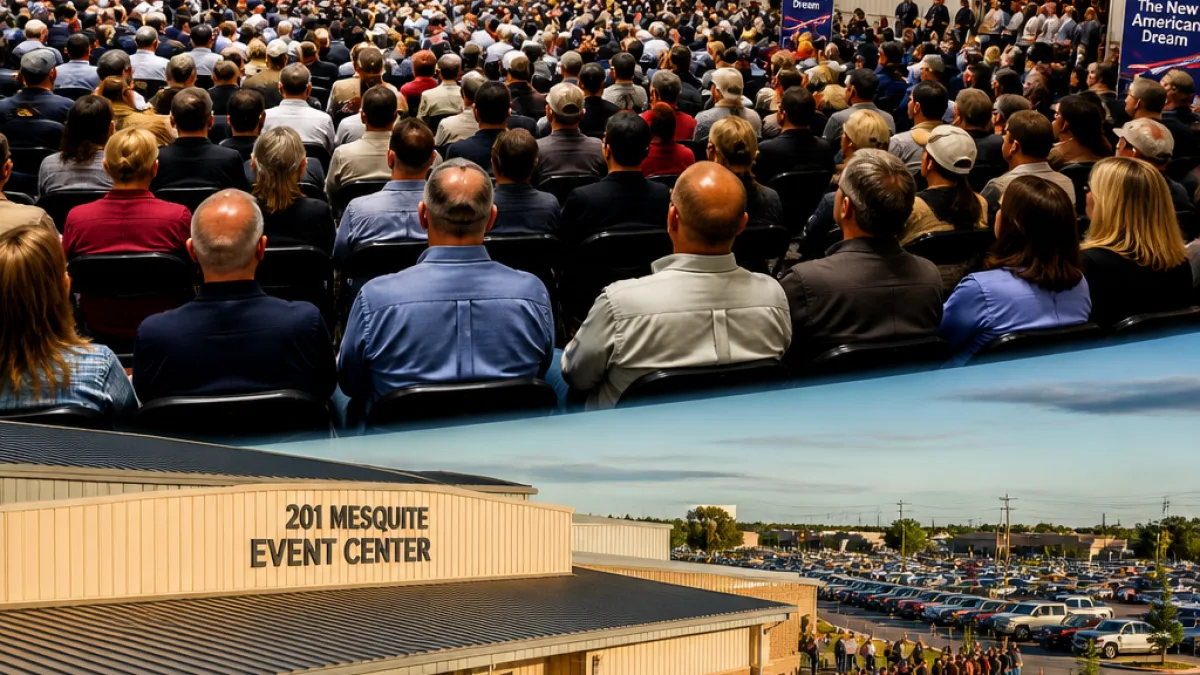
Large turnout greets Talarico at Abilene event
More than 800 people gathered at the 201 Mesquite Event Center in Abilene on Thursday evening for a rally by Texas state Rep. James Talarico, the Democratic nominee for the U.S. Senate. The line for the 7:30 p.m. start time had already wrapped around the event center parking lot by 6:30 p.m., and organizers opened an overflow room to accommodate the crowd.
Talarico spoke for about 25 minutes, focusing on what he described as an affordability crisis driven by corruption and special-interest influence. He accused industry leaders tied to large-scale data center development and factions aligned with his Republican opponent of placing private gain over everyday Texans’ needs.
Themes: affordability, data centers and AI
At the Abilene stop of his "The New American Dream Tour," Talarico framed the campaign around economic strain and the influence of wealthy donors. "We have an affordability crisis because we have a corruption crisis. We are getting screwed," he told attendees, adding that the problem crosses ideological lines.
"Whether you're a little more conservative or a little more progressive, we're all getting screwed," he said. "None of us can afford our groceries. None of us can afford our gas. None of us can afford childcare or healthcare, the things that we need to survive. The billionaires buying the system, they don't care who you are."
Talarico singled out unchecked data center spending as a focal point, asserting that the industry and its donors have too large an influence on state policy. He accused Texas Attorney General Ken Paxton of accepting "almost half a million dollars" in donations from data center industry leaders and called Paxton "the most corrupt politician."
He connected data center growth to the future of artificial intelligence, saying lawmakers must ensure that an AI-driven economy does not become "yet another arena where billionaires write the rules for the rest of us." He said Abilene has been central to a data center fund and vowed to be an ally to the city in the U.S. Senate.
Local reaction and context
The rally drew a cross-section of attendees, including local residents and veterans. Organizers said more than 800 people attended and noted they had to open overflow space to handle demand. A military veteran and Abilene resident, identified in accounts of the event, was among those who spoke with Talarico after the rally.
Abilene has been mentioned by the candidate as a focal point for data center investment in Texas. Concerns about the local impact of large data center projects — including effects on infrastructure, utilities and economic development priorities — have been raised in communities across the state as the industry expands.
- Event: James Talarico rally, Abilene
- Venue: 201 Mesquite Event Center (overflow room opened)
- Attendance: Over 800, according to Talarico's team
- Speech length: About 25 minutes
What the candidate is asking for
Talarico urged tighter oversight of data center development and policies to ensure working Texans share in the benefits of technological change. He emphasized affordability issues — groceries, gas, childcare and health care — as central themes of his message and promised to represent Abilene"s interests should he win a U.S. Senate seat.
Those comments come as the campaign season intensifies, with candidates increasingly focusing on statewide economic issues and local impacts of large-scale industry investments. The Abilene stop allowed Talarico to press his message directly to voters in a city he said has been at the center of data center funding decisions.
| Item | Figure |
|---|---|
| Reported attendance | 800+ |
| Speech length | ~25 minutes |
| Start time (scheduled) | 7:30 p.m. |
| Donation amount cited | Almost $500,000 (to AG Ken Paxton, per Talarico) |
The rally underscores how national and statewide issues — campaign finance, industry influence and the governance of emerging technologies — are being debated at the local level. For Abilene residents, the discussions about data centers and community impact may shape conversations about infrastructure, jobs and the city’s economic future as the campaign season continues.

















