The Inglewood City Council on Tuesday approved a $261 million public-private partnership to rebuild major streets in Downtown Inglewood and construct three mobility hubs aimed at reducing event-related congestion and improving everyday transit for residents.
Project scope and delivery model
The agreement covers design, construction, financing, operations and maintenance under a single, fixed-price contract. The city selected Elevate Inglewood Development Corporation through a competitive procurement. Plenary Americas will lead the consortium, with Swinerton as the design-build contractor and Walter P. Moore serving as the architect of record.
City officials described the contract as a Design-Build-Finance-Operate-Maintain (DBFOM) arrangement that places cost and schedule risk with the developer rather than the city. Councilmember Eloy Morales Jr. said the structure protects taxpayers by making the developer assume those risks. In council remarks released with the action, Mayor James T. Butts Jr. also emphasized the financial protections built into the agreement.
“This agreement caps our cost, and construction is funded through a partnership with the State and Metro — using grant dollars we competed for and won, and not a dime from the General Fund,” the mayor said.
Funding and timeline
City officials said the project will be paid entirely through grant funding — including awards from California’s Transit and Intercity Rail Capital Program (TIRCP) and Metro — and will not require General Fund dollars or new local taxes. Construction is scheduled to begin this fall, with roadway work slated to start in November.
| Item | Detail |
|---|---|
| Total project budget | $261 million |
| Funding sources | Grants from TIRCP and Metro (no General Fund or new taxes) |
| Delivery model | Design-Build-Finance-Operate-Maintain (DBFOM) |
What will change on the ground
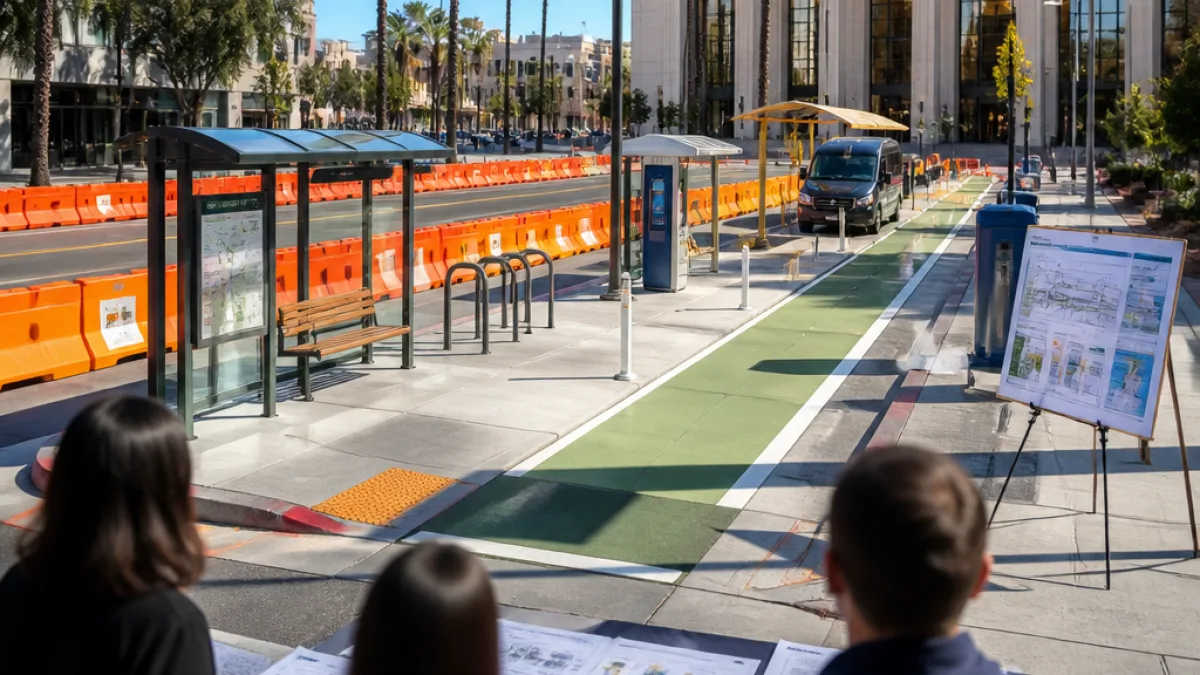
The plan calls for rebuilding major corridors in the downtown core, including sections of Market Street, Manchester Boulevard and Queen Street, and constructing three mobility hubs to support the Inglewood Transit Connector (ITC) program. Officials say the work is intended to cut congestion on event days at SoFi Stadium, the Intuit Dome and the Kia Forum, while also improving daily transportation options for residents and workers.
- Three mobility hubs to be constructed as part of the ITC program.
- Roadway reconstruction to start in November, with broader construction beginning this fall.
- No General Fund dollars or new taxes will be used to build or operate the system, according to city statements.
City leaders point to recent operational lessons learned during large events as proof of concept. During the 2026 FIFA World Cup, Metro implemented dedicated bus lanes, signal priority and expanded shuttle service to move large numbers of fans to and from SoFi Stadium. The city says those tools informed the designs now being funded through the ITC program.
Expected impacts and next steps
Inglewood hosts more than 60 major annual events in its sports and entertainment district, regularly bringing tens of thousands of visitors to a city of roughly 100,000 residents. Officials have cited the 2028 Los Angeles Olympics as a factor in accelerating investments in downtown mobility capacity.
Under the DBFOM contract, the developer will take responsibility for meeting a fixed price and deadline, transferring the financial and schedule risk away from the city. Council members framed the arrangement as a way to deliver a single coordinated project team and a guaranteed completion plan.
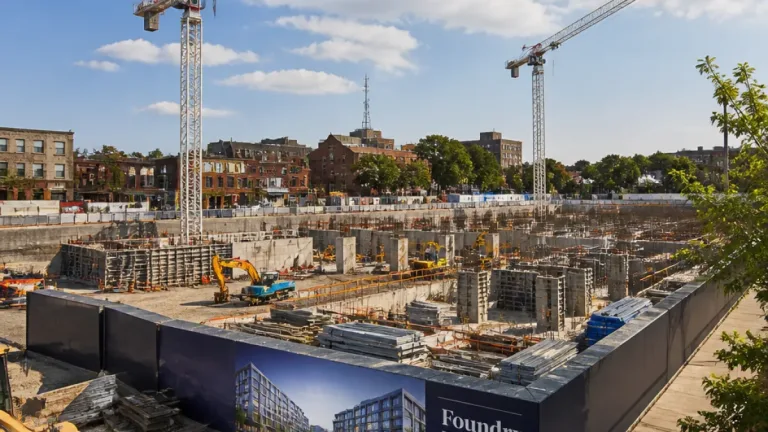
Construction crews are expected to mobilize this fall. City staff and the developer will proceed to the pre-construction and permitting steps outlined in the agreement, with targeted roadway work beginning in November. Residents can expect phased street work and associated traffic management plans as the project moves forward.
The council vote marks a major step in Inglewood’s broader strategy to accommodate large event crowds while maintaining reliable daily mobility for residents. With grant funding and a private partner in place, city leaders say the initiative positions Inglewood to handle increased visitor volumes without drawing on the General Fund.