
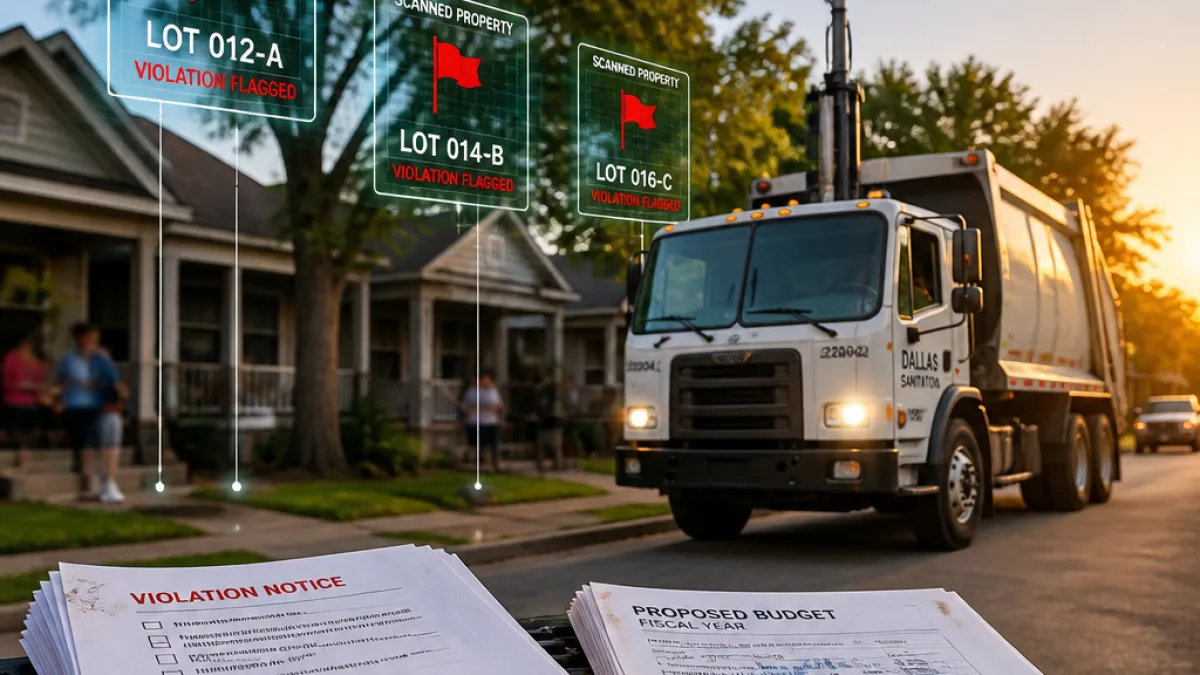
The City of Dallas has deployed AI-powered cameras on sanitation trucks since early 2026 to identify potential code violations across neighborhoods — a move city officials say speeds blight enforcement but that critics warn may infringe on privacy and disproportionately target communities of color.
What the city reported
A Sept. 8 city memo detailed results from the pilot program run with a vendor called City Detect. According to the document:
- 10,000 properties were scanned by cameras mounted on trash trucks.
- The system flagged roughly 3,700 potential violations that led to notices to property owners.
- After follow-up inspections by code officers, 57 citations were issued affecting 34 distinct properties.
- The program’s annual taxpayer cost is reported as $852,000.
| Metric | Count |
|---|---|
| Properties scanned | 10,000 |
| Notices produced | 3,700 |
| Citations issued | 57 |
| Properties cited | 34 |
| Annual cost | $852,000 |
Officials and critics respond
Supporters inside city government argue the cameras allow code officers to address blight more proactively instead of waiting for complaints. But the rollout has prompted questions from some council members and residents about surveillance, data protections and fairness.
“My concern is, as we're learning more about AI and the lack of privacy and lack of protections, does the city have those protections in place to make sure my home, your home, our residents' homes, and our privacy are protected, number one,”
That comment came from Dallas City Councilman Chad West, who also noted that about 70% of citations from what the cameras identified were tied to predominantly African American neighborhoods — a disparity that has heightened scrutiny.
City officials say citations are not issued automatically by the AI system. According to the memo, each flagged location is reviewed in person by a code officer who determines whether to issue a notice or citation.
Local context and consequences
The trash-truck camera initiative arrives as Dallas continues public debates over other municipal surveillance tools, including Flock safety cameras. Questions about civil liberties and unequal enforcement have become central to discussions about how technology should be deployed by local government.
For residents, the program’s implications are practical and immediate. Notices can lead to fines or required repairs, and increased enforcement may place added burdens on homeowners and tenants in neighborhoods already facing economic pressure. Critics say automated scanning risks amplifying existing inequities if the technology reflects or reinforces biased patterns in data or deployment.
Proponents counter that the approach helps staff find and remove hazards, clear debris and address conditions that can decrease property values and safety. The city also highlights that human review remains part of the enforcement pipeline.
Questions ahead
Key issues the City Council and residents are likely to press in coming weeks include:
- What specific privacy safeguards govern image storage, sharing and retention?
- How is vendor accuracy validated and audited?
- What metrics will the city use to assess disparate impacts across neighborhoods?
As Dallas weighs whether to expand or modify the program, council members and advocacy groups will demand clarity on cost effectiveness, civil liberties protections and measures to prevent discriminatory outcomes. The city’s next steps will shape how technology is used to tackle blight — and whether residents feel those tools are applied fairly across Dallas neighborhoods.















