
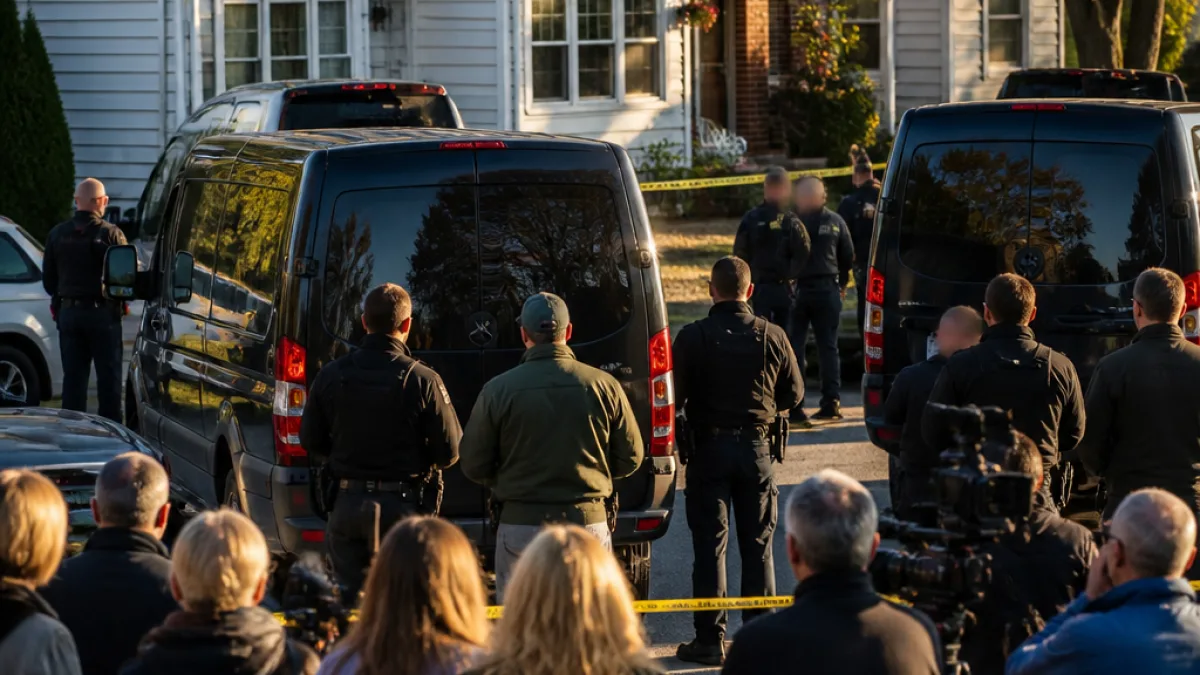
BIDDEFORD, Maine — Federal immigration agents were conducting surveillance intended for a different person when an officer shot and killed a 25-year-old motorist outside a Biddeford home on July 13, a U.S. congresswoman said Monday during a public hearing in the city.
Rep. Chellie Pingree, D-Maine, told the panel that the intended target of the Immigration and Customs Enforcement operation was a roommate of the man who was killed, and that the roommate — not the victim — was the subject of a final order of removal. The man who died was identified as Johan Sebastián Durán Guerrero, a Colombian national who, Pingree said, had a pending asylum claim and a valid work permit.
Disagreement between congresswoman and DHS
Pingree described the revelation as a “shocking” contradiction to official accounts provided by ICE and the Department of Homeland Security. She said the new information undercuts explanations offered about the circumstances that led to the fatal encounter and renewed demands for clarity from federal authorities.
“Johan Sebastián Durán Guerrero should be alive today,” Pingree said at the hearing. “More than a month later, there are still so many basic questions that remain unanswered by ICE and the Trump administration.”
In a written statement issued late Monday, the Department of Homeland Security said it stands by earlier assessments of the episode. A DHS spokesperson said ICE was carrying out “targeted surveillance on the last known address of an illegal alien with a final order of removal.” The statement added that the agency would not disclose law enforcement-sensitive intelligence or methods and disputed that it ever said Durán Guerrero or his roommate had been the specific target.
Official investigations and unanswered questions
The shooting remains under review by the Office of the Maine Attorney General, which is investigating the circumstances and the use of force. Local and federal officials, along with several Democratic members of Congress, gathered in Biddeford on Monday to press for information about ICE’s operations and its rules governing the use of deadly force.
Officials at the hearing stressed the number of unresolved elements surrounding the episode, including:
- Who specifically was the target of the ICE operation;
- What surveillance and engagement protocols were in place at the address involved; and
- How DHS and ICE are coordinating with state investigators reviewing the shooting.
Pingree and other lawmakers urged federal transparency on those points, saying the family and the public deserve a full accounting. The Department of Homeland Security’s statement, by contrast, emphasized protecting investigative methods while reiterating the agency’s prior public remarks about the circumstances.
Community impact and oversight
The death of Durán Guerrero has drawn attention in Biddeford and across Maine to ICE’s tactical practices and to broader questions about enforcement actions carried out in residential communities. The hearing in Biddeford was one of several gatherings where members of Congress and community leaders sought more details and accountability.
Family members, advocates and local officials have called for a thorough and transparent review of the facts. While federal officials have defended their prior statements, state investigators are continuing their inquiry, and congressional interest appears likely to sustain pressure for answers.
| Key dates | Event |
|---|---|
| July 13 | ICE agent shoots and kills Johan Sebastián Durán Guerrero in a car near his Biddeford home |
| Late Monday | Department of Homeland Security issues statement standing by prior assessment |
| Month following shooting | Hearing in Biddeford where Rep. Pingree and others press ICE on use of force |
As both state and federal reviews move forward, lawmakers and community members said they will continue to demand clarity about who was targeted, why surveillance was carried out at the address and the sequence of events that resulted in a life being lost. The Maine Attorney General’s office has not released a timeline for its findings.
The matter raises questions about coordination between federal immigration enforcement and local jurisdictions, and it underscores broader policy debates over ICE tactics nationwide. For now, those directly involved in the case and the wider Biddeford community await more detailed accounts from officials who conducted and authorized the operation.
Public hearings and continued oversight from representatives in Washington suggest the shooting will remain a focal point as investigators work to reconcile competing accounts and produce an official record.

















