
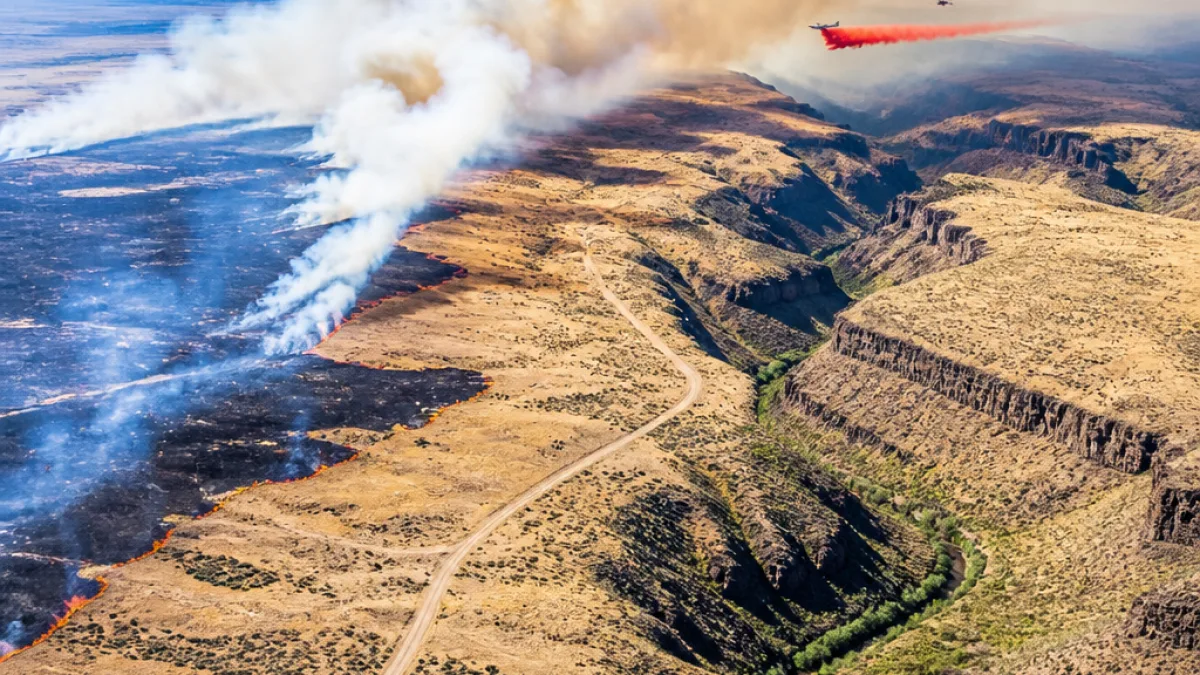
The Big Grass Fire has grown into the largest wildfire in Oregon's modern record after burning 579,300 acres, officials said, roughly half of which lie across the border in Idaho. The blaze, ignited by lightning on July 23, raced through mostly grassland in the remote Owyhee Canyonlands and reached 282,000 acres within its first two days before its spread slowed.
Size, cost and containment
As of Aug. 12 the fire was reported to be 36% contained and had cost about $40 million to manage and attempt to suppress. The incident has so far been notable for its scale rather than structural losses: officials say the Big Grass Fire has not destroyed any homes.
Where it sits in Oregon fire history
Big Grass surpassed the 2012 Long Draw Fire, which had been Oregon's largest modern-era fire at 557,028 acres, and becomes the biggest recorded fire since the modern wildfire record-keeping era began around 1992. The state's largest forest fire — fires burning in heavy timber — remains the Biscuit Fire of 2002, which scorched about 500,000 acres in southwest Oregon.
Historic fires before the modern record era remain estimates. The Tillamook Burn, a series of Coast Range fires from 1933 to 1951, is estimated at roughly 355,000 acres. Accounts of the Great Forest Fire of 1845 put its size between 400,000 and 1.5 million acres. In human toll and destruction, the 2020 Labor Day Fires — a complex of fires across Oregon — are remembered for the highest impacts in recent years, with 11 lives lost and more than 4,000 homes destroyed. The Bandon Fire of 1936 is noted as one of the deadliest single fires, killing 10 and devastating that south-coast town.
Other active fires and community impacts
Alongside Big Grass, other fires across the state continue to affect communities. One separate incident, the Grasshopper Fire in Wasco County, has resulted in structural losses: as of Aug. 11 the Wasco County Sheriff's Office reported six primary residences and 15 outbuildings destroyed, with damage assessments still underway.
"We understand the community’s concern about reports of damaged structures from the Grasshopper Fire and the importance of providing timely, accurate information. We are working to share verified information as soon as possible," the sheriff's office said.
How the fire behaved and why it spread
Fire officials noted that the Big Grass Fire burned primarily grass and occurred in a remote region, factors that shaped its rapid early growth and overall behavior. Grass fires can spread quickly under dry, windy conditions, allowing for large daily acreages early in an incident. After the initial fast spread — 282,000 acres in two days — the fire's expansion moderated as resources and suppression efforts were deployed and as terrain and fuel types changed.
- Ignition: lightning, July 23
- Acreage: 579,300 acres (about half in Idaho)
- Containment: 36% (as of Aug. 12)
- Suppression cost: approximately $40 million
| Fire | Approx. acres | Notes |
|---|---|---|
| Big Grass Fire (2026) | 579,300 | Mostly grass; half of acreage in Idaho; 36% contained |
| Long Draw Fire (2012) | 557,028 | Mostly grass in southeast Oregon (previous modern-era record) |
| Biscuit Fire (2002) | ~500,000 | Largest forest (timber) fire in modern record |
What this means for Oregonians
While the Big Grass Fire's footprint is concentrated in remote rangeland, the scale of the blaze strains firefighting resources and underscores the continuing risk of large wildfires during the season. The high suppression cost and cross-jurisdictional response between Oregon and Idaho highlight logistical and fiscal challenges when fires cross state lines. Officials continue to monitor containment, potential weather-driven spread and impacts to air quality in downwind communities.
State and local authorities advise residents near active fires to stay informed through official channels, heed evacuation orders if issued, and avoid entering active fire areas to allow emergency personnel to operate safely. Fire managers will continue assessments of burned areas and property losses where other fires, such as the Grasshopper Fire, have produced local damage.
As investigators and incident managers work through containment and recovery in affected areas, the Big Grass Fire stands as a stark reminder of how rapidly fires can grow under the right conditions and how historic records can be eclipsed in a single season.


















